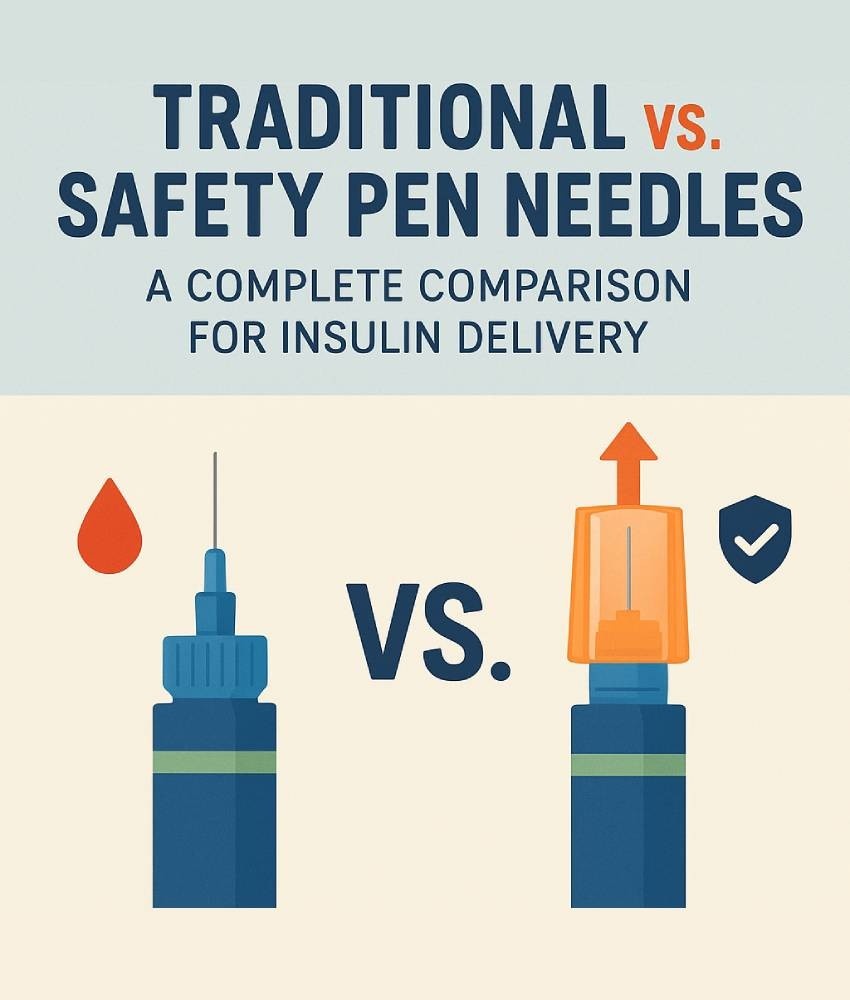
Introduction to Pen Needles in Diabetes Care
Diabetes care is rapidly evolving, and the tools used for daily insulin injections are becoming safer, more efficient, and patient-friendly. Whether you’re a healthcare professional, procurement officer, or diabetic patient, understanding the difference between safety pen needle, traditional models, and other insulin delivery devices is crucial for making informed decisions. Choosing the right design—and a dependable pen needle manufacturer—can directly impact safety, comfort, and treatment adherence.
Globally, the demand for better insulin injection systems has pushed manufacturers to innovate beyond the traditional design. As we compare these two needle types, you’ll see how modern safety features are transforming patient experience and clinician protocols. Know more..
Understanding Traditional Pen Needles
Design and Functionality
Traditional pen needles are simple devices designed to attach to insulin pens. Their basic components include:
- A stainless steel needle
- Threaded hub or push-fit mechanism for connection
- A removable outer and inner cap
These needles come in a range of gauges (usually 29G to 33G) and lengths (4mm to 12mm) and are used primarily for subcutaneous insulin delivery.
Benefits and Limitations
Advantages:
- Affordable and widely available
- Easy to attach and use
- Compatible with most insulin pens
Drawbacks:
- No built-in safety mechanism
- High risk of needlestick injuries
- Potential for reuse, increasing infection risk
What is a Safety Pen Needle?
Key Features and Protective Mechanisms
A safety pen needle is designed with advanced features to reduce the risk of needlestick injuries and cross-contamination. Key innovations include:
- Automatic needle shielding after use
- Dual-end protection for both patient and user
- Tamper-evident caps to discourage reuse
These are ideal for clinical environments and patients with impaired vision, mobility, or dexterity.
How Safety Pen Needles Reduce Risk
- Prevents accidental sticks for caregivers and healthcare staff
- Lowers exposure to bloodborne pathogens (HIV, Hepatitis B/C)
- Meets OSHA, EU MDR, and ISO safety standards for sharps
Comparative Analysis: Traditional vs. Safety Pen Needles
| Feature | Traditional Pen Needle | Safety Pen Needle |
| Safety Shield | ❌ | ✅ |
| Reusability Risk | High | Low |
| Price Per Unit | Low | Slightly higher |
| Patient Comfort | Standard | Enhanced |
| Regulatory Compliance | Basic | Advanced (OSHA, MDR) |
| Training Required | Minimal | Slightly more |
| Use in Hospitals | Limited | Preferred |
Needle Safety and Needlestick Prevention
Safety pen needles significantly reduce accidental injuries, especially in multi-patient settings like hospitals and nursing homes.
Comfort and Injection Technique
While both types use ultra-fine tips and lubrication coatings, safety models often include:
- Thinner gauges (up to 34G)
- Advanced bevel designs
- Ergonomic hubs for better grip
Regulatory Requirements and Compliance
Safety devices are often required in:
- OSHA-compliant facilities (USA)
- EU MDR and ISO 23908-compliant hospitals
- Healthcare settings with high occupational hazard ratings
Benefits of Using Safety Pen Needle for Insulin Delivery
Infection Control and User Confidence
Safety pen needles eliminate the risk of:
- Reuse by mistake
- Misplacement of used sharps
- Patient anxiety about handling exposed needles
Enhanced Safety in Clinical and Home Use
From caregivers in home settings to nurses in busy wards, safety needles:
- Simplify disposal
- Prevent post-injection needle exposure
- Support safe insulin administration for all skill levels
How Insulin Delivery Devices Are Evolving
Smart Technology Integration
New-age insulin delivery devices are merging with technology:
- Bluetooth-enabled insulin pens
- Dose memory systems
- Mobile app integrations
Safety needles are being adapted for these modern tools, offering seamless compatibility and maintaining high safety standards.
Compatibility with Safety Pen Needles
Leading pen needle manufacturers ensure their safety models fit:
- Sanofi SoloStar
- NovoPen
- FlexPen
- KwikPen
- Omnican and other digital insulin pens
Choosing the Right Pen Needle Manufacturer
OEM Capabilities and Certification Standards
When selecting a pen needle manufacturer, consider:
- ISO 13485 & CE certification
- FDA listing or registration
- OEM/ODM capabilities
Customization and Bulk Supply Options
Reputable suppliers offer:
- Custom labeling
- Private packaging
- Language-specific instructions
- MOQ flexibility for clinics, hospitals, and wholesalers
Cost Considerations and Healthcare Economics
Long-Term Cost vs. Safety Investment
Although safety pen needles have a higher per-unit price, they:
- Reduce treatment-related complications
- Eliminate needle reuse
- Decrease occupational hazard claims
Reimbursement and Insurance Factors
In many regions:
- Government insurance covers safety needle use for Type 1 diabetics
- Private insurers reimburse based on physician recommendations
- Hospitals budget for safety devices to meet regulatory compliance
Training and Patient Education
Teaching Proper Injection Technique
Safety needle adoption requires a slight learning curve. Training should cover:
- Attaching/removing the needle
- Ensuring shield activation
- Safe disposal into sharps containers
Encouraging Transition to Safety Devices
Healthcare providers must:
- Educate on long-term benefits
- Demonstrate ease of use
- Address patient concerns about cost or complexity
FAQs: Pen Needle Types, Safety, and Sourcing
1. Are safety pen needles compatible with all insulin pens?
Most safety needles are universal but always verify with your pen needle manufacturer.
2. Do safety pen needles hurt more than traditional ones?
No. Many use ultra-thin tips and triple bevels for minimal pain.
3. Can safety needles be reused?
No. They’re single-use and often disable automatically after one injection.
4. How do safety pen needles prevent needlestick injuries?
Built-in retractable shields or locking caps cover the needle immediately after use.
5. Is switching to safety pen needles expensive?
Not significantly. The slightly higher cost is offset by improved safety, reduced injury risk, and longer-term healthcare savings.
6. What should I look for in a pen needle manufacturer?
Look for OEM support, ISO certification, proven client reviews, and bulk ordering capacity.
Conclusion
The debate between traditional and safety pen needle designs ultimately centers around safety, patient comfort, and modern healthcare demands. As insulin delivery devices become more advanced, integrating secure, easy-to-use needle systems is vital. Whether you’re a hospital purchasing manager or a patient looking for peace of mind, partnering with a qualified pen needle manufacturer is the first step to safer diabetes management.