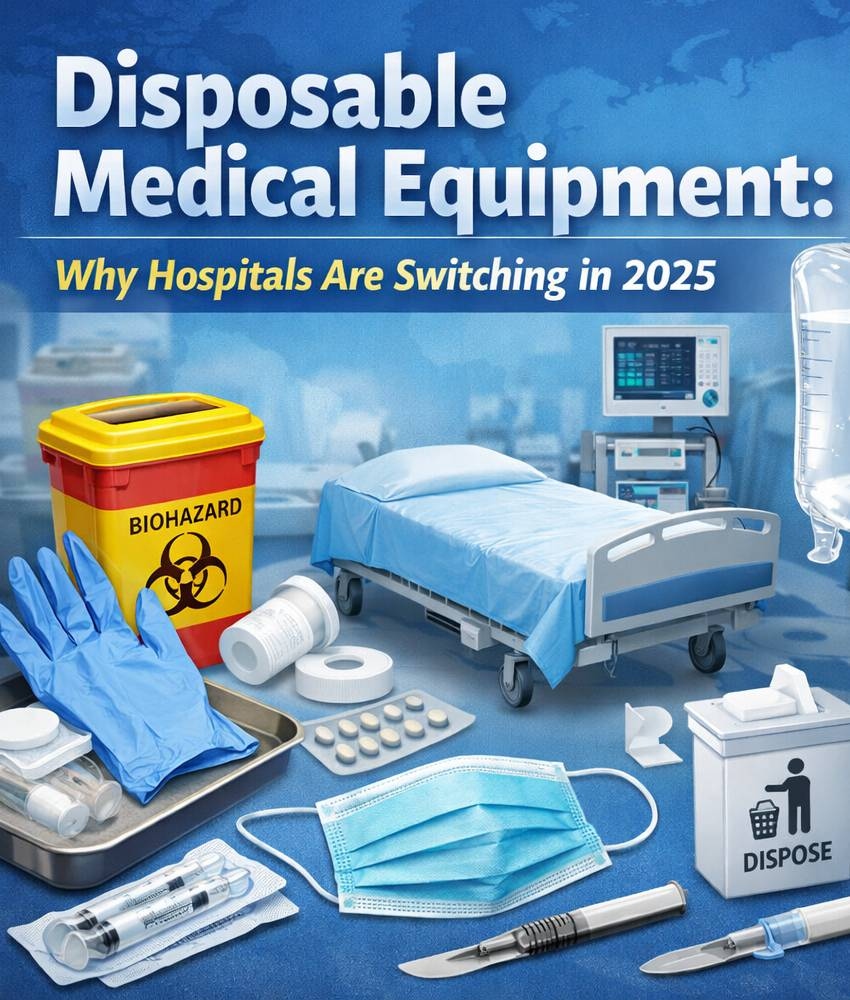
In 2025, hospitals worldwide are increasingly adopting Disposable Medical Equipment as a core component of their operational strategy. The shift toward Single-Use Medical Devices is driven by rising concerns about patient safety, efficiency, and cost-effectiveness. One of the primary reasons healthcare institutions are embracing these solutions is the role they play in Hospital Infection Control.
The ongoing demand for safer, cleaner, and more streamlined medical procedures has made disposable tools essential in modern healthcare settings. This trend is not only reshaping hospital workflows but also revolutionizing the way medical staff approach hygiene and patient care. Know more..
Understanding Disposable Medical Equipment
Disposable Medical Equipment refers to tools and devices designed for a single use before safe disposal. Unlike traditional reusable instruments, these items eliminate the need for sterilization processes, which can be time-consuming and sometimes unreliable. Examples include syringes, surgical gloves, IV catheters, and diagnostic swabs.
The rise of Single-Use Medical Devices offers several advantages. First, it drastically reduces the risk of cross-contamination, a major concern in Hospital Infection Control. Second, it ensures consistent quality for each procedure, as the devices are manufactured under strict standards and used only once. Third, it simplifies logistics, as hospitals no longer need complex sterilization units and equipment tracking systems.
The Role of Hospital Infection Control
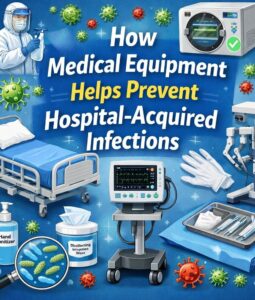
One of the key drivers behind the adoption of Disposable Medical Equipment is improved Hospital Infection Control. Hospital-acquired infections (HAIs) continue to be a significant challenge, affecting millions of patients each year and increasing healthcare costs.
Traditional reusable devices, even when sterilized, carry the risk of residual contamination. With Single-Use Medical Devices, hospitals can minimize these risks effectively. Devices such as disposable endoscopes, surgical drapes, and catheters prevent pathogens from spreading between patients.
For healthcare providers, this not only ensures patient safety but also strengthens their reputation for quality care. Research indicates that hospitals implementing disposable medical solutions experience a measurable decline in HAIs, making them a cost-saving investment in the long run.
Key Benefits of Disposable Medical Equipment
Enhanced Safety and Infection Control
Disposable Medical Equipment directly supports Hospital Infection Control initiatives. By using devices only once, hospitals prevent cross-contamination and reduce the risk of disease transmission. This is particularly critical in operating rooms, intensive care units, and infectious disease wards.
Operational Efficiency
Single-Use Medical Devices eliminate the need for sterilization and maintenance processes. Medical staff can focus more on patient care rather than cleaning and tracking reusable instruments. Faster turnover times also allow hospitals to serve more patients safely.
Cost Management
While disposables may initially appear more expensive, the overall savings are substantial. Hospitals save on sterilization equipment, labor costs, and infection-related complications. Bulk procurement further reduces per-unit costs.
Regulatory Compliance
Stricter healthcare regulations emphasize infection prevention. Disposable Medical Equipment helps hospitals meet hygiene and safety standards consistently and efficiently.
Innovation and Advanced Materials
Modern disposable devices are made from advanced materials that enhance performance during single use. Innovations include biodegradable plastics, improved ergonomics, and devices integrated with digital monitoring features.
Popular Types of Disposable Medical Equipment in 2025
In 2025, the most commonly used disposable medical devices include:
- Syringes and needles that reduce contamination and needle-stick injuries
- Surgical gloves and gowns that protect patients and healthcare staff
- IV catheters and tubing that significantly reduce bloodstream infections
- Endoscopes and diagnostic devices that eliminate reprocessing risks
- Swabs and sample collection kits that ensure accurate, contamination-free testing
These products demonstrate that Disposable Medical Equipment is now a critical component of Hospital Infection Control protocols.
Environmental Considerations and Sustainability
While Disposable Medical Equipment improves safety, environmental concerns remain important. Hospitals are adopting eco-friendly alternatives such as biodegradable plastics and energy-efficient disposal systems.
Manufacturers are investing in sustainable materials, recycling initiatives, and waste-to-energy solutions. By 2025, green innovations are playing a larger role, helping hospitals balance patient safety with environmental responsibility.
How Hospitals Are Integrating Disposable Medical Equipment
Strategic Procurement
Hospitals are forming long-term partnerships with reliable suppliers. Bulk purchasing and standardized products improve cost control and supply chain efficiency.
Staff Training
Proper usage of Single-Use Medical Devices requires continuous staff training. Hospitals are using workshops, simulations, and digital learning platforms to ensure safe handling.
Data-Driven Monitoring
Digital healthcare systems track usage patterns to predict demand and minimize waste. This improves efficiency while supporting Hospital Infection Control.
Patient-Centered Care
Disposable devices contribute to safer procedures, shorter treatment times, and reduced infection risks, resulting in improved patient satisfaction.
Future Trends in Disposable Medical Equipment
Several innovations are shaping the future of Single-Use Medical Devices:
- Smart disposable devices with IoT-based monitoring
- Biodegradable materials to reduce environmental impact
- Personalized single-use devices for specialized procedures
- Automated inventory systems to improve efficiency and reduce waste
These trends confirm that Disposable Medical Equipment will continue evolving into smarter, safer, and more sustainable solutions.
Challenges and Considerations
Despite the advantages, some challenges remain:
- Cost perception and budget planning
- Environmental impact and waste management
- Dependence on reliable supply chains
Strategic planning helps healthcare facilities balance safety, sustainability, and efficiency.
Conclusion
The shift toward Disposable Medical Equipment is redefining modern healthcare. Driven by safety, efficiency, and Hospital Infection Control, Single-Use Medical Devices reduce contamination risks, streamline operations, and enhance patient care.
As 2025 progresses, disposable medical solutions are becoming standard practice rather than optional upgrades. With ongoing technological advancements and sustainability efforts, Disposable Medical Equipment will continue to play a vital role in shaping the future of healthcare.