In 2025, healthcare providers face increasing pressure to maintain patient safety while complying with evolving medical equipment sterilization standards, adopting advanced sterilization technologies, and strengthening infection control in healthcare environments. As medical procedures become more complex and healthcare-associated infections (HAIs) remain a global concern, effective sterilization of medical equipment is no longer optional—it is a critical operational priority. This guide explores the latest best practices, technologies, and compliance strategies shaping medical equipment sterilization in 2025. Know more..
Why Medical Equipment Sterilization Matters More Than Ever
Medical equipment sterilization plays a foundational role in modern healthcare delivery. With rising patient volumes, antibiotic-resistant pathogens, and stricter regulations, failure to meet medical equipment sterilization standards can lead to infections, legal penalties, and reputational damage.
Strong infection control in healthcare depends on consistent, validated, and well-documented sterilization processes. In 2025, hospitals and clinics are expected to go beyond basic cleaning and adopt advanced sterilization technologies that provide higher precision, traceability, and safety.
Evolving Medical Equipment Sterilization Standards in 2025
Regulatory authorities worldwide continue to refine medical equipment sterilization standards to address emerging risks. In 2025, standards emphasize risk-based sterilization protocols, validation and routine performance monitoring, compatibility with complex reusable devices, and digital documentation for audits.
Compliance with updated medical equipment sterilization standards ensures healthcare facilities align with international benchmarks while strengthening infection control in healthcare environments.
Advanced Sterilization Technologies Transforming Healthcare
The adoption of advanced sterilization technologies is a defining trend in 2025. These technologies deliver faster cycles, improved material compatibility, and enhanced safety.
Low-Temperature Hydrogen Peroxide Sterilization
Hydrogen peroxide vapor systems are widely adopted advanced sterilization technologies that enable safe sterilization of heat-sensitive devices. These systems fully support medical equipment sterilization standards while enhancing infection control in healthcare.
Steam Sterilization with Smart Controls
Modern steam sterilizers now feature AI-driven sensors, real-time monitoring, and automated data logging. These advanced sterilization technologies improve consistency and reduce manual errors.
UV-C and Pulsed Light Systems
UV-based advanced sterilization technologies are increasingly used for room and surface disinfection. While not a replacement for core methods, they significantly support infection control in healthcare by reducing environmental contamination.
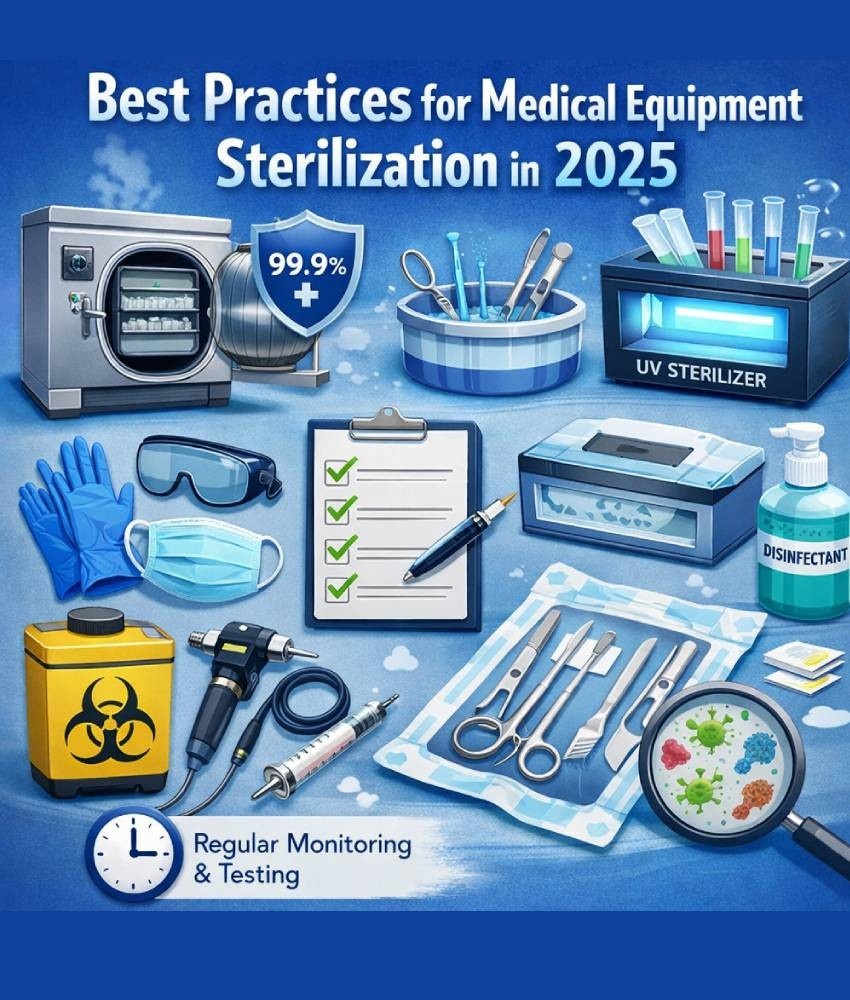
Best Practices for Medical Equipment Sterilization in 2025
To meet modern medical equipment sterilization standards, healthcare facilities must implement structured and repeatable best practices.
Proper Cleaning Before Sterilization
Effective sterilization begins with thorough cleaning. Organic residues can reduce the effectiveness of even the most advanced sterilization technologies, making pre-cleaning essential for strong infection control in healthcare.
Correct Sterilization Method Selection
Different devices require different sterilization techniques. Choosing the correct method protects device integrity while ensuring compliance with medical equipment sterilization standards.
Routine Validation and Monitoring
Routine biological and chemical testing confirms sterilization effectiveness. This practice strengthens infection control in healthcare and supports regulatory compliance.
Role of Automation and Digitalization
Automation is redefining medical equipment sterilization standards in 2025. Smart systems now offer automated cycle selection, digital instrument tracking, and cloud-based documentation.
These capabilities are core components of advanced sterilization technologies, improving workflow efficiency while reinforcing infection control in healthcare.
Infection Control in Healthcare Beyond Sterilization
Although sterilization is critical, comprehensive infection control in healthcare requires integration with wider safety protocols.
Staff Training and Competency
Even the best advanced sterilization technologies rely on skilled personnel. Regular staff training ensures adherence to medical equipment sterilization standards.
Environmental Hygiene Integration
Sterilized equipment must be properly stored and transported to maintain infection control in healthcare effectiveness.
Continuous Monitoring and Improvement
Tracking infection trends allows facilities to refine sterilization workflows and remain aligned with evolving medical equipment sterilization standards.
Challenges in Medical Equipment Sterilization
Healthcare facilities continue to face challenges such as complex device designs, higher costs of advanced sterilization technologies, and strict regulatory demands tied to medical equipment sterilization standards.
Overcoming these challenges is essential for sustainable infection control in healthcare.
Sustainability and Eco-Friendly Sterilization Practices
Sustainability is now embedded within medical equipment sterilization standards. Eco-conscious advanced sterilization technologies reduce energy consumption, water usage, and chemical waste while maintaining strong infection control in healthcare outcomes.
Documentation and Traceability Requirements
In 2025, documentation is just as important as sterilization itself. Digital records ensure traceability, support audits, and reinforce medical equipment sterilization standards while improving transparency in infection control in healthcare.
Preparing Healthcare Facilities for the Future
To remain compliant and competitive, healthcare facilities should invest in advanced sterilization technologies, regularly update sterilization protocols, and strengthen infection control in healthcare policies in line with evolving medical equipment sterilization standards.
Global Trends Influencing Medical Equipment Sterilization
Global alignment of medical equipment sterilization standards is driving innovation and accelerating adoption of advanced sterilization technologies, resulting in improved infection control in healthcare worldwide.
Benefits of Following Best Practices
Following best practices leads to reduced healthcare-associated infections, improved patient trust, regulatory compliance, operational efficiency, and stronger infection control in healthcare systems.
Final Thoughts
In 2025, advanced sterilization technologies, strict medical equipment sterilization standards, and proactive infection control in healthcare strategies define modern medical facilities. By adopting innovation-driven sterilization practices, healthcare providers can ensure patient safety, regulatory compliance, and long-term operational success.