Smart Medical Devices, Digital Healthcare Technology, and Connected Medical Devices are transforming the global healthcare industry at an unprecedented pace. From real-time patient monitoring to AI-powered diagnostics, these innovations are reshaping how healthcare providers deliver care, improve outcomes, and reduce operational costs. As hospitals and clinics move toward value-based care, the integration of Smart Medical Devices, Digital Healthcare Technology, and Connected Medical Devices has become essential rather than optional.
In this article, we explore how Smart Medical Devices are revolutionizing modern healthcare, the role of Digital Healthcare Technology, and why Connected Medical Devices are the backbone of next-generation medical systems. Know more..
What Are Smart Medical Devices?
Smart Medical Devices are advanced healthcare tools equipped with sensors, software, connectivity, and data analytics capabilities. Unlike traditional medical equipment, Smart Medical Devices can collect, analyze, and transmit data in real time, enabling proactive and personalized patient care.
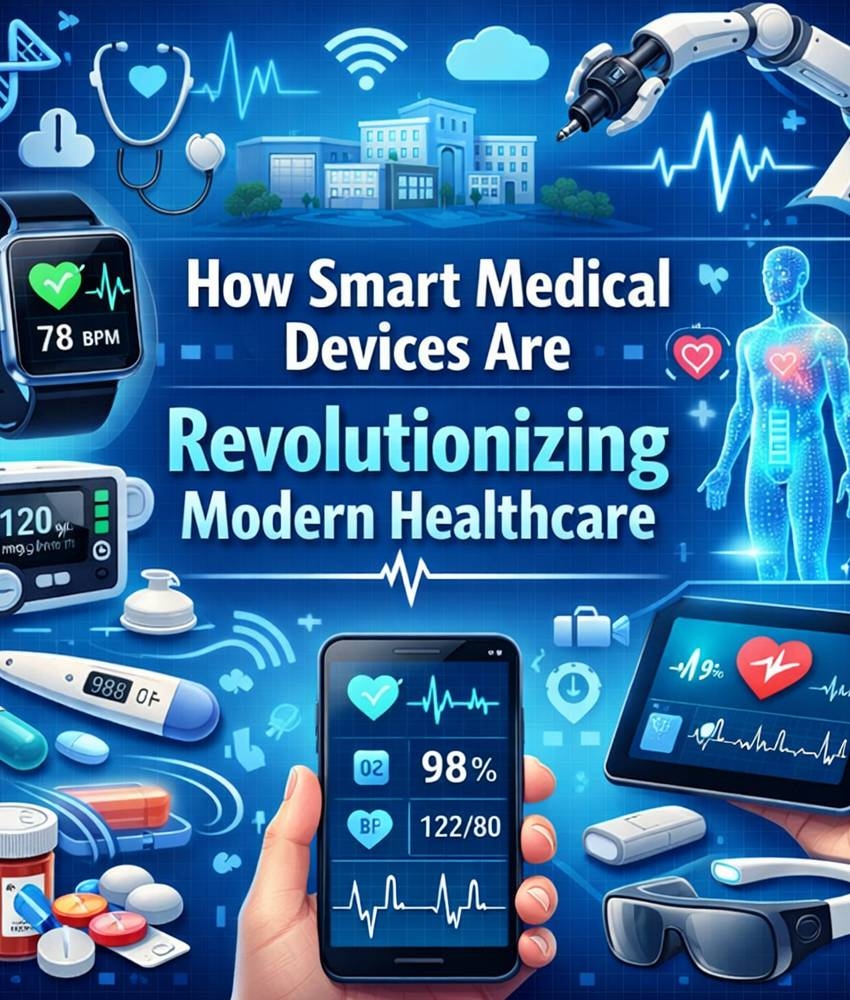
Examples of Smart Medical Devices include wearable heart monitors, smart infusion pumps, digital imaging systems, and AI-enabled diagnostic machines. These devices are a critical component of Digital Healthcare Technology, helping healthcare providers make faster and more accurate decisions.
By leveraging Connected Medical Devices, healthcare systems can create an interconnected ecosystem that improves efficiency, safety, and patient engagement.
The Rise of Digital Healthcare Technology
Digital Healthcare Technology refers to the use of digital tools, platforms, and intelligent systems to enhance healthcare delivery. This includes Smart Medical Devices, electronic health records, telemedicine platforms, and cloud-based analytics.
The adoption of Digital Healthcare Technology is driven by growing patient demand for remote care, increasing chronic disease prevalence, shortages of healthcare professionals, and the need for cost-effective solutions.
Through Digital Healthcare Technology, healthcare providers can monitor patients remotely using Connected Medical Devices, reduce hospital readmissions, and improve overall clinical outcomes.
How Connected Medical Devices Improve Patient Monitoring
Connected Medical Devices play a vital role in continuous patient monitoring. These devices transmit patient data directly to healthcare providers, enabling early detection of health issues.
Key benefits of Connected Medical Devices include real-time vital sign monitoring, early intervention for critical conditions, reduced emergency admissions, and improved patient safety.
Wearable Smart Medical Devices, such as smart ECG monitors and glucose sensors, demonstrate how Connected Medical Devices enhance preventive care through Digital Healthcare Technology.
Smart Medical Devices in Remote Patient Care
Remote patient monitoring is one of the most impactful applications of Smart Medical Devices. Using Connected Medical Devices, healthcare professionals can track patients’ health conditions outside traditional clinical settings.
Digital Healthcare Technology enables home-based care for chronic patients, reduces hospital congestion, and supports continuous health tracking.
Remote care powered by Smart Medical Devices improves patient comfort while maintaining high clinical standards, making Digital Healthcare Technology essential for modern healthcare systems.
Role of AI and Data Analytics in Smart Medical Devices
Artificial intelligence and data analytics are core components of Smart Medical Devices. These technologies analyze large volumes of patient data collected through Connected Medical Devices to identify patterns and predict outcomes.
Benefits of AI-enabled Digital Healthcare Technology include faster diagnosis, personalized treatment plans, reduced human error, and predictive healthcare insights.
AI-powered Smart Medical Devices are helping clinicians transition from reactive treatment to proactive healthcare management.
Enhancing Hospital Efficiency with Connected Medical Devices
Hospitals increasingly rely on Connected Medical Devices to streamline operations and reduce inefficiencies. Through Digital Healthcare Technology, these devices enable automated workflows and centralized monitoring.
Operational advantages of Smart Medical Devices include improved asset tracking, reduced equipment downtime, automated data documentation, and enhanced staff productivity.
By integrating Connected Medical Devices, hospitals can significantly improve patient throughput and care quality.
Smart Medical Devices and Patient Engagement
Patient engagement is a crucial element of effective healthcare delivery. Smart Medical Devices empower patients by providing direct access to their health data.
Through Digital Healthcare Technology, patients can track vital signs, receive medication reminders, share data with healthcare providers, and actively participate in care decisions.
This patient-centric approach, enabled by Connected Medical Devices, improves treatment adherence and long-term health outcomes.
Cybersecurity and Data Protection in Digital Healthcare Technology
As Smart Medical Devices and Connected Medical Devices generate large volumes of sensitive data, cybersecurity has become a top priority. Protecting patient information is essential for maintaining trust in Digital Healthcare Technology.
Key security measures include data encryption, secure cloud platforms, regular software updates, and compliance with healthcare regulations.
Robust cybersecurity ensures that Smart Medical Devices remain safe, reliable, and compliant with international healthcare standards.
Smart Medical Devices in Diagnostics and Imaging
Diagnostics and medical imaging have significantly advanced with the adoption of Smart Medical Devices. AI-powered imaging systems and smart diagnostic tools improve accuracy and speed.
Benefits include faster image processing, improved disease detection, and reduced diagnostic errors.
By combining Connected Medical Devices with Digital Healthcare Technology, healthcare providers can deliver precise and timely diagnoses.
The Future of Connected Medical Devices
The future of healthcare is deeply rooted in Connected Medical Devices. As 5G, AI, and cloud computing continue to evolve, Smart Medical Devices will become more intelligent and interconnected.
Emerging trends in Digital Healthcare Technology include fully integrated smart hospitals, advanced wearable Smart Medical Devices, predictive healthcare analytics, and personalized medicine.
Healthcare providers that adopt Connected Medical Devices today will be better prepared for future healthcare challenges.
Benefits for Healthcare Providers and Patients
The combined impact of Smart Medical Devices, Digital Healthcare Technology, and Connected Medical Devices delivers measurable value.
Healthcare providers benefit from improved clinical decision-making, reduced operational costs, and enhanced workflow efficiency. Patients experience better access to care, improved health outcomes, and greater convenience.
Conclusion
Smart Medical Devices are revolutionizing modern healthcare by enabling real-time monitoring, data-driven decision-making, and patient-centered care. Supported by Digital Healthcare Technology and powered by Connected Medical Devices, the healthcare industry is moving toward a more efficient, intelligent, and connected future.
As adoption continues, Smart Medical Devices and Connected Medical Devices will remain critical to improving care quality, patient safety, and healthcare sustainability in the digital era.