Since Brexit, the medical device industry has had to adapt to a transformed regulatory landscape. For manufacturers, understanding UKCA vs CE, managing post Brexit compliance, and staying current with UK medical rules is critical to continue trading in both the UK and EU. In this guide, we break down the technical, procedural, and strategic aspects of navigating this new regulatory frontier. Know more..
Introduction to Medical Compliance Post-Brexit
The Impact of Brexit on CE and UKCA
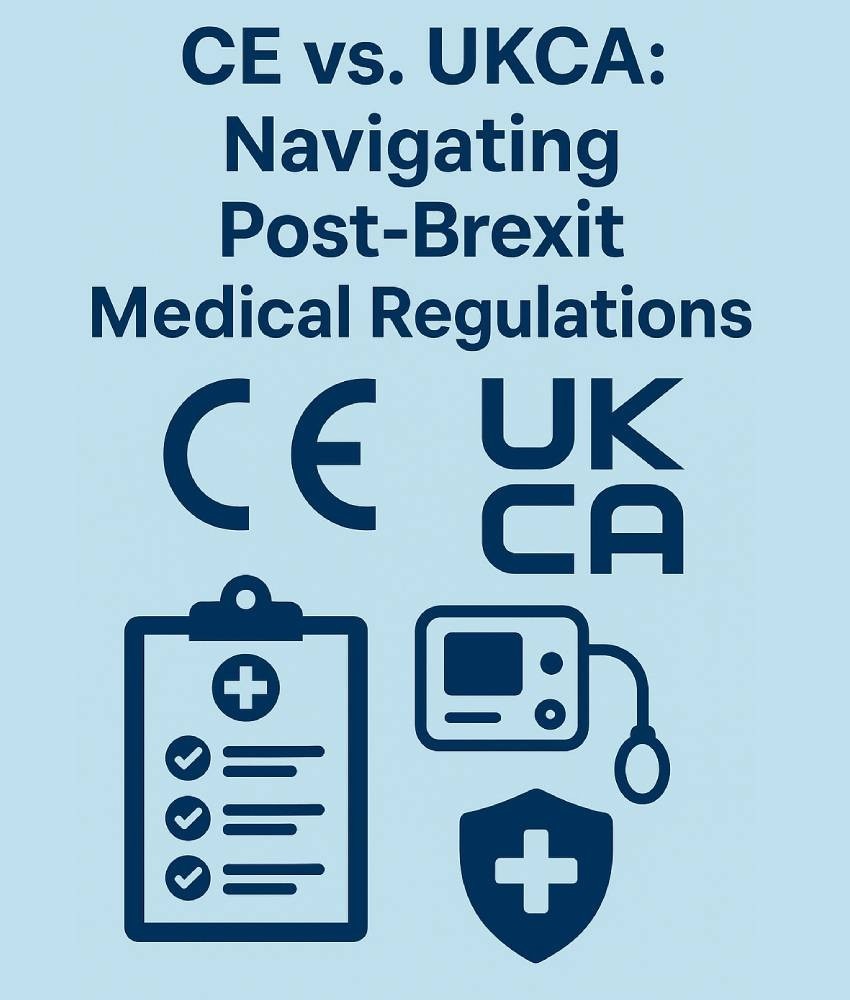
Before Brexit, the CE mark was the universal indicator of conformity for medical devices across both the EU and UK. Post-Brexit, the UK introduced its own mark—the UKCA (UK Conformity Assessed) mark—replacing the CE mark for Great Britain (England, Scotland, and Wales), while Northern Ireland follows a slightly different system.
Why Understanding UKCA vs CE is Essential
For companies looking to sell or distribute medical devices in both regions, the distinction between UKCA vs CE is not just regulatory—it directly affects access to markets, documentation, packaging, and approval timelines. Navigating post Brexit compliance is the only way to remain competitive and legal in the shifting landscape of UK medical rules.
CE Marking: An Overview
Origin and Scope of CE Marking
CE (Conformité Européenne) marking signifies conformity with EU health, safety, and environmental protection standards. It remains valid in the EU and continues to apply in Northern Ireland under the NI Protocol.
CE Marking for Medical Devices Under EU MDR
CE requirements for medical devices are governed under the EU MDR 2017/745, which includes extensive updates related to safety documentation, clinical evaluations, and post-market surveillance.
What is UKCA Marking?
UKCA Explained
The UKCA mark is the UK’s new product marking system that came into effect on January 1, 2021. For medical devices, its enforcement was extended, but it will eventually be mandatory for all products entering the UK market.
Scope of UKCA for Medical Devices
UK medical rules governing UKCA fall under the Medical Devices Regulations 2002 (as amended). These rules mirror EU MDR in some ways but are distinct and evolving under the guidance of the MHRA (Medicines and Healthcare products Regulatory Agency).
UKCA vs CE: Key Differences and Similarities
Regulatory Bodies (EU vs UK)
- CE: Overseen by EU Notified Bodies.
- UKCA: Regulated by UK Approved Bodies.
Understanding these bodies is central to navigating UKCA vs CE efficiently.
Technical Documentation & Conformity Assessment
While the types of documents required are similar, they must be submitted to the appropriate regional authority. Manufacturers must also maintain updated declarations of conformity specific to either CE or UKCA formats.
Post Brexit Compliance Timeline for Medical Devices
Important Dates for CE and UKCA Transition
- Until June 30, 2025: CE-marked medical devices can still be placed on the Great Britain market.
- After July 1, 2025: All devices must bear the UKCA mark unless exempt.
New Rules for Northern Ireland
Due to the Northern Ireland Protocol:
- CE mark remains valid.
- UKNI mark is required if a UK Approved Body is involved.
This unique situation demands careful post Brexit compliance planning.
How UK Medical Rules Affect Exporters and Manufacturers
Regulatory Landscape After Brexit
UK medical rules now diverge from EU law. The MHRA has introduced registration requirements and future reforms that may further separate UK requirements from the EU’s MDR and IVDR.
Risk Classification and UK-Specific Requirements
Risk-based classification remains similar, but vigilance and documentation standards are under review. Exporters must align with local expectations to maintain UK market access.
Labelling and Packaging Requirements under UKCA
Language, Logos, and Declarations
UKCA-labeled products must display:
- UKCA logo
- Responsible Person’s name and address (if outside the UK)
- English language instructions
These changes, though minor visually, are critical for UKCA vs CE compliance.
Unique Device Identification (UDI) Rules
The UK currently does not fully adopt the EU’s UDI system, though future harmonization is possible. Tracking devices remains a priority under UK medical rules.
Notified Bodies vs Approved Bodies: What’s Changed?
From EU Notified to UK Approved Bodies
Post-Brexit, Notified Bodies designated under EU law cannot issue UKCA certifications. New UK Approved Bodies like BSI and SGS UK Ltd have stepped in to fill this regulatory gap.
Impacts on SMEs and International Trade
The shift to UK Approved Bodies has increased costs and administrative burdens, especially for SMEs trying to maintain dual compliance under UKCA vs CE rules.
The Role of MHRA in Post-Brexit UK Medical Regulation
Registration with MHRA
All medical devices must now be registered with the MHRA before being placed on the GB market. This registration includes:
- Manufacturer details
- UDI data (if applicable)
- Declaration of conformity
Ongoing Surveillance and Enforcement
The MHRA monitors post-market performance, adverse incidents, and compliance—ensuring post Brexit compliance stays proactive.
Post Brexit Compliance for Non-UK Manufacturers
Representative Requirements
Overseas manufacturers must appoint a UK Responsible Person—equivalent to an EU Authorized Representative—to manage regulatory obligations.
Importation Protocols and Data Handling
Logistics and customs processes also differ from the EU model. Shipping documentation must clearly reference UKCA compliance and MHRA registration.
CE vs UKCA for Software-Based Medical Devices
AI, Apps, and Digital Health Compliance
AI and software used for diagnostics or treatment fall under medical device laws. The divergence between EU’s MDR Annex XVI and UK medical rules affects algorithm transparency, validation, and updates.
Cross-Border Challenges and Harmonization
Digital tools must meet both CE and UKCA if marketed in both regions. Dual compliance is essential for cross-border SaaS medical platforms.
UK Medical Rules: Special Rules for Northern Ireland
NI Protocol and Dual Marking
Medical devices for Northern Ireland may require both CE and UKNI markings, depending on the location of the assessment body.
EU Market Access from NI
Manufacturers in NI retain access to both the EU and GB markets under transitional rules. However, changes are expected pending UK-EU agreements.
Preparing for a Dual Certification Strategy
Pros and Cons of Dual UKCA & CE Compliance
Pros:
- Full market access to the EU and UK
- Reduced future transition costs
Cons:
- Increased audits
- Higher administrative and certification costs
Cost Considerations and Risk Mitigation
Investing in modular technical documentation and using multi-lingual labeling can ease the dual certification burden.
UKCA vs CE in the Global Market Context
Recognition by International Partners
While CE is widely recognized, UKCA is currently limited to Great Britain. Global exporters must treat them as separate approvals when targeting diverse regions.
Trade Agreements and Global Impact
Post-Brexit trade agreements may eventually promote UKCA recognition in certain Commonwealth countries, but that’s still in progress.
Common Pitfalls in Post-Brexit Compliance
Delayed Transitions
Many manufacturers delay the switch, risking non-compliance after the final CE grace period ends.
Documentation Gaps and Mislabeling
Incomplete conformity declarations or incorrect logos can result in product seizures and fines.
Steps to Transition from CE to UKCA Smoothly
Audits, Technical Files, and Compliance Teams
Start by reviewing:
- Product classification
- Technical files
- Current CE certificates
Set internal timelines to align with post Brexit compliance dates.
Training and Internal Communication
Educate cross-functional teams—regulatory, packaging, legal—on evolving UK medical rules to avoid operational disruptions.
FAQs About CE vs. UKCA and UK Medical Rules
Q1: Can I use CE and UKCA on the same label?
Yes, if the product meets the requirements of both regions and labeling is properly managed.
Q2: What is the deadline for using CE in the UK?
CE marking is valid until June 30, 2025 for most medical devices in Great Britain.
Q3: Do I need a UK Responsible Person if I’m outside the UK?
Yes, if you wish to sell in the UK, you must appoint a local representative.
Q4: Is UKCA recognized outside the UK?
Currently, no. CE remains the more internationally accepted mark.
Q5: How do I get a UKCA certificate?
Through a UK Approved Body after a conformity assessment based on UK regulations.
Q6: Does Northern Ireland require UKCA?
No, it follows EU rules and uses CE or CE+UKNI based on assessment body location.
Conclusion: Staying Ahead in a Changing Regulatory Landscape
Navigating UKCA vs CE, achieving post Brexit compliance, and following the evolving UK medical rules landscape is a complex but vital task for medical device manufacturers. Proactive planning, investment in expertise, and ongoing surveillance will position your business to thrive in both the UK and EU markets.