In today’s fast-paced global healthcare system, the right needle gauge selection can make all the difference in patient safety, injection accuracy, and supply efficiency. Whether you’re working with a specialized hypodermic needle manufacturer or sourcing from a top injection needle exporter, understanding needle gauges is a non-negotiable aspect of smart procurement. With needle innovation and demand growing worldwide, proper selection ensures both cost-effectiveness and optimal care. Know more..
Introduction to Hypodermic Needles and Injection Safety
The term “hypodermic” literally means “under the skin,” and that’s exactly what these needles are designed to do—deliver medication or extract fluids through skin penetration. A crucial component of any injection is the needle gauge, which directly influences how the injection feels, how quickly the fluid flows, and the degree of tissue trauma.
As medical procedures diversify, so does the need for different needle types. Selecting the correct gauge size can improve patient comfort, reduce complications, and support better treatment outcomes.
Understanding Needle Gauges: What the Numbers Mean
Needle gauges are identified by a numbering system: the higher the gauge, the thinner the needle. For example:
- 18G: thick and fast-flowing, used for drawing viscous fluids
- 22G–25G: common for vaccines and routine injections
- 27G–31G: ultra-thin for insulin or pediatric use
| Gauge Number | Outer Diameter (mm) | Common Uses |
| 18G | 1.27 | Blood collection, viscous meds |
| 21G | 0.82 | IM injections |
| 25G | 0.51 | Vaccinations, routine injections |
| 30G | 0.30 | Pediatric and insulin use |
Correct needle gauge selection depends on medication type, injection site, and patient profile.
Role of a Hypodermic Needle Manufacturer in Product Design
A professional hypodermic needle manufacturer plays a critical role in the quality and safety of needles. These manufacturers use state-of-the-art machinery to produce fine, burr-free tips that minimize patient discomfort and tissue damage.
Top-tier manufacturers also ensure:
- Sterile packaging
- Consistent inner diameters for predictable flow
- Regulatory certifications (ISO, CE, FDA)
Partnering with a certified hypodermic needle manufacturer ensures reliability in performance and global compliance.
Most Common Hypodermic Needle Gauges by Use Case
| Medical Application | Gauge Range | Rationale |
| Blood Donation | 16G–18G | High flow rate for rapid collection |
| Vaccinations | 22G–25G | Balance between comfort and effectiveness |
| Subcutaneous Injections | 26G–30G | Minimizes pain, ideal for sensitive skin |
| Intramuscular Injections | 21G–23G | Ensures deep delivery without excessive trauma |
Comparing Thin vs. Thick Gauge Needles
Thicker needles (lower gauge) are great for:
- Drawing blood quickly
- Administering viscous medications
Thinner needles (higher gauge) are preferred for:
- Comfort in pediatric or geriatric patients
- Precision dosing (e.g., insulin)
Global Trends in Needle Gauge Selection
Organizations like the WHO and CDC have published guidance on optimal gauge ranges for various programs. Notably, the post-COVID vaccination era has led to a surge in injection needle exporter activity worldwide, as nations rush to stock up on high-quality needles for mass immunization.
Emerging markets are shifting toward higher gauge (thinner) needles for improved patient compliance and reduced waste.
Why Healthcare Settings Rely on Certified Injection Needle Exporters
A reputable injection needle exporter brings:
- Large volume availability
- Worldwide shipping and regulatory support
- Transparent manufacturing standards
When choosing an exporter, consider:
- Batch traceability
- Freight timelines
- Sterilization documentation
How to Match Needle Length with Gauge Size
Length and gauge must work together to reach the desired tissue without causing harm. For example:
- Intramuscular injections typically need 1″–1.5″ length, 21–23G
- Subcutaneous injections use ½” length, 26–30G
Always consult the medication’s label and injection site protocol when choosing the right pairing.
Pediatric vs. Adult Injection Needs
Children need higher gauge (thinner) needles and shorter lengths for comfort and minimal trauma. Adults, particularly those with high BMI, may require thicker, longer needles to ensure deep tissue penetration.
A knowledgeable hypodermic needle manufacturer will often supply pediatric-specific products with ergonomic designs for smaller hands and better control.
How Gauge Affects Pain, Flow Rate, and Trauma
- Higher gauge needles cause less pain, but may deliver fluids more slowly.
- Lower gauge needles deliver fast but may increase discomfort.
Clinical studies show that 25G–27G offers the best balance for intramuscular shots, while 30G+ is ideal for insulin users and needle-sensitive patients.
Materials Used in Hypodermic Needles
Top materials used include:
- Surgical-grade stainless steel for durability and sharpness
- Silicone coatings for smoother skin penetration
- Plastic hubs (color-coded by gauge for easy ID)
This is where a professional hypodermic needle manufacturer makes a big difference—by sourcing biocompatible, non-toxic materials that pass international testing.
Needle Gauge Selection in Vaccination Campaigns
Mass vaccination campaigns require:
- Affordable, high-volume needle production
- Needles that suit a wide age range
- Color-coded packs for quick deployment
Many programs now work with an experienced injection needle exporter to supply consistent gauge sizes (typically 23G–25G) that reduce complications and improve throughput.
The Importance of Sterilization and Safety Testing
Regulations demand:
- EO sterilization (Ethylene Oxide)
- Gamma irradiation for certain needle types
- Compliance with ISO 7864 and EN 20594
Manufacturers must test:
- Tip sharpness
- Tensile strength
- Leakage and flow under pressure
Reliable sterilization and documentation are essential when buying from a hypodermic needle manufacturer or exporter.
Best Practices When Sourcing from an Injection Needle Exporter
- Ask for product samples and test reports
- Confirm gauge-size availability in bulk
- Verify CE/FDA/ISO certifications
- Inquire about color-coded packaging for gauge differentiation
Packaging and Labelling for Gauge Identification
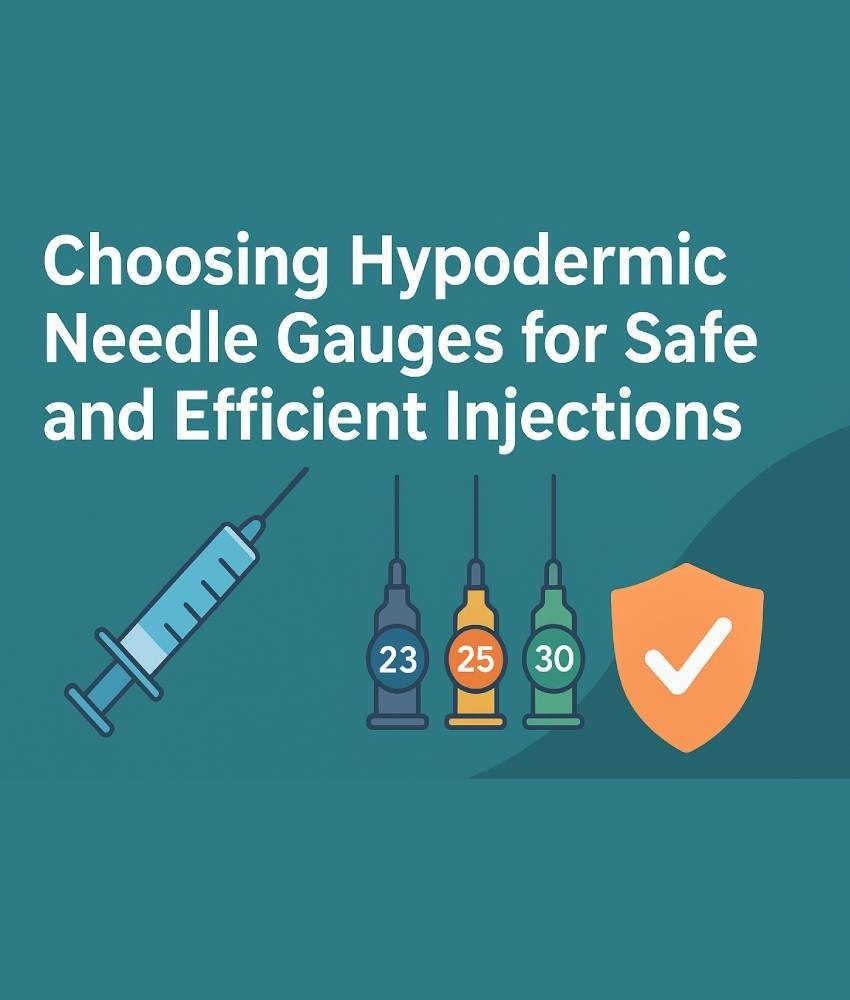
Standard color coding helps avoid confusion:
- Green = 18G
- Black = 22G
- Blue = 23G
- Orange = 25G
- Grey = 27G
Exporters and manufacturers must comply with this global standard to minimize needle mix-ups.
Common Errors in Needle Gauge Selection
- Using a low-gauge needle for subcutaneous injection (can cause bleeding)
- Selecting a high-gauge needle for thick fluids (causes clogging)
- Failing to consider patient-specific needs (age, BMI, condition)
- Mislabeling or misinterpreting color codes
FAQs About Hypodermic Needle Gauge Selection
Q1: What does needle gauge mean?
A: It refers to the needle’s diameter. Higher gauge = thinner needle.
Q2: What is the most commonly used needle gauge?
A: 23G–25G are widely used for routine injections and vaccinations.
Q3: Can I use the same gauge for all patients?
A: No. Gauge depends on the medication, site, and patient type.
Q4: How do manufacturers ensure quality?
A: Leading hypodermic needle manufacturers follow ISO and FDA protocols with rigorous QC.
Q5: Where can I buy certified needles in bulk?
A: From a trusted injection needle exporter who offers volume pricing and documentation.
Q6: Do color codes for needle gauges follow international standards?
A: Yes. The ISO 6009 standard mandates specific colors for each gauge.
Conclusion
Choosing the right hypodermic needle gauge is more than a technical decision—it’s a vital part of patient care, safety, and supply efficiency. By partnering with a reliable hypodermic needle manufacturer and experienced injection needle exporter, you ensure that your healthcare facility is equipped with precision-engineered products tailored for every clinical need. Smart needle gauge selection helps reduce errors, improve comfort, and streamline operations across the medical landscape.