
In today’s rapidly evolving healthcare supply chain, having the right medical syringe sizes guide, optimizing bulk syringe procurement, and partnering with a trusted hospital syringe distributor can make or break international hospital procurement success. Whether you’re supplying a 50-bed rural clinic or a 2,000-bed metropolitan hospital, matching syringe sizes with application needs ensures efficient care, reduces waste, and keeps frontline professionals well-equipped.
This article will walk procurement teams, distributors, and hospital buyers through a smart strategy for selecting syringe sizes based on clinical use, regional regulations, and global logistics realities. Know more..
1. Why Syringe Size Matters in Global Healthcare
Syringe selection isn’t just about volume—it’s about compatibility, safety, accuracy, and workflow. Using the wrong size syringe in the wrong context can lead to medication errors, dose inaccuracy, or compromised patient safety.
Key factors influenced by syringe size include:
- Injection accuracy
- Backpressure control
- Patient comfort
- Drug wastage
- Storage and packaging space
- Compatibility with needles and connectors
That’s why every hospital syringe distributor and purchasing agent should rely on a well-structured medical syringe sizes guide to make informed decisions.
2. Standard Syringe Sizes in Global Markets
Understanding the most commonly used syringe volumes in international healthcare helps buyers plan for standardized inventory. Here’s a quick breakdown:
| Syringe Size | Common Uses |
| 1 mL | Insulin, allergy injections, vaccines |
| 3 mL | Injections, anesthesia, vaccine delivery |
| 5 mL | Antibiotics, antiemetics, steroids |
| 10 mL | Irrigation, aspiration, drug reconstitution |
| 20 mL | Fluid withdrawal, wound irrigation |
| 30 mL | Tube feeding, flushes |
| 50/60 mL | IV flushing, catheter use, oral dosing |
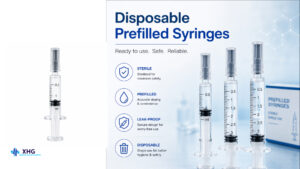
A practical medical syringe sizes guide should include these volumes, plus special-purpose syringes (e.g., oral syringes, enteral syringes) tailored to pediatric or geriatric care.
3. Clinical Applications That Determine Syringe Sizing
Choosing the right syringe size means understanding where and how it will be used. Here’s a breakdown by clinical department:
Emergency & Critical Care
- 3 mL and 10 mL are ideal for medication injections and anesthesia.
- 50 mL used for IV drug infusion or flushing.
Pediatrics
- Smaller syringes (0.5 mL to 3 mL) offer greater control for dosing precision.
- Oral syringes without needles are often used for liquids.
Surgery & Anesthesia
- 20 mL to 50 mL syringes are standard for aspiration and irrigation.
- Locking tip syringes help prevent disconnection during procedures.
Wound Care
- 30 mL to 60 mL syringes with curved tips are ideal for wound irrigation.
Infectious Disease & Immunization
- 1 mL and 3 mL syringes are standard for vaccine delivery.
This section of your medical syringe sizes guide helps align product specifications with department-level needs.
4. Tips for Bulk Syringe Procurement Strategy
Smart bulk syringe procurement doesn’t just mean buying more—it means buying the right mix at the right quality with the right certifications.
4.1 Forecasting Demand Accurately
- Analyze usage data across departments.
- Factor in seasonal demands (e.g., flu season, vaccination drives).
- Align inventory with national health guidelines and protocols.
4.2 Balancing Size Distribution
Avoid overordering a single size. Even small facilities need multiple types to cover diverse procedures.
Use a demand-weighted mix such as:
- 40% – 3 mL
- 25% – 5 mL
- 15% – 10 mL
- 10% – 20/30 mL
- 10% – 1 mL / specialty
4.3 Consider Syringe Material & Features
- Luer lock vs. slip tip: Luer lock ensures secure needle fit, preferred in high-pressure or IV uses.
- Polypropylene barrels: Durable and chemical-resistant.
- Graduation marks: Clear, accurate markings reduce dosing errors.
4.4 Verify Sterilization & Packaging
For sterile syringes, check the type of sterilization (EO, gamma, etc.) and packaging—single or bulk wrap. For bulk syringe procurement, logistics cost is significantly influenced by packaging efficiency.
5. Compliance and Certifications Matter
Every reputable hospital syringe distributor must provide proof of regulatory compliance for international shipment:
| Region | Required Certification |
| EU | CE marking under MDR |
| USA | FDA 510(k) or exemption |
| Canada | Health Canada MDL |
| Australia | TGA registration |
| LATAM/MEA | Country-specific registrations |
When sourcing for bulk syringe procurement, always confirm that your supplier includes documentation to verify CE/FDA certification, batch testing, and sterile processing protocols.
6. Choosing the Right Hospital Syringe Distributor
The best hospital syringe distributor offers more than just syringes. They provide:
6.1 Global Logistics Support
- Fast lead times
- Multi-region warehousing
- Freight optimization
6.2 Custom Kitting & Packaging
Ability to bundle syringes with needles, disinfectants, or custom labeling per hospital preferences.
6.3 Regulatory Expertise
Vetted compliance support and pre-filled UDI data for FDA and CE systems.
6.4 Traceability & Recall Systems
Digital systems to track batch/lot numbers across global inventory.
Ask potential distributors about these services before committing to large-volume bulk syringe procurement.
7. Managing Syringe Inventory Across Borders
International procurement comes with challenges—here’s how to mitigate them:
- Standardize SKUs: Minimize variety to reduce confusion and storage costs.
- Monitor Shelf Life: Rotate stock to avoid expiration-related losses.
- Bundle Supplies: Order with associated items like needles, gloves, or catheters to optimize freight.
A good medical syringe sizes guide can double as a forecasting and ordering tool across hospital networks.
8. Avoiding Common Mistakes in Syringe Procurement
| Mistake | Impact | Fix |
| Ordering the wrong tip type (slip vs. lock) | Incompatible with current needle stock | Cross-check usage before procurement |
| Over-reliance on one size | Stockouts in specialty areas | Use a balanced mix guided by usage data |
| Ignoring packaging format | Storage and contamination risks | Specify wrap type (sterile, single-use, bulk) |
| Choosing unverified suppliers | Risk of non-compliance | Work only with certified hospital syringe distributors |
Avoid these pitfalls by consulting a reliable medical syringe sizes guide and verifying supplier credentials.
9. Case Study: Regional Procurement Success Story
A public hospital system in Southeast Asia needed to streamline syringe procurement across 40+ locations.
Challenges:
- Inconsistent syringe sizes
- Over-ordering 10 mL syringes but understocking 3 mL
- Import delays due to incorrect labeling
Solution:
- Partnered with a certified hospital syringe distributor offering CE/FDA-compliant syringes
- Used a custom medical syringe sizes guide to develop demand forecasts
- Switched to kitted packaging, reducing stockouts by 45%
In the first year, the system saved 18% on total syringe spend and reduced expired inventory by 22%.
10. Final Thoughts: Size Isn’t Just a Number—It’s a Strategy
In syringe procurement, size selection is a strategic move—not just a logistics choice. With the right medical syringe sizes guide, smarter bulk syringe procurement, and a trusted hospital syringe distributor, your organization can optimize patient care, control costs, and meet international compliance with confidence.
Ready to Streamline Your Syringe Procurement?
We specialize in full-spectrum syringe solutions for hospitals, clinics, and distributors worldwide. Our team provides:
- CE and FDA-compliant disposable syringes
- Custom syringe size packaging
- Fast-track logistics for bulk orders
- Expert consultation on optimal size distribution
📩 Contact us today for a custom quote or access our complete medical syringe sizes guide and bulk syringe procurement toolkit.