
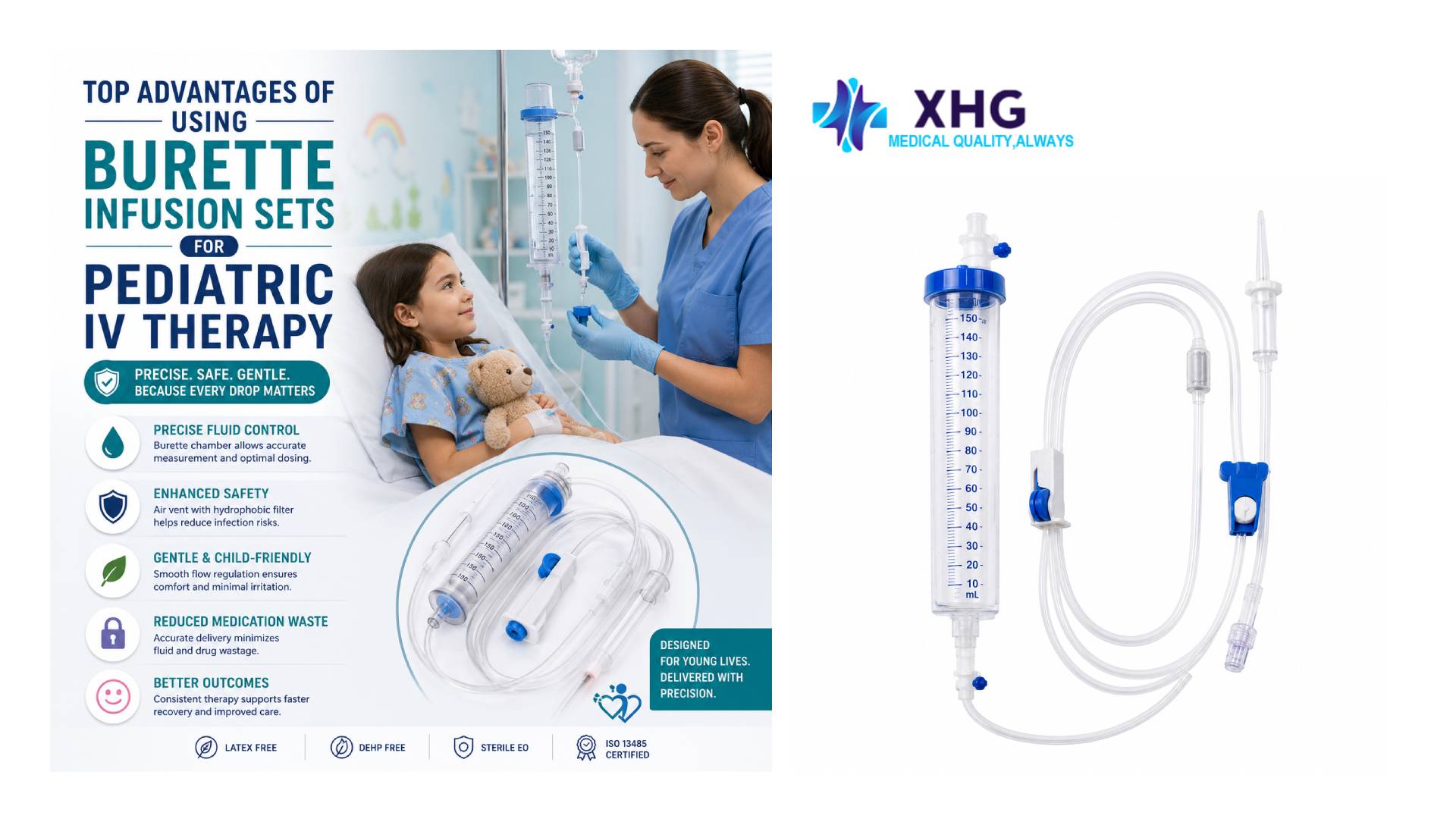
Administering intravenous therapy to pediatric patients demands a level of precision and safety that goes beyond standard adult care protocols. The physiological differences in children, particularly neonates and infants, require medical equipment that allows for meticulous fluid management. Among the essential tools in a pediatrician’s arsenal is the specialized burette infusion set, which provides the granular control necessary for safe treatment. For distributors and healthcare providers, understanding the value of these devices is critical for ensuring optimal patient outcomes and managing inventory effectively. As the healthcare landscape evolves toward more specialized care, the demand for high-quality, customizable burette infusion sets continues to rise, making them a cornerstone of pediatric IV therapy.
1. Why Precision Matters in Pediatric Care and Fluid Management
The physiological composition of pediatric patients, especially newborns, renders them highly susceptible to fluid overload. Their kidneys are not fully developed to handle excessive volumes, and even a minor miscalculation in fluid delivery can lead to serious complications such as pulmonary edema or heart failure. Consequently, healthcare providers rely on a burette infusion set to deliver medication and fluids in small, accurately measured doses, typically ranging from 1ml to 150ml at a time.
This device acts as a secondary reservoir, allowing medical professionals to administer exact volumes rather than relying on the less precise drop rates of standard administration sets. The ability to control fluid intake with such granularity is not merely a convenience but a clinical necessity for safeguarding the vulnerable health of young patients.
Standard IV sets often lack the calibration required for low-volume infusion, posing significant risks in a pediatric setting. Unlike adult sets where a slight variance in volume is negligible, pediatric therapy requires strict adherence to prescribed limits. A burette set for accurate fluid control addresses this by incorporating a calibrated chamber that enables the visualization of fluid volume in milliliters. This feature ensures that the prescribed amount of fluid is the exact amount delivered, minimizing the risk of accidental over-infusion. Furthermore, the design of these sets often includes micro-drip technology, typically delivering 60 drops per ml, which offers an additional layer of control for slow infusion rates that are common in neonatal care.
Recent 2025 industry data highlights a growing emphasis on medication error reduction in pediatric wards, driving the adoption of specialized equipment. Statistics indicate that hospitals implementing dedicated burette infusion sets for pediatric use have seen a measurable decrease in infusion-related adverse events. As patient safety protocols become increasingly stringent, the reliance on standard IV sets for children is being phased out in favor of these precision tools. Market analysis suggests that by 2026, the integration of safety-engineered devices will become a standard criterion for hospital accreditation, further solidifying the role of precise fluid management tools in modern healthcare.
For wholesale buyers and distributors, this trend underscores the importance of stocking a diverse range of burette infusion sets to meet the escalating demand for precision medicine. Healthcare facilities are actively seeking partners who can supply reliable, high-precision equipment that complies with evolving safety standards. By offering a portfolio that prioritizes accuracy and safety, wholesalers can position themselves as vital contributors to pediatric patient care. Additionally, providing products that feature clear calibrations and user-friendly designs helps healthcare providers adhere to strict protocols, thereby reducing liability and enhancing the overall quality of care provided to young patients.
2. How Burette Infusion Sets Enhance Patient Safety and Outcomes
The design of a burette infusion set inherently promotes patient safety through several integrated mechanisms that prevent common IV therapy complications. One of the primary safety features is the automated shut-off valve or float mechanism within the burette chamber. This critical component automatically stops the flow of fluid once the chamber is empty, preventing air from entering the intravenous line. Air embolisms are a life-threatening risk, particularly in small children, and the air-eliminating feature of these sets provides a crucial safeguard. By mechanically blocking the passage of air, these sets allow nurses to focus on other aspects of patient care without the constant need to monitor the fluid level for the risk of an empty bag.
Beyond air embolism prevention, these sets significantly reduce the likelihood of medication dosage errors. In a busy pediatric ward, distractions are frequent, and manual calculation of drip rates can lead to potentially dangerous mistakes. The burette set for accurate fluid control allows practitioners to fill the chamber with a specific, pre-calculated volume of medication or fluid. Once that volume is infused, the flow stops, ensuring that the patient receives exactly the prescribed amount. This “volume-limiting” capability is particularly beneficial for potent medications where toxicity thresholds are low, thereby ensuring that therapeutic levels are maintained without crossing into toxic ranges.
Clinical observations and studies from late 2024 and 2025 reinforce the correlation between specialized infusion equipment and improved patient outcomes. Data suggests that the use of burette infusion sets reduces the rate of phlebitis and infiltration compared to standard sets, likely due to the controlled pressure and flow rates associated with their use. Furthermore, the psychological benefit for parents cannot be overstated; knowing that their child is connected to a device specifically designed for safety can alleviate anxiety. As we move toward 2026, patient-centric care models are increasingly prioritizing technologies that not only treat conditions but also actively prevent iatrogenic harm, with burette sets playing a pivotal role in this paradigm shift.
From a B2B perspective, the safety features embedded in these devices offer a strong selling point to hospital procurement teams. Distributors should emphasize the inclusion of features such as latex-free construction, sharp-less injection ports, and premium filters that block particulates and bacteria. Offering burette infusion sets that go beyond basic functionality to include advanced safety enhancements can differentiate a wholesale supplier in a competitive market. Customization options, such as varying the length of the tubing or adding specific needle-free connectors, allow suppliers to tailor their offerings to the specific safety protocols of different healthcare institutions, thereby fostering long-term business relationships.
3. Which Key Features Define a High-Quality Burette Set for Accurate Fluid Control
Identifying a superior burette infusion set requires a close examination of the materials and engineering that go into its construction. High-quality sets are manufactured from medical-grade PVC that is flexible yet durable, and increasingly, DEHP-free options are being prioritized to eliminate exposure to plasticizers. The clarity of the burette chamber is another defining feature; it must be optically clear to allow for the easy reading of fluid levels and the detection of air bubbles.
A burette set for accurate fluid control relies on precise markings that do not rub off with handling or alcohol swabs, ensuring that the volume measurements remain accurate throughout the duration of the therapy. These material and design characteristics are fundamental to ensuring that the device performs reliably in critical care scenarios.
The mechanism controlling the flow rate is equally critical in defining the quality of the set. A high-performance burette infusion set features a roller clamp that provides smooth adjustment and maintains the set flow rate without slipping. Fluctuations in flow rate can cause spikes in medication delivery, which is dangerous for pediatric patients. Additionally, the inclusion of a Y-injection port positioned close to the patient end allows for the administration of secondary medications without interrupting the primary infusion. The quality of these ports—specifically their ability to withstand multiple punctures without leaking—is a key differentiator in the wholesale market, as it impacts the overall usability and cost-effectiveness of the product.
Looking ahead to 2026, industry insights predict a surge in the integration of smart materials compatible with digital monitoring systems. Future iterations of the burette infusion set may feature coding or materials that interact with smart pumps to provide real-time data on infusion rates and volumes. While traditional manual sets remain the standard in many resource-limited settings, the trend is moving toward hybrid solutions. Manufacturers and wholesalers who stay ahead of these technological curves by investing in R&D will likely capture a significant share of the market. The ability to offer sets that bridge the gap between manual control and digital monitoring will be a key value proposition for B2B buyers in the coming years.
For wholesale and customization-focused strategies, it is essential to offer a versatile range of specifications. Hospitals may require burette infusion sets with different burette volumes (e.g., 100ml vs. 150ml) or varying tubing lengths to accommodate different clinical setups. Providing the option to customize packaging, such as individual peel pouches for sterility or bulk packs for high-volume wards, adds another layer of service. By understanding the specific technical needs of pediatric departments—such as the requirement for ultra-fine filters to protect fragile veins—suppliers can curate a product catalog that directly addresses the nuanced demands of the market, ensuring that their offerings are viewed as indispensable clinical tools.
4. Why Wholesale and Customization Strategies Are Critical for B2B Buyers
The global market for pediatric medical supplies is expanding, driven by birth rates in developing regions and advanced neonatal care in developed economies. For B2B buyers and distributors, focusing on burette infusion sets presents a substantial opportunity for recurring revenue, as these are consumable items with constant demand. However, the market is also becoming saturated, making a generic “one-size-fits-all” approach less effective. Adopting a wholesale strategy that centers on bulk availability coupled with customization capabilities allows distributors to meet the exacting needs of large hospital networks and government tenders. Volume procurement enables healthcare facilities to drive down costs, but they require assurance that the bulk supply does not compromise on the quality and specificity required for delicate pediatric therapies.
Customization in the realm of burette infusion sets goes beyond mere branding; it involves adapting the product to fit specific clinical workflows and regional regulatory standards. A burette set for accurate fluid control can be customized with specific types of connectors, varying drop rates, or even color-coded components to reduce usage errors in high-stress environments. For instance, a distributor might work with a manufacturer to produce sets with purple ports for specific anesthesia applications, distinguishing them from standard IV lines. This level of tailored product development builds deep loyalty with clients, as it solves specific operational challenges for end-users, making the distributor a strategic partner rather than just a vendor.

Market projections for 2025-2026 indicate a shift towards “value-based purchasing,” where hospitals evaluate suppliers based on total value delivered, including product reliability and support services. In this context, the ability to supply burette infusion sets that consistently meet quality standards is paramount. Batch-to-batch consistency is a major concern for healthcare providers; any variation can disrupt hospital operations. Wholesalers who can guarantee consistency and provide traceability for every batch of products will be preferred. Furthermore, offering flexible Minimum Order Quantities (MOQs) can attract smaller clinics and specialized pediatric centers, expanding the customer base beyond large-scale hospitals.
Ultimately, the competitive advantage for B2B buyers lies in establishing a robust supply chain for burette infusion sets that is both responsive and resilient. The ability to quickly scale up production or distribution in response to local health crises or seasonal demand spikes is a critical capability. By forging strong relationships with manufacturers who prioritize quality raw materials and advanced production techniques, wholesalers can ensure they are delivering the best possible tools to the market. As the healthcare sector continues to evolve, those who prioritize a customer-centric, customized approach to supplying these life-saving devices will see sustained growth and market leadership.
Conclusion
The utilization of burette infusion sets in pediatric IV therapy is not merely a preference but a fundamental requirement for ensuring patient safety and treatment efficacy. The precision, safety features, and reliability offered by a high-quality burette set for accurate fluid control make it indispensable in the management of fluid and medication for vulnerable pediatric populations. As the industry moves toward 2026, the integration of advanced materials and potential smart technologies promises to further enhance the capabilities of these essential devices. For healthcare providers, the choice of infusion equipment directly impacts clinical outcomes, while for B2B buyers, it represents a critical segment of the medical supply market.
To capitalize on the growing demand and evolving needs of the healthcare sector, businesses must prioritize a wholesale and customization-focused approach. By offering a diverse range of burette infusion sets that can be tailored to specific clinical requirements, distributors can provide significant value to their partners. Ensuring product consistency, safety compliance, and technical superiority will solidify market position and foster trust among healthcare professionals. Investing in these specialized devices is an investment in the future of pediatric care, ensuring that the youngest patients receive the precise and safe treatment they deserve.
Frequently Asked Questions
1. What is the primary function of a burette infusion set in pediatric care?
The primary function of a burette infusion set is to facilitate the safe and precise administration of intravenous fluids and medications to pediatric patients. Unlike standard IV sets, these devices feature a calibrated chamber that allows healthcare professionals to measure and deliver specific small volumes of fluid, typically ranging from 1ml to 150ml. This capability is essential because pediatric patients, especially neonates, have strict fluid restrictions and are highly susceptible to volume overload. By using a burette set for accurate fluid control, practitioners can ensure that the exact prescribed dosage is delivered, thereby minimizing the risk of complications associated with fluid mismanagement.
2. How do burette infusion sets enhance patient safety regarding air embolisms?
Burette infusion sets are specifically designed with an automatic shut-off valve or float mechanism located within the burette chamber. This safety feature activates when the fluid reservoir is empty, mechanically stopping the flow of liquid and preventing air from entering the intravenous line. Air embolisms are a critical safety concern in IV therapy, as they can cause life-threatening complications. The integration of this air-eliminating technology allows nurses and caregivers to tend to other duties without the constant, immediate fear that an empty bag will introduce air into the patient’s bloodstream, significantly enhancing overall patient safety.
3. Why is a burette set for accurate fluid control preferred over standard macro-drip sets?
A burette set for accurate fluid control is preferred in pediatrics over standard macro-drip sets because it offers superior granularity in fluid delivery. Standard sets often deliver larger drops (20 drops per ml), making it difficult to achieve the slow, precise infusion rates required for infants. In contrast, burette infusion sets typically utilize a micro-drip system that delivers 60 drops per ml. This allows for exact calculation and administration of low-volume fluids, ensuring that the infusion rate matches the physiological limitations of the child and reducing the likelihood of fluid overload or medication toxicity.
4. What customization options are available for wholesale buyers of burette infusion sets?
Wholesale buyers and distributors have a wide array of customization options when sourcing burette infusion sets to meet the specific needs of their healthcare clients. Manufacturers can tailor these products with varying burette chamber volumes (e.g., 100ml vs. 150ml), different tubing lengths to suit various clinical setups, and specialized connectors such as needle-free Y-ports. Additionally, branding options, including customized packaging with hospital logos or specific color-coding for different departments, are available. These customization capabilities allow B2B partners to offer unique solutions that enhance workflow efficiency and safety protocols for their end-users.
5. How does the precision of a burette infusion set impact medication administration in NICUs?
In Neonatal Intensive Care Units (NICUs), the margin for error in medication administration is extremely narrow due to the low body weight and fragile physiology of the patients. A burette infusion set provides a closed, calibrated system that allows for the exact measurement of potent drugs before they reach the patient. By filling the burette with a precise volume required for a specific time frame, the system acts as a secondary check against dosage errors. This precision ensures that vulnerable neonates receive the correct therapeutic dosage, thereby improving treatment efficacy and reducing the incidence of adverse drug events.
6. Are the materials used in manufacturing burette infusion sets safe for long-term use?
Yes, high-quality burette infusion sets are manufactured using medical-grade materials that are safe for therapeutic use. To meet modern safety standards and patient care guidelines, many reputable manufacturers now produce sets using DEHP-free PVC. DEHP (Di-2-ethylhexyl phthalate) is a plasticizer that has raised health concerns, particularly in sensitive pediatric populations. By shifting to non-toxic, biocompatible materials, manufacturers ensure that the burette set for accurate fluid control does not leach harmful chemicals into the infused fluids. Furthermore, the tubing is designed to be flexible and kink-resistant, maintaining consistent flow without compromising material safety.
7. Why is it beneficial for hospitals to source burette infusion sets via wholesale channels?
Sourcing burette infusion sets through wholesale channels offers hospitals significant cost advantages and supply chain stability. Pediatric IV therapy is a high-volume necessity, and purchasing in bulk allows healthcare facilities to reduce per-unit costs, which is crucial for maintaining budget efficiency. Beyond price, wholesale relationships ensure a consistent inventory of essential medical consumables, preventing stockouts that could compromise patient care. Reliable wholesalers also provide batch-to-batch consistency, ensuring that every burette infusion set delivered meets the same rigorous quality and performance standards required by hospital procurement protocols.
8. What future trends are expected for burette infusion sets in the medical market by 2026?
Industry insights for 2026 suggest that burette infusion sets will likely see increased integration with digital health technologies and smart materials. The future trend points toward “smart” sets that may include coding or markers compatible with smart pumps to allow for real-time monitoring of infusion rates and volumes. Additionally, there is a growing movement toward antimicrobial coatings on surfaces to reduce the risk of infection. As value-based care continues to drive purchasing decisions, the market will also demand enhanced sustainability in manufacturing and packaging, making eco-friendly burette infusion sets a potential area for innovation and growth.
9. In which specific medical scenarios is a burette set for accurate fluid control most critical?
A burette set for accurate fluid control is most critical in scenarios involving patients with fluid restrictions, such as those with renal or cardiac failure, and in pediatric intensive care. It is also indispensable when administering potent medications like vasoactive drugs, chemotherapy agents, or high-dose antibiotics where precise volume control is vital to prevent toxicity. Furthermore, in emergency pediatric care where rapid yet controlled access is required, the burette serves as a vital tool for administering bolus medications safely. These scenarios highlight the device’s role in managing complex fluid dynamics that standard sets cannot handle safely.
10. What criteria should B2B buyers consider when selecting a manufacturer for burette infusion sets?
B2B buyers should prioritize manufacturers who adhere to international quality standards, such as ISO 13485 and CE certifications, to ensure product safety and efficacy. It is essential to choose a supplier that offers robust customization options, allowing the buyer to tailor burette infusion sets to specific market demands. Additionally, buyers should assess the manufacturer’s capacity for large-scale production to meet wholesale volume requirements without lead time delays. Finally, evaluating the use of premium, non-toxic materials and the presence of advanced safety features, such as automated shut-off valves, is crucial for securing a competitive and reliable product line.