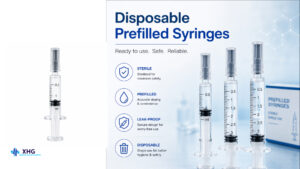
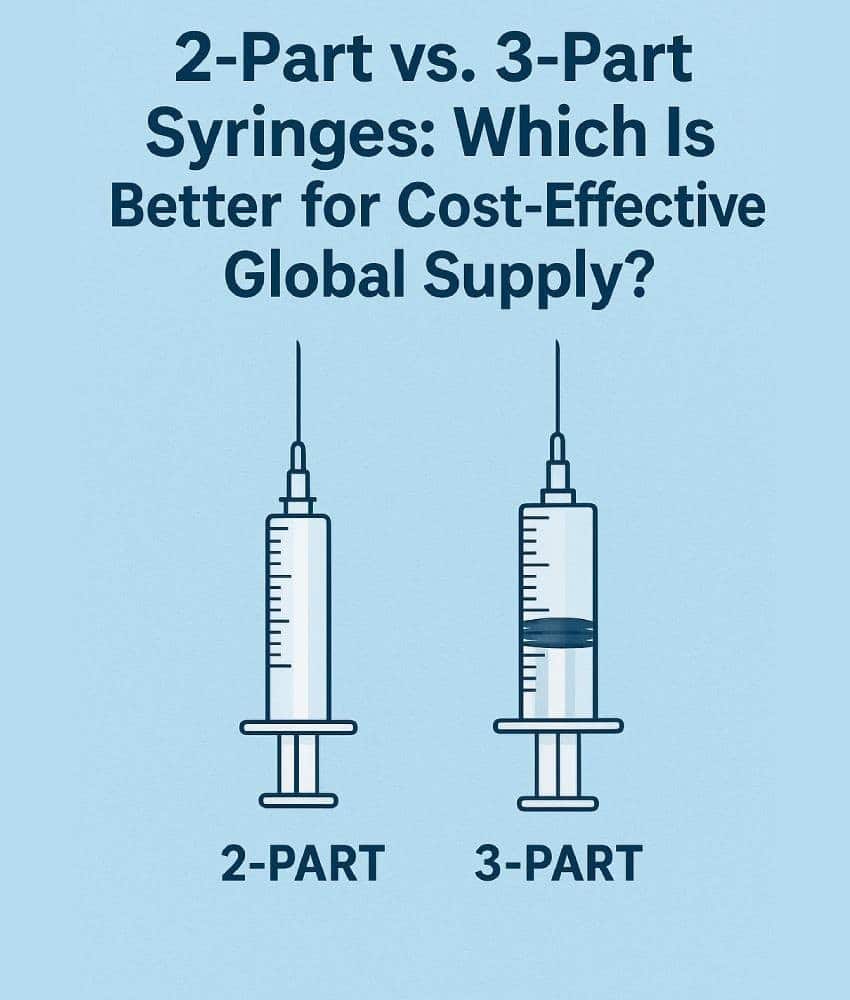
In the ever-evolving world of global healthcare supply, the choice between 2-part vs 3-part syringes is more critical than ever. For procurement teams, NGOs, and public health ministries, aligning with a reliable disposable syringe manufacturer or a trusted bulk syringe supplier can dramatically influence costs, compliance, and patient outcomes. With global demand for safe injection devices continuing to rise, understanding the trade-offs between these two syringe types is essential. Know more..
Introduction to Syringe Design in Global Healthcare
Syringes are among the most widely used medical devices globally. As healthcare systems scale up vaccination drives, chronic disease management, and routine clinical operations, cost-effective and safe injection tools are vital. At the heart of procurement decisions lies a comparison between 2-part vs 3-part syringes, with both types offering specific benefits in functionality, manufacturing ease, and price sensitivity.
What Are 2-Part Syringes?
A 2-part syringe consists of only two components:
- The barrel
- The plunger (usually made from the same material, e.g., polypropylene)
There is no rubber gasket or separate seal, making the design simpler and more cost-efficient. The seal is created via a precise fit between the barrel and plunger, reducing material requirements and production steps.
Advantages:
- Lower cost per unit
- Easier to manufacture
- Reduced risk of chemical interaction with drugs
Limitations:
- Slightly higher friction
- Less smooth movement
- Not ideal for high-viscosity fluids
What Are 3-Part Syringes?
The 3-part syringe includes:
- Barrel
- Plunger
- Rubber gasket (or stopper at the tip of the plunger)
This additional gasket improves the smoothness of movement and provides a more controlled injection, especially in precise dosing scenarios.
Advantages:
- Smoother plunger movement
- Improved leak-proof sealing
- Preferred for medications requiring precision
Limitations:
- Slightly more expensive
- Involves more manufacturing complexity
- May have compatibility concerns with some drugs due to rubber material
Key Differences Between 2-Part and 3-Part Syringes
| Feature | 2-Part Syringe | 3-Part Syringe |
| Components | Barrel + Plunger | Barrel + Plunger + Rubber Gasket |
| Cost | Lower | Higher due to extra part |
| Sealing Method | Tight plastic fit | Rubber seal |
| Movement | Slight resistance | Very smooth |
| Compatibility with Viscous Fluids | Moderate | High |
| Sterilization Process | Simpler | Needs more care due to gasket |
Cost Comparison of 2-Part vs. 3-Part Syringes
From the viewpoint of a bulk syringe supplier, 2-part syringes offer up to 25% cost savings per unit in high-volume production. They are often chosen for massive immunization drives and developing country markets where affordability trumps sophistication.
3-part syringes, while costlier, offer better functionality, which is essential in hospital-grade medication delivery, IV injections, or insulin dosing.
Cost Influencing Factors:
- Raw material volume
- Assembly time
- Sterilization complexity
- Storage space and logistics
For disposable syringe manufacturers, optimizing design to reduce part friction in 2-part syringes can close the performance gap while retaining cost advantages.
Performance & Functionality Review
When performance is crucial—such as pediatric use or precision medicine—3-part syringes deliver smoother plunger action and tighter control. However, for general vaccination campaigns or mass injections, 2-part syringes suffice, especially when budgets are limited.
Which Syringe Type Is More Reliable in Practice?
Reliability is a combination of manufacturing consistency and end-user feedback. While 3-part syringes are often praised in clinical settings for ease of use, 2-part syringes show exceptional consistency in bulk use, with fewer chances of dislodged rubber parts or contamination issues.
The Role of a Disposable Syringe Manufacturer in Cost Efficiency
A reputable disposable syringe manufacturer plays a critical role in ensuring that the chosen syringe type adheres to international quality and safety standards while remaining cost-effective. The best manufacturers:
- Automate high-speed production lines
- Conduct rigorous QC on sealing and sterilization
- Customize syringe types for specific client needs
- Provide OEM/white-label services for governments or hospitals
Sourcing from a Bulk Syringe Supplier: Pros & Pitfalls
Working with a qualified bulk syringe supplier offers benefits like:
- Better pricing through volume discounts
- Faster replenishment cycles
- Supply chain transparency
However, buyers should be cautious of:
- Inconsistent sterilization standards
- Subpar gasket materials
- Lack of certifications or testing documentation
Environmental Impact: 2-Part vs. 3-Part Syringes
From a sustainability standpoint, 2-part syringes are marginally better:
- Use fewer materials
- Avoid rubber, which is harder to recycle
- Have simpler disposal requirements
However, with innovations in biodegradable rubber and eco-friendly plastic, 3-part syringes are catching up.
Popular Use Cases by Syringe Type
| Use Case | Preferred Syringe Type |
| Mass Immunization Campaigns | 2-Part |
| Insulin Injection | 3-Part |
| Anesthesia or Contrast Dye | 3-Part |
| Basic Health Post or Mobile Unit | 2-Part |
Global Trends in Syringe Procurement
Major organizations like WHO, GAVI, and UNICEF continue to support both syringe types, with a stronger preference for 2-part syringes in high-volume, low-cost settings. Regions in Africa, South Asia, and parts of Latin America are seeing increased demand for bulk syringe supplier services offering 2-part designs.
Compliance and Certification Standards
Whether 2-part or 3-part, international certification is mandatory:
- ISO 7886-1 for disposable syringes
- CE marking for European markets
- FDA 510(k) approval for U.S. markets
Your disposable syringe manufacturer must validate every batch and provide documentation for audits and tenders.
What Hospitals and NGOs Prefer
Hospitals in urban areas prefer 3-part syringes for precision dosing, while NGOs and public health departments lean toward 2-part syringes for their lower costs and ease of disposal.
Should You Switch to 2-Part Syringes in 2025?
Consider switching if:
- You’re planning a large-scale immunization program
- Your end-users are trained on basic injection techniques
- Cost efficiency outweighs dosing precision
Stick to 3-part if:
- You’re dealing with insulin or chemotherapy
- The market demands premium experience
- You operate in strictly regulated regions
The Future of Disposable Syringe Design
With innovations in low-friction plastic molds, biodegradable materials, and AI-powered QC processes, the gap between 2-part and 3-part syringe performance is narrowing. Expect hybrid designs and modular components soon.
FAQs About 2-Part vs. 3-Part Syringes
Q1: Which syringe type is cheaper in bulk?
A: 2-part syringes are significantly cheaper when bought in bulk.
Q2: Are 2-part syringes safe for all injections?
A: Yes, especially for general use, though not ideal for precision doses.
Q3: Can I source both types from one manufacturer?
A: Most established disposable syringe manufacturers offer both types.
Q4: What should I ask my bulk syringe supplier before placing an order?
A: Ask about sterilization method, certifications, and lead time.
Q5: Which type generates more medical waste?
A: 3-part syringes due to the rubber gasket.
Q6: Do rubber gaskets cause drug interaction issues?
A: In rare cases, especially with biologics or chemo drugs. Always consult product specs.
Conclusion
In the debate of 2-part vs 3-part syringes, the decision ultimately boils down to your use case, cost tolerance, and performance expectations. As a global healthcare buyer, aligning with a reputable disposable syringe manufacturer and trusted bulk syringe supplier will ensure you get the best of both worlds—affordability and reliability.