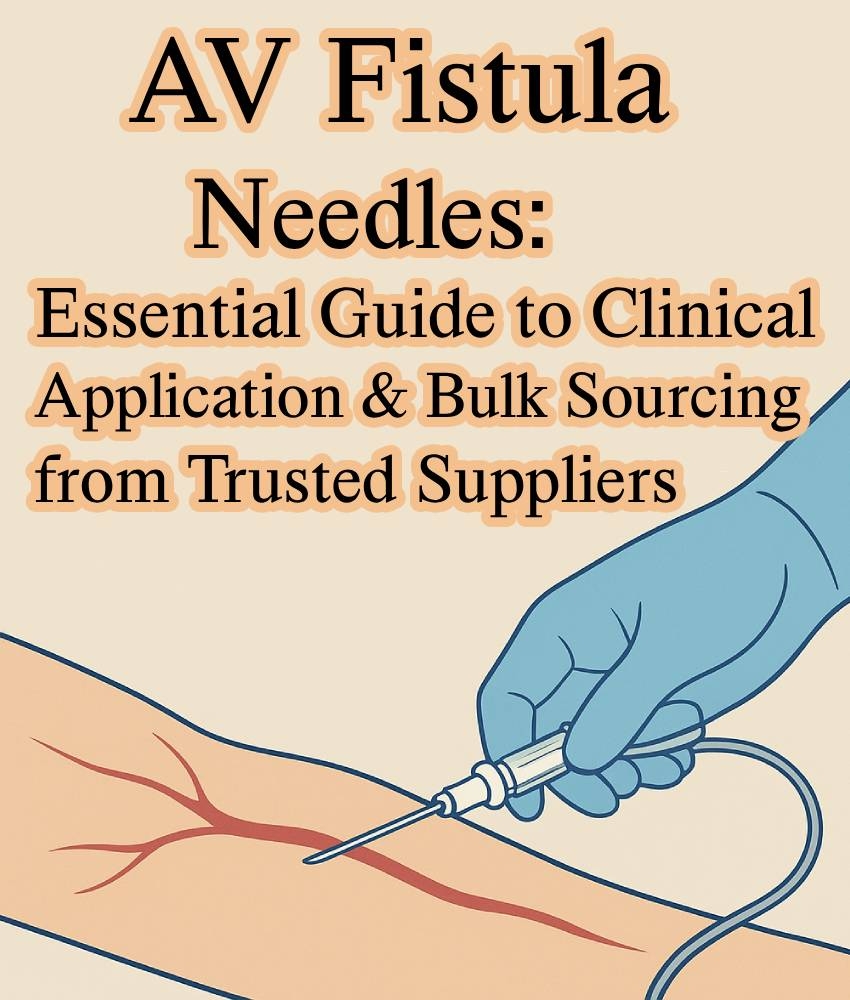
What Are AV Fistula Needles?
AV (Arteriovenous) fistula needles are specialized vascular access tools used primarily in hemodialysis procedures. Designed for repeated vascular access, these needles are critical in managing patients with chronic kidney disease. Know more..
Types of AV Fistula Needles
AV fistula needles come in two main types:
- Fixed-wing needles – Common for standard dialysis settings.
- Rotating-wing or buttonhole needles – Designed for repeated access in the same site with minimal trauma.
Components and Specifications
Each AV fistula needle typically consists of:
- A beveled stainless steel needle
- Flexible tubing with clear flow paths
- Color-coded hubs for easy gauge identification
- Back-eye holes to reduce pressure on vessel walls
Clinical Applications of AV Fistula Needles
Use in Hemodialysis Procedures
AV fistula needles are inserted directly into the AV fistula created surgically in patients undergoing long-term dialysis. These needles form the bridge between the patient and the dialysis machine.
Guidelines for Safe Use
Proper insertion angle, appropriate gauge size, and maintaining a sterile environment are essential practices to avoid complications like:
- Hematoma
- Infiltration
- Infection
Benefits of AV Fistula Needles in Dialysis
Patient Comfort and Safety
Modern AV fistula needles are designed to minimize discomfort. Their silicone coating ensures smoother penetration, which is crucial for patient adherence.
Improved Vascular Access Efficiency
With the right vascular access needle, nurses and clinicians can achieve faster access, reduce procedure time, and enhance the overall dialysis experience.
Understanding the Dialysis Needle OEM Market
What is a Dialysis Needle OEM?
A dialysis needle OEM (Original Equipment Manufacturer) specializes in producing needles that other companies brand and distribute. These manufacturers allow hospitals, clinics, and distributors to source high-quality products with custom branding.
OEM vs. ODM – What’s the Difference?
- OEM: You supply the design, they manufacture it.
- ODM: They provide an in-house design that you can rebrand.
How to Choose a Reliable AV Fistula Needle Supplier
Choosing the right AV fistula needle supplier can dramatically impact patient outcomes and operational efficiency.
Certifications and Regulatory Compliance
Look for:
- ISO 13485 for medical devices
- CE marking for Europe
- FDA approval for U.S. markets
Global vs. Local Sourcing
While global AV fistula needle suppliers offer competitive pricing and variety, local options may reduce lead times and improve support.
Factors to Consider in Bulk Purchasing
- Delivery timelines
- Sterilization methods
- Batch testing protocols
- Custom packaging options
Vascular Access Needle Innovations and Trends
Technological Advancements
Newer vascular access needles offer:
- Anti-kink tubing
- Needleless connectors
- Improved bevel angles for easier insertion
Eco-Friendly Disposable Materials
Sustainability is trending. Manufacturers now focus on:
- BPA-free plastics
- Biodegradable packaging
- Energy-efficient production
Bulk Sourcing Considerations for Medical Facilities
Cost Efficiency in Volume Orders
Buying from a high-quality dialysis needle OEM in bulk can reduce per-unit cost by up to 40%. Negotiate long-term contracts to stabilize pricing.
Quality Assurance in High-Volume Supply
Reputable suppliers conduct batch testing and include certificates of analysis with each shipment. Ensure:
- Batch traceability
- Sterility reports
- Shelf-life documentation
Packaging and Sterilization Standards
Importance of Sterile Delivery
AV needles are sterilized using:
- EO gas
- Gamma radiation
Ensure your AV fistula needle supplier includes sterilization indicators on all packaging.
Single vs. Multi-Pack Options
Hospitals often prefer:
- Single-pack sterile pouches for flexibility
- Bulk trays for cost-saving in high-volume centers
Custom Labeling and OEM Branding
How Private Labeling Works
Dialysis centers can collaborate with a dialysis needle OEM to produce white-label needles that meet their internal brand guidelines.
Branding Advantages for Clinics
- Builds trust with repeat patients
- Enhances facility reputation
- Creates uniform supply chain identity
AV Fistula Needle Sizes and Color Coding
Understanding Gauge Differentiation
Common sizes include:
| Gauge | Outer Diameter (mm) | Use Case |
| 16G | 1.7 | Standard adult use |
| 15G | 1.8 | Higher flow rate |
| 14G | 2.1 | Rapid treatments |
Use of Color Coding for Clinical Efficiency
Color-coded hubs allow clinicians to:
- Instantly recognize needle size
- Avoid mismatches
- Streamline patient prep
Training and Handling for Clinical Staff
Best Practices for AV Needle Insertion
- Insert at a 25–35° angle
- Use appropriate tourniquet tension
- Apply gentle pressure post-removal
Preventing Vascular Access Complications
Proper needle alignment and rotation of insertion sites are essential to reduce:
- Fistula thrombosis
- Vein scarring
- Infection risk
Disposal and Waste Management Practices
Complying with Medical Waste Standards
Used vascular access needles are classified as sharps and must follow local disposal laws.
Sharps Container Usage and Protocols
- Immediately discard post-use
- Never recap or bend the needle
- Replace containers at 75% capacity
Top Global Suppliers and OEM Manufacturers
Spotlight on Reliable Brands
- Nipro
- Fresenius Medical Care
- Asahi Kasei
- Bain Medical
These companies serve as both dialysis needle OEM providers and trusted brands globally.
Evaluating Supplier Reputation
- ISO certification
- Customer reviews
- Support availability
- Sample policy
How to Ensure Compliance with FDA & CE
Understanding International Regulations
FDA (USA) and CE (EU) compliance ensures that products:
- Meet safety standards
- Pass quality checks
- Are traceable by batch
Common Certification Requirements
- Material Biocompatibility
- Sterilization Validations
- Technical File Submissions
Frequently Asked Questions (FAQs)
1. What is the difference between an AV fistula needle and a regular needle?
AV fistula needles are specifically designed for repeated vascular access during dialysis. They are thicker, more durable, and equipped with back-eye holes.
2. Can I source AV fistula needles directly from a dialysis needle OEM?
Yes, many OEMs welcome bulk inquiries from hospitals and distributors, often offering custom branding and packaging.
3. What gauge is most commonly used in dialysis?
The 15G needle is most commonly used due to its balance between flow rate and patient comfort.
4. How should used AV fistula needles be disposed of?
They must be disposed of in a certified sharps container immediately after use to prevent contamination or injury.
5. Are OEM needles of lower quality than branded ones?
No. In many cases, branded needles are manufactured by the same OEMs, making them equal in quality.
6. What should I look for in an AV fistula needle supplier?
Look for product certifications, batch testing protocols, custom options, and responsive support.
Conclusion
Choosing the right AV fistula needle supplier, understanding the dialysis needle OEM process, and sourcing high-quality vascular access needles can significantly improve dialysis care and operational efficiency. Whether you’re a procurement officer or a clinician, always prioritize safety, certification, and long-term reliability when purchasing in bulk.