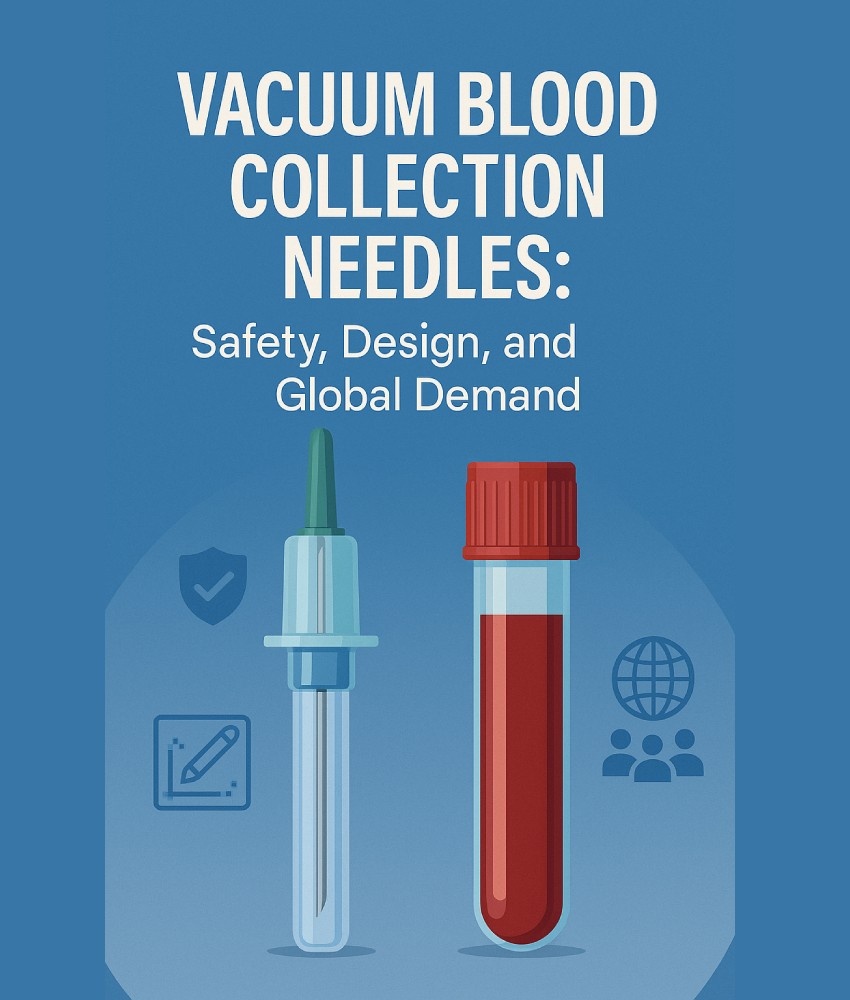
In today’s fast-paced diagnostic landscape, the vacuum blood collection needles has become an essential component of patient care, clinical efficiency, and laboratory safety. Trusted by hospitals, diagnostic labs, and mobile phlebotomy teams, these needles offer precision and safety in one streamlined device. Partnering with a high-quality phlebotomy needle OEM and sourcing from a reliable safety blood needle manufacturer ensures consistent quality, compliance with global standards, and protection for both patients and healthcare workers.
Let’s dive deep into how these advanced blood collection tools are shaping modern healthcare. Know more..
Introduction to Vacuum Blood Collection in Modern Diagnostics
The accuracy of diagnostic testing depends largely on the quality of blood sample collection. In this process, the design and reliability of the vacuum blood needle plays a crucial role.
Blood collected using vacuum technology offers:
- Precise volume control
- Reduced contamination risk
- Faster and safer draws
For laboratories and hospitals worldwide, choosing the right safety blood needle means fewer complications and better diagnostic outcomes.
What Is a Vacuum Blood Needle?
A vacuum blood needle is a specialized, double-ended needle used with vacuum blood collection tubes. One end penetrates the vein, while the other punctures the rubber stopper of a vacuum tube, allowing blood to flow in naturally through negative pressure.
Key Features:
- Stainless steel needle
- Hub with safety cap
- Rubber sleeve for backflow prevention
- Sterilized, disposable packaging
These needles are usually compatible with standard tube holders and are engineered to prevent blood exposure during withdrawal.
Why Safety Matters: The Rise of the Safety Blood Needle
Needlestick injuries can transmit:
- Hepatitis B & C
- HIV
- Other bloodborne pathogens
WHO estimates over 3 million needlestick injuries occur annually among healthcare workers, many of which could be prevented by using a safety blood needle.
These devices come with built-in:
- Retractable tips
- Protective safety caps
- Tamper-proof hubs
Their increasing adoption has helped healthcare institutions comply with global safety regulations and reduce infection risks significantly.
Design Components of a Modern Vacuum Blood Needle
| Component | Function |
| Needle Tip (Bevel) | Enables smooth vein penetration |
| Needle Hub | Connects securely to tube holder |
| Rubber Sheath | Prevents blood leakage when switching tubes |
| Safety Cap or Shield | Protects users after withdrawal |
Every vacuum blood needle must undergo quality control testing to ensure no leakage, accurate flow rate, and structural durability.
How a Phlebotomy Needle OEM Drives Innovation
A reputable phlebotomy needle OEM doesn’t just mass-produce needles—they engineer solutions.
OEM services offer:
- Custom branding
- Special gauge and length adjustments
- Sterilization customization (EO or gamma)
- Packaging in various languages
Top OEMs also invest in patent-protected safety designs to give clients a competitive edge in tenders and export markets.
Standard Sizes, Gauges, and Configurations
Needles come in various gauges and lengths for different patient profiles and procedures.
| Gauge | Use Case |
| 18G–20G | High-volume blood draws |
| 21G–22G | General phlebotomy in adults |
| 23G–25G | Pediatrics, geriatrics, small veins |
Each phlebotomy needle OEM can configure needles to hospital preferences and regional regulations.
Global Demand Surge for Vacuum Blood Collection Systems
Driven by:
- Post-pandemic diagnostic surge
- Aging population
- Increased chronic disease screening
Vacuum blood needles are now a staple in:
- National diagnostic centers
- Emergency preparedness stockpiles
- Community testing programs
As a result, the market for safety blood needle and OEM services has grown rapidly, particularly in Asia, Africa, and Latin America.
Phlebotomy Use Cases in Hospitals, Clinics, and Mobile Units
These needles are used across a variety of clinical settings:
- Hospitals: In-patient labs and emergency rooms
- Diagnostic Labs: High-throughput collection centers
- Mobile Clinics: Field diagnostics, vaccination drives
- Home Visits: For chronic care and elderly patients
The common factor? Safety, speed, and standardization—qualities ensured by a good vacuum blood needle design.
Benefits of a Safety Blood Needle Over Traditional Needles
- Protects caregivers from accidental injuries
- Improves workflow with easy handling
- Reduces waste contamination
- Eliminates need for recapping, a major source of injury
These benefits lead many healthcare systems to replace standard phlebotomy needles with safety blood needle products across all departments.
Certifications and Quality Standards for Blood Needles
Globally compliant needles must meet:
- ISO 7864: Sterile hypodermic needles
- EN 20594-1: Needle-to-hub connection
- CE Marking: European safety compliance
- FDA 510(k): U.S. market clearance
Manufacturers and phlebotomy needle OEM brands must undergo batch testing for:
- Needle sharpness
- Flow rate
- Leak resistance
- Sterilization validation
Supply Chain Considerations for Vacuum Blood Needle Buyers
To ensure uninterrupted supply:
- Choose an OEM with stable raw material sourcing
- Negotiate MOQ with flexibility
- Confirm sterilization method and shelf life
- Ask for lot numbers and traceability systems
The best vacuum blood needle suppliers offer 24/7 logistics support and transparent production timelines.
OEM vs. Generic: Why Custom Phlebotomy Needles Win
OEM products allow:
- Private label branding
- Custom packaging (language, unit count)
- Quality control tailored to your market
- Long-term exclusivity options
Buyers in competitive markets benefit more from phlebotomy needle OEM contracts than off-the-shelf generics.
Challenges in Export and Global Supply
While demand is rising, so are logistical hurdles:
- Varying sterilization regulations
- Labeling compliance in different regions
- Packaging and temperature control during shipping
- Customs clearance documentation
Experienced safety blood needle suppliers handle these challenges with in-house compliance officers and third-party audits.
Future Trends in Vacuum Blood Needle Design
Expect innovations like:
- Retractable safety needles
- Biodegradable materials
- Pre-attached barcode tags
- Color-coded caps for quick gauge ID
- Digital logging chips for inventory tracking
Phlebotomy needle OEM partners are already investing in these advancements to future-proof product lines.
Choosing the Right Vacuum Blood Needle Manufacturer
Ask these critical questions:
- Are you ISO, CE, or FDA certified?
- What’s your defect rate per batch?
- Can I audit your facility?
- Do you provide OEM and bulk customization?
Choose a vacuum blood needle supplier with proven international hospital clients, transparent pricing, and a strong reputation.
FAQs About Vacuum Blood Needles
Q1: What is the difference between a standard and a vacuum blood needle?
A: A vacuum blood needle has two ends and is designed to work with evacuated blood collection tubes.
Q2: Are safety needles reusable?
A: No, all safety blood needles are single-use and auto-disable to prevent injury.
Q3: Can I get custom packaging for my hospital?
A: Yes, through a phlebotomy needle OEM, you can brand and package as needed.
Q4: Which gauge is best for pediatric use?
A: 23G to 25G are preferred for smaller veins in children.
Q5: How do I ensure the needle is sterile?
A: Look for EO or gamma sterilization certification and sealed packaging.
Q6: How long do vacuum blood needles last in storage?
A: Typically 3–5 years if stored in cool, dry conditions.
Conclusion
Whether you’re sourcing for a national hospital network or outfitting a mobile testing unit, the importance of choosing the right vacuum blood needle cannot be overstated. A certified phlebotomy needle OEM and trustworthy safety blood needle partner will ensure your facility meets international safety standards, avoids legal liability, and provides optimal care for every patient. In a world where diagnostics are more critical than ever, precision begins with the needle.