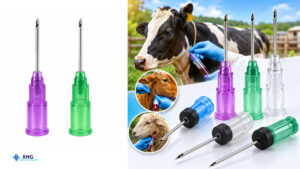

If you’re sourcing needles for medical use, three factors will make or break your project: custom needle MOQ, lead time medical OEM, and a transparent needle pricing model. These elements determine everything from how soon you can launch to whether your margins stay intact. Whether you’re a startup with a small R&D run or a global brand scaling to millions, understanding these three variables is key to smart medical device procurement. This guide will walk you through exactly what to expect, what to ask, and how to stay ahead when ordering custom needles. Know more..
Why MOQ, Lead Time, and Pricing Matter in Medical Needle Procurement
Medical needles are used in everything from insulin pens to biopsy kits to prefilled syringes. But behind every needle is a web of manufacturing decisions. You can’t just call a supplier and ask for 500 units off the shelf.
To get it right, you need:
- A realistic custom needle MOQ (minimum order quantity)
- A factory-verified lead time medical OEM schedule
- A scalable, clear needle pricing model
If even one of these goes wrong, your product is delayed—or worse, doesn’t meet compliance.
Understanding Custom Needle MOQ (Minimum Order Quantity)
What is MOQ in Medical Manufacturing?
The custom needle MOQ is the lowest quantity a manufacturer is willing to produce in a single run. This is based on:
- Tooling costs
- Machine setup time
- Labor use
- Material waste
- Packaging minimums
A reliable supplier will be upfront about MOQ thresholds for different projects.
Typical MOQ Ranges:
| Type of Needle | Typical MOQ |
| Standard hypodermic | 100,000 pcs |
| Safety needle | 50,000 pcs |
| Blunt fill or filter | 20,000 pcs |
| Custom gauge/length combo | 250,000 pcs |
| Coated or specialty needles | 500,000 pcs + |
A lower custom needle MOQ might be available for prototypes or clinical trials—but expect higher unit pricing.
Factors That Affect Custom Needle MOQ
- Gauge & Length Customization
The more unique the spec, the higher the MOQ. Common gauges like 22G–25G offer lower thresholds than rare sizes. - Needle Tip Style
Bevel variations, ultra-sharp designs, or angled tips may require custom grinding or polishing equipment. - Coatings and Treatments
Silicone coatings or antimicrobial additives often require separate machinery—raising MOQ. - Packaging Format
Blister vs. bulk, private labeling, or multi-pack options affect MOQ due to different packaging line setups.
Work with your supplier to define the custom needle MOQ that fits your scale and timeline.
Decoding Lead Time in Medical OEM Production
What Does “Lead Time Medical OEM” Mean?
In medical manufacturing, lead time medical OEM refers to the time between placing an official purchase order and receiving finished, ready-to-ship products. It includes:
- Design review and approvals
- Tooling or mold setup
- Production run
- Sterilization (if required)
- QC and regulatory documentation
- Packing and logistics prep
Average Lead Time Ranges:
| Stage | Duration |
| Design finalization | 1–2 weeks |
| Tooling setup | 3–4 weeks |
| Initial production | 4–8 weeks |
| EO/Gamma sterilization | 1–2 weeks |
| Inspection and release | 1 week |
| Shipping (international) | 2–4 weeks |
Total estimated lead time medical OEM: 10–18 weeks depending on complexity and volume.
Ways to Shorten Your OEM Needle Lead Time
- Choose Existing Tooling
Custom designs require custom tools. If your spec can fit existing tooling, you skip 3–4 weeks. - Pre-approve Materials
Submit your required certifications and material data sheets early to avoid downstream delays. - Bundle Sterilization
Coordinate with other products for batch EO or gamma sterilization. - Book Logistics Early
Container and air freight space can cause last-minute bottlenecks. Reserve capacity as soon as your order is scheduled for release.
An experienced lead time medical OEM partner will build realistic timelines and provide milestone updates.
Breaking Down the Needle Pricing Model
What is a Needle Pricing Model?
A needle pricing model details how your cost per unit is calculated. It’s not just material + labor—it includes:
- Raw materials (stainless steel, polymer hub)
- Needle grinding & coating processes
- Tool amortization
- QA/QC testing
- Packaging & labeling
- Sterilization (if needed)
- Certification or regulatory costs
Understanding your needle pricing model helps you budget accurately—and find cost-saving opportunities.
Tiered Pricing Explained
Most needle manufacturers use tiered pricing. That means the more units you order, the lower your per-unit price.
| Quantity (pcs) | Estimated Unit Price |
| 100,000 | $0.125 |
| 500,000 | $0.078 |
| 1,000,000 | $0.058 |
| 5,000,000+ | $0.042 |
Needle pricing model discounts often kick in at 500k+ units.
Factors That Influence Pricing in Custom Needle Orders
1. Gauge and Length
Thinner or longer needles use more precision grinding—adding cost.
2. Hub Material and Color
Custom colors or engineered plastics are pricier than generic PP or ABS.
3. Sterilization Method
EO is cheaper than gamma radiation, but not suitable for all materials.
4. Certification Requirements
CE marking, ISO 13485 documentation, or US FDA registration adds paperwork and QA steps—raising per-unit cost.
5. Shipping Method
Sea freight is cheaper but slower; air freight ensures faster turnaround at a premium.
Discuss each of these with your supplier to optimize your needle pricing model without compromising compliance.
Compliance Considerations
Don’t let price or speed come at the cost of safety.
For regulated markets (EU, US, Japan), your needles must:
- Be produced in ISO 13485–certified facilities
- Include sterilization validation (if sterile)
- Pass ISO 7864 and ISO 9626 needle tests
- Be traceable by lot number and packaging date
- Carry appropriate CE or FDA markings
Your custom needle MOQ supplier should provide full compliance documentation before first shipment.
Case Study: Biotech Startup Scaling to Market
Situation: A biotech firm developing a fixed-dose biologic delivery system needed 1 million units of a custom 29G, 8mm silicone-coated needle.
Challenges:
- Needed dual-color hubs
- Required EO sterilization
- Tight 90-day launch timeline
Solutions:
- Partnered with a lead time medical OEM expert who used pre-approved tooling
- Approved all specs and packaging within 10 days
- Finalized a needle pricing model that scaled over two production waves
- Delivered full ISO, CE, and sterilization documentation
Result: The startup launched 3 weeks early with zero QA issues and beat its target cost by 8%.
Frequently Asked Questions
Q: Can I negotiate a lower custom needle MOQ for a clinical trial?
A: Yes—some suppliers offer pilot runs with higher pricing for early-stage development.
Q: What’s the difference between MOQ and EOQ?
A: MOQ is the minimum order accepted. EOQ (economic order quantity) is the most cost-efficient quantity you should buy based on pricing and logistics.
Q: Are sterilization costs included in my needle pricing model?
A: Not always. Some suppliers itemize it separately—ask upfront.
Final Thoughts
When sourcing custom medical needles, details matter. Whether you’re planning a small run or scaling into the millions, getting clarity on your custom needle MOQ, lead time medical OEM, and needle pricing model will make all the difference.
Smart sourcing is more than a quote—it’s understanding the process, compliance, and cost breakdowns that affect your final product. Choose a partner who’s transparent, ISO-certified, and committed to delivering quality on your timeline.
Ready to Start Your Custom Needle Project?
Here’s what to do next:
- Request a detailed quote based on your specs
- Ask for sample lead time schedules and pricing tiers
- Verify ISO 13485 certification and audit history
- Start with a pilot batch to test QC and delivery accuracy
We’re here to help you build smarter, safer, and faster—from design to delivery.