Introduction to Transfusion Sets in Modern Healthcare
In today’s rapidly evolving healthcare landscape, the need for efficient, sterile, and cost-effective transfusion equipment is more crucial than ever. Whether you are sourcing from a transfusion set OEM, investing in disposable transfusion set solutions, or managing a hospital’s bulk IV blood set inventory, understanding the key features and sourcing strategies can ensure better patient outcomes and smoother procurement processes.
The global demand for blood transfusions has increased due to expanded access to surgeries, trauma care, cancer treatment, and mobile medical services. This growth puts pressure on healthcare facilities to source safe and standardized transfusion systems on a mass scale—without compromising quality. Know more..
Understanding the Disposable Transfusion Set
Key Components and Features
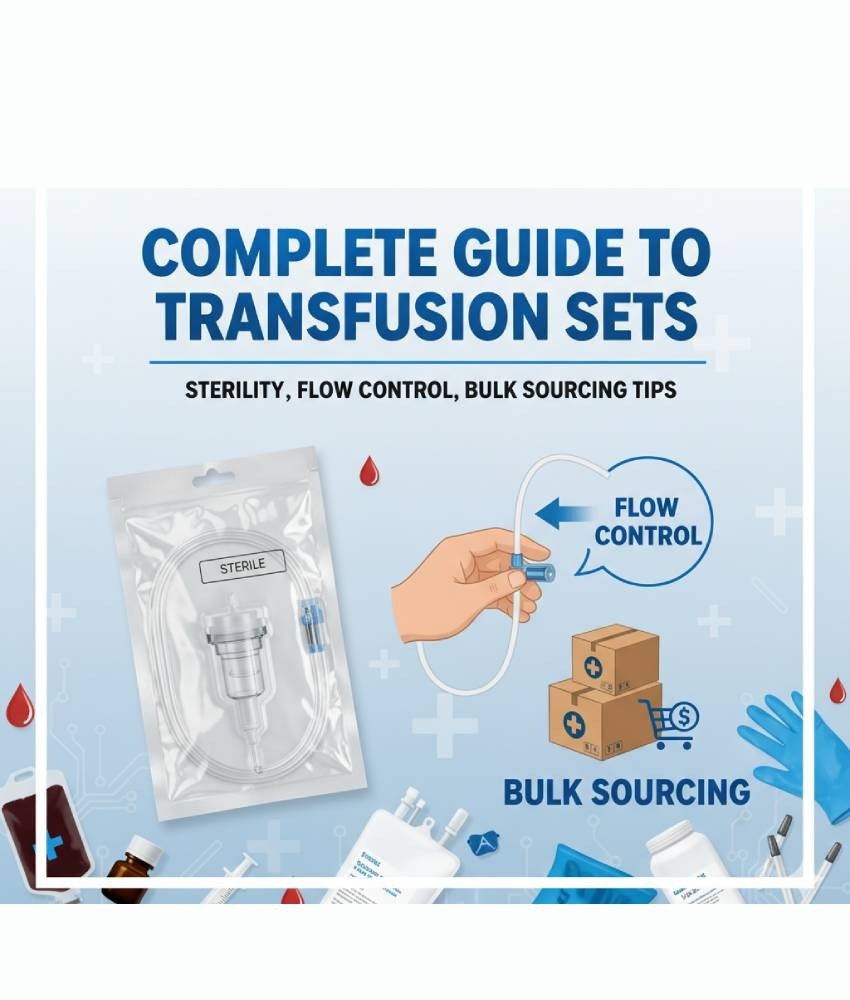
A standard disposable transfusion set includes:
- Spike to pierce the blood bag
- Drip chamber for air-blood separation
- Roller clamp for flow control
- Y-injection site for medication input
- Luer lock adapter or needle for vascular access
These components work together to deliver blood or plasma from donor bags to patients with minimal risk of contamination.
Types of Blood Transfusion Sets
- Standard transfusion set
- Filter-type set with microporous filters
- Non-vented vs. vented spike sets
- Needle-free sets for improved safety and compatibility
Sterility Standards and Medical Safety
EO Sterilization and Barrier Protection
Sterility is a non-negotiable requirement. Leading transfusion set OEM manufacturers use:
- Ethylene Oxide (EO) sterilization
- Double-sealed blister packs
- Sterility indicators that change color once processed
This ensures that each set remains contamination-free from factory to point of care.
Certifications and Regulatory Compliance
Ensure the supplier adheres to:
- ISO 13485 (Quality Management Systems)
- CE certification (Europe)
- FDA 510(k) (U.S. regulatory clearance)
These benchmarks confirm that the disposable transfusion set meets stringent quality and safety standards.
How Flow Control Works in a Transfusion Set
Role of Drip Chambers and Roller Clamps
Flow control in a bulk IV blood set is managed by:
- A transparent drip chamber for monitoring rate visually
- A roller clamp to adjust flow speed
- Optional precision dial-a-flow controllers for advanced settings
Precision Flow Rate Devices
Some OEMs offer advanced models with integrated:
- Anti-kink tubing
- Adjustable regulators
- Drop-rate calibrators (e.g., 20 drops/mL or 60 drops/mL)
These help healthcare providers tailor transfusions according to specific clinical needs.
Advantages of Partnering with a Transfusion Set OEM
Custom Product Development
A transfusion set OEM can collaborate with healthcare institutions or distributors to design products that align with:
- Specific procedural needs
- Branding requirements
- Local regulatory environments
Branding and Labeling Flexibility
OEM services typically include:
- Private labeling with your hospital or distributor brand
- Custom instructions in multiple languages
- Barcode and lot tracking on every package
Lower Manufacturing Costs at Scale
OEM production in countries like China or India can reduce costs by up to 40%, especially when ordering bulk IV blood sets.
Why Disposable Transfusion Sets Are Preferred Globally
Infection Prevention and Cross-Contamination Control
Reusable transfusion equipment increases infection risk. With disposable transfusion set products, clinics benefit from:
- One-time use
- Guaranteed sterility
- Reduced labor in cleaning and disinfecting
Lightweight, Portable, and Single-Use
Ideal for emergency rooms, field hospitals, and mobile units, disposable sets:
- Save space
- Require minimal setup
- Eliminate sterilization logistics
Bulk IV Blood Set Sourcing Strategies
Comparing Global and Regional Suppliers
While regional suppliers offer faster logistics, international sourcing from high-volume transfusion set OEM factories provides:
- Customization options
- Better pricing
- Access to emerging technology
Evaluating MOQ, Lead Time, and Logistics
Key procurement questions:
- What is the Minimum Order Quantity (MOQ)?
- Are samples available before the full order?
- How long does manufacturing and shipping take?
- Does the supplier offer warehouse support in your region?
Packaging Options for High-Volume Supply
Bulk Carton vs. Individually Wrapped
Depending on the use case:
- Individually packed sets are ideal for sterile environments and single-patient care.
- Bulk packaging reduces costs and is suited for large hospitals and disaster relief.
Labeling, Barcoding, and Sterile Indicators
Ensure packaging includes:
- Clear usage instructions
- Sterility proof (EO indicator)
- Lot numbers for traceability
These features are especially important in bulk IV blood set shipments.
Customization and OEM Innovation Trends
Color-Coded Ports and Flow Rate Variants
Advanced designs now include:
- Color-coded injection ports for error reduction
- Multiple drop factor options (e.g., pediatric vs. adult)
Integration with Needle-Free Connectors
Modern disposable transfusion set designs feature:
- Luer locks compatible with IV catheters
- Needle-free Y-sites to reduce risk of needlestick injuries
These designs align with safety protocols in North America and Europe.
Quality Control and Batch Testing Protocols
In-House QA Measures by Top Manufacturers
Reputable transfusion set OEM suppliers conduct:
- Batch leak tests
- Flow rate calibration tests
- Packaging integrity checks
Sample Approval Before Mass Production
Ask for:
- Pre-production samples
- Technical drawings
- Third-party test reports
This ensures your bulk orders meet both technical and compliance needs.
Environmental Considerations and Waste Management
Safe Disposal of Used IV Sets
Used disposable transfusion sets should be:
- Collected in designated biohazard bins
- Incinerated or treated per local biomedical waste policies
Eco-Friendly Packaging Innovations
Some OEMs now offer:
- Biodegradable outer cartons
- Low-plastic design tubing
- Minimalist sterile wrap to reduce waste
Top Use Cases in Hospitals and Clinics
Emergency Transfusions
In trauma centers and ambulances, bulk IV blood sets are a must-have for rapid blood delivery.
Oncology and Pediatric Applications
Patients with chronic conditions often require:
- Daily or weekly transfusions
- Gentle flow-rate control
- Compatibility with infusion pumps
Rural and Mobile Medical Units
Disposable transfusion sets are ideal for outreach programs due to:
- Portability
- Low risk of contamination
- Simplified setup
FAQs About Disposable Transfusion Sets & Bulk Orders
1. What makes a good transfusion set OEM?
Look for ISO-certified factories with custom OEM capabilities, proven client history, and global distribution support.
2. Can I request custom labeling and instructions?
Yes. Most OEMs offer private labeling, multilingual IFUs, and custom barcoding.
3. What’s the standard sterilization method for IV sets?
Ethylene Oxide (EO) sterilization is standard and ensures 100% sterility.
4. How long does a disposable transfusion set last (shelf life)?
Typically 3 to 5 years when stored in a dry, cool environment.
5. Is bulk IV blood set ordering more cost-efficient?
Yes. Bulk purchases often come with 30–50% savings and lower logistics overhead.
6. Are there eco-friendly options for disposable sets?
Some manufacturers now offer low-plastic designs and recyclable packaging materials.
Conclusion
Whether you’re a hospital administrator, global distributor, or healthcare procurement officer, understanding the nuances of transfusion set OEM partnerships, selecting a reliable disposable transfusion set, and ordering the right bulk IV blood set configuration can significantly enhance care delivery and budget efficiency.
By working with trusted OEMs, ensuring certification compliance, and prioritizing sterility and flow control features, medical institutions can deliver safe transfusions on every shift—while meeting the growing demand for scalable healthcare solutions.