Introduction
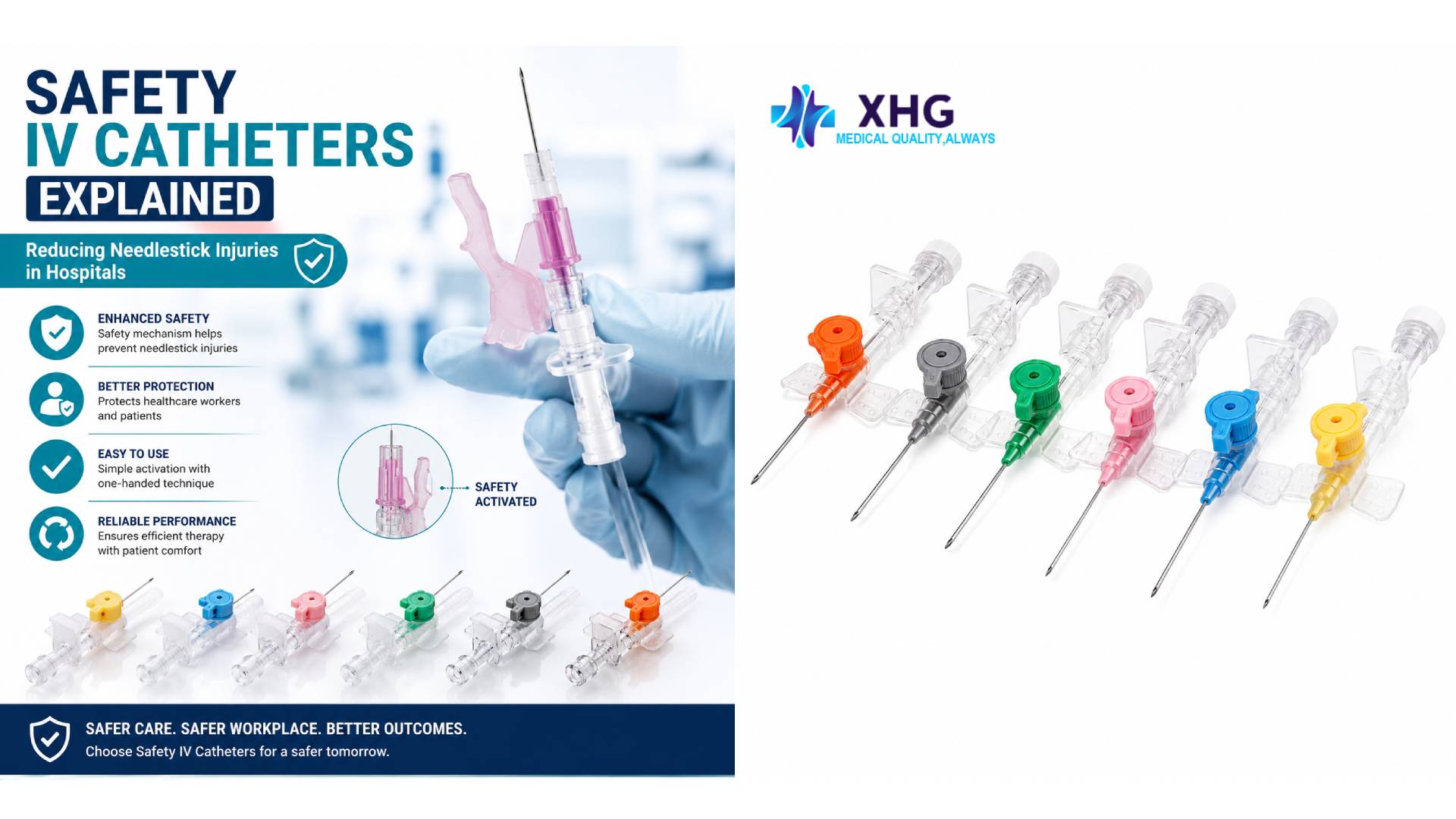
In the high-stakes environment of modern healthcare, protecting medical staff from occupational hazards is a priority that directly influences operational efficiency and patient care standards. Needlestick injuries represent one of the most significant threats in clinical settings, leading to serious health risks and substantial financial burdens for hospitals worldwide. The adoption of advanced safety IV catheters and safety IV cannula technologies has emerged as the definitive solution to mitigate these risks, offering engineering controls that protect clinicians during and after use.
As procurement strategies evolve, hospital administrators and wholesale distributors are increasingly prioritizing these devices, looking toward industry benchmarks like the B Braun IV cannula to ensure quality and compliance. With market data projecting continued growth through 2025 and 2026, understanding the wholesale and customization landscape of these essential medical devices is crucial for making informed purchasing decisions.
1. Why Safety IV Catheters Are Crucial for Modern Healthcare Procurement
The landscape of medical procurement is shifting rapidly as patient safety and occupational health take center stage in hospital administration. Safety IV catheters have evolved from optional premium products to essential components of standard care, driven by an increasing awareness of the risks associated with traditional needle systems. For procurement officers and distributors, understanding this shift is not merely about compliance but about ensuring the highest standard of care. The transition toward safety-engineered devices represents a fundamental change in how hospitals approach vascular access, prioritizing mechanisms that actively prevent accidental injuries. This focus on safety IV catheters is becoming a primary criterion in vendor selection processes globally.
Financial implications play a significant role in the rising demand for safety IV cannulas, as the long-term costs associated with needlestick injuries far exceed the upfront investment in protective devices. Hospitals are recognizing that the expenses related to testing, treatment, and potential litigation following an injury create a substantial financial burden. By investing in high-quality safety IV catheters, healthcare facilities can mitigate these hidden costs, realizing a significant return on investment over time. Wholesale buyers are increasingly analyzing total cost of ownership rather than just unit price, driving bulk purchases of safety-oriented devices. This economic perspective is crucial for B2B buyers aiming to optimize budgets while maintaining rigorous safety standards.
Regulatory bodies and health organizations are intensifying their recommendations, effectively mandating the use of safety-engineered devices in clinical settings. In many regions, legislation now requires the use of safety IV cannulas to protect healthcare workers, making it a legal imperative rather than a choice. This regulatory pressure ensures that the market for safety IV catheters will continue to expand, creating a stable demand for wholesalers and distributors. Staying ahead of these regulations allows hospitals to avoid penalties and ensures continuous compliance. Consequently, the procurement pipeline is heavily favoring manufacturers who can guarantee consistent supply and adherence to these evolving safety standards.
The psychological impact on healthcare workers cannot be overlooked, as the fear of needlestick injuries contributes to workplace stress and staff turnover. Providing safety IV catheters demonstrates an institutional commitment to staff well-being, boosting morale and retention rates among nurses and phlebotomists. When healthcare providers feel safe, their efficiency and quality of care improve, creating a positive feedback loop within the hospital environment. Distributors and wholesale partners who emphasize the human element of these products often find greater success in B2B relationships. This focus on workforce safety is becoming a key differentiator in the competitive market of medical supplies, aligning operational goals with compassionate care.
2. How Needlestick Injuries Impact Hospital Operations and Financials
2.1 Why Needlestick Injuries Remain a Persistent Risk
Needlestick injuries remain a persistent hazard in the clinical environment due to the high-paced nature of medical procedures and the frequent use of sharp devices. Despite rigorous training, fatigue and high patient turnover rates can lead to lapses in technique, increasing the likelihood of accidents. The risk is particularly high during the withdrawal or disposal phases of IV cannulation, where the exposed needle poses a threat to the user. Statistics from 2025 indicate that a significant percentage of injuries still occur during these critical moments, highlighting the need for automated safety solutions. Addressing this persistent risk requires a shift from reliance on human behavior to reliance on safety-engineered device features.
The complexity of modern medical procedures often requires clinicians to work in suboptimal lighting or cramped conditions, further exacerbating the risk of accidental sticks. Emergency situations, where speed is of the essence, often lead to shortcuts in safety protocols, leaving workers vulnerable to contamination. Traditional non-safety IV cannulas lack the built-in passive mechanisms needed to prevent these accidents, relying solely on user activation of safety features. This dependency on active user compliance is a weak link in the safety chain. Wholesale procurement strategies must therefore prioritize devices that offer passive protection, reducing the burden on the clinician during high-stress interventions.
Underreporting of needlestick injuries remains a critical issue that masks the true scale of the problem, often leading to a false sense of security in hospital management. Many staff members fail to report minor sticks due to the perceived hassle of post-exposure protocols or fear of disciplinary action. However, even unreported injuries carry the risk of blood-borne pathogen transmission, creating a hidden liability for healthcare institutions. The introduction of safety IV catheters that eliminate the exposure risk altogether helps bridge the gap between protocol and practice. By removing the sharp from the equation immediately after use, these devices address both the reported and unreported incidents of injury.
The introduction of safety IV catheters serves as a systemic intervention that addresses the root causes of injury rather than merely treating the symptoms. Industry analyses from late 2025 suggest that facilities with high compliance rates for safety-engineered devices see a drastic reduction in injury rates within the first year of implementation. This correlation reinforces the argument that the device itself is the most effective control measure. For procurement managers, the decision to stock safety IV cannulas is no longer just about inventory but about implementing a systemic safety culture. The persistence of this risk makes the adoption of these technologies a non-negotiable aspect of modern inventory management.
2.2 How Safety Mechanisms in IV Cannulas Mitigate Risks
Safety mechanisms in IV cannulas are designed to physically shield the needle after use, effectively neutralizing the threat of accidental punctures. These mechanisms range from active systems, where the user must manually slide a shield over the needle, to passive systems, which engage automatically upon withdrawal. The primary goal of these engineering controls is to reduce the reliance on user behavior, ensuring that safety is maintained even in chaotic environments. Wholesale suppliers are seeing a marked preference for passive safety IV cannulas because they guarantee activation without requiring an extra step from the healthcare worker. This automation is the key to mitigating risks in high-volume hospital settings.
The integration of safety features directly into the design of the IV catheter ensures that protection is immediate and seamless. Upon retraction of the needle into the catheter chamber, a clip or shield locks permanently into place, blunting the tip and rendering it harmless. This immediate action eliminates the window of time during which a clinician could accidentally stick themselves or a colleague. Devices that emulate the functionality of the B Braun IV cannula are particularly effective because they are designed to be intuitive, requiring minimal deviation from standard insertion techniques. The ease of use encourages compliance among staff, ensuring that the safety feature is utilized correctly every single time.
Advanced safety IV catheters now incorporate visual and tactile indicators that confirm the activation of the safety mechanism. These feedback features provide assurance to the clinician that the device is secure, reducing anxiety during disposal procedures. The audible click often associated with the locking mechanism serves as a distinct signal that the needle is safely retracted. For hospital buyers, these reliability features are critical quality indicators when selecting bulk inventory. The consistency of these mechanisms across different product gauges and sizes ensures that safety standards are maintained universally across all departments, from pediatrics to emergency care.
The economic value of these safety mechanisms becomes evident when analyzing the cost savings from prevented injuries. By effectively containing the sharp, hospitals avoid the direct costs of post-exposure prophylaxis, laboratory testing, and employee absenteeism. Furthermore, the use of safety IV cannulas reduces the indirect costs associated with emotional distress and potential litigation. Market data suggests that the return on investment for safety-engineered devices is realized within months of adoption, driven purely by the reduction in incident-related expenses. Consequently, the mitigation of risk provided by these mechanisms translates directly into financial stability for healthcare providers.
3. Which Safety IV Cannula Features Matter Most for Wholesale Buyers
3.1 How Passive Safety Mechanisms Enhance Workflow Efficiency
Passive safety mechanisms represent a pinnacle in design innovation, offering protection that requires no additional steps from the healthcare provider after the IV line is established. These automatic activation features are crucial for maintaining workflow efficiency, particularly in busy emergency departments or trauma centers where seconds count. Unlike active systems that require a hand to slide a guard, passive safety IV cannulas allow the clinician to focus entirely on the patient and the procedure. This seamless integration into standard practice reduces the cognitive load on staff, allowing for smoother, faster patient throughput. Wholesale buyers are prioritizing these designs because they address the dual needs of speed and safety.
The elimination of manual activation steps significantly reduces the potential for user error, which is a leading cause of device-related failures. In a fast-paced clinical setting, any additional step can be forgotten or performed incorrectly, compromising the safety of the device. Passive mechanisms inherent in high-quality safety IV catheters ensure that the safety feature engages purely by the physics of removing the needle. This “hands-free” activation means that even in the most chaotic scenarios, the needle is automatically covered. Distributors who offer passive safety devices are providing a solution that aligns with the reality of clinical workflow, making their products more attractive to hospital procurement teams.
Efficiency gains from passive safety mechanisms extend beyond the individual procedure to impact overall departmental productivity. When nurses do not have to worry about manually engaging a safety shield, they can move more quickly to the next task or patient. This cumulative time saving across hundreds of daily procedures translates to significant operational improvements. Furthermore, the reduction in workflow interruptions helps maintain a calmer, more controlled clinical environment. For B2B customers, the argument for passive safety IV cannulas is rooted in operational excellence and the optimization of human resources. This efficiency is a key selling point in modern medical supply negotiations.
The reliability of passive safety mechanisms also reduces the frequency of training required for staff, as the device operates intuitively. New hires can quickly master the use of these devices because they function similarly to standard catheters but with added safety. This ease of adoption minimizes the learning curve and ensures high compliance rates from day one. As hospitals face staffing shortages and high turnover, products that require minimal training are highly valued. Therefore, stocking safety IV catheters with passive mechanisms is a strategic move for wholesalers looking to provide solutions that address both clinical and operational challenges.
3.2 Why Customization Options in Safety IV Cannulas Are Increasing
The demand for customized medical solutions is growing as hospitals seek to tailor their inventory to specific clinical protocols and branding requirements. Manufacturers of safety IV cannulas are increasingly offering bespoke options, allowing buyers to specify gauges, catheter lengths, and even packaging configurations. This trend toward customization is driven by the need for standardization across large hospital networks, which prefer consistent product specifications across all facilities. Wholesale partners that can facilitate these custom orders provide significant value to their clients, differentiating themselves from generic suppliers. The ability to order safety IV catheters that meet exact specifications is becoming a standard expectation in the B2B market.
Customization extends to the safety mechanism itself, with some hospitals preferring specific types of activation or visual feedback indicators. Certain specialty departments, such as oncology or pediatrics, may require unique features that standard off-the-shelf products do not offer. By working with manufacturers to develop specialized safety IV cannulas, distributors can address these niche market needs effectively. This collaborative approach to product development strengthens the relationship between the buyer and the supplier. It ensures that the final product is perfectly suited to the clinical application, thereby enhancing patient safety and user satisfaction.
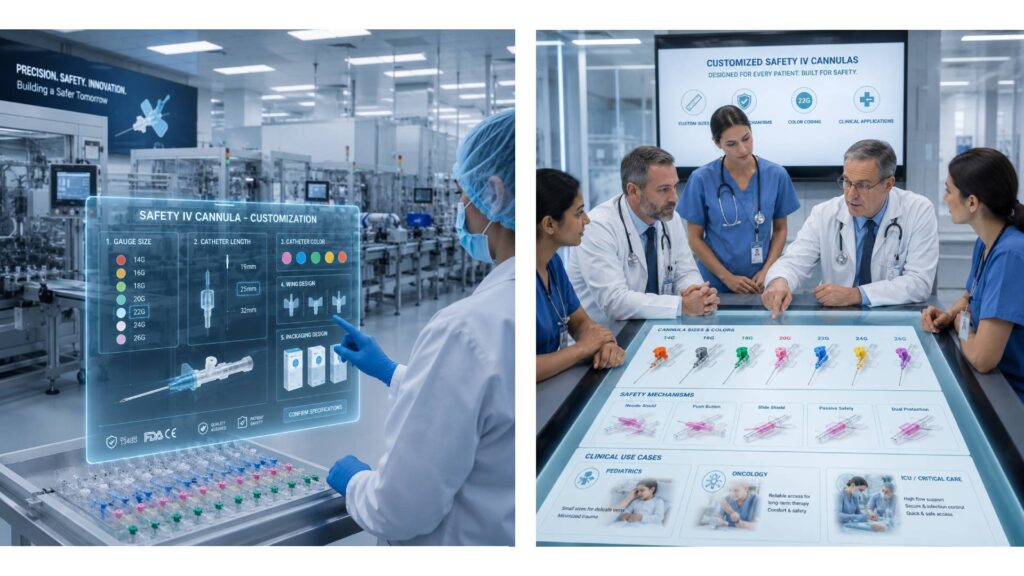
Branding and packaging are other critical areas where customization is increasingly requested, as hospitals look to streamline their supply chains and prevent theft or diversion. Private labeling of safety IV catheters allows institutions to maintain a consistent brand identity within their facility. Additionally, custom procedural trays often necessitate IV catheters with specific packaging dimensions or peel-open features to fit into sterile kits. Wholesalers who offer these tailored packaging solutions help their clients optimize their inventory management systems. This level of service transforms the supplier from a simple vendor into a strategic partner in the healthcare supply chain.
The flexibility offered by customization also allows for better cost management, as buyers can prioritize features that offer the most value while eliminating unnecessary add-ons. Instead of purchasing a “one-size-fits-all” product that may be over-engineered for certain applications, hospitals can order safety IV cannulas that fit their exact needs and budget constraints. This targeted purchasing strategy is essential in an era of rising healthcare costs. As we move into 2026, the market is expected to shift further towards demand-driven manufacturing, where customization is the norm rather than the exception. Distributors must be prepared to offer these flexible solutions to remain competitive.
4. How the B Braun IV Cannula Sets the Standard for Market Leaders
4.1 Why B Braun IV Cannula Technology Is Widely Adopted
The B Braun IV cannula has long been regarded as a gold standard in the industry, setting a high benchmark for quality, safety, and reliability. Its widespread adoption is largely due to the company’s commitment to evidence-based design and rigorous testing protocols. Hospitals trust the brand because it consistently delivers on its promise of patient comfort and clinician safety. The specific engineering of the B Braun IV cannula often features a passive safety mechanism that is intuitive and fail-safe, making it a preferred choice in high-risk environments. For wholesale buyers, stocking this brand ensures they are offering a product that is recognized and requested by healthcare professionals worldwide.
One of the defining features of the B Braun IV cannula is its needle design, which is often coated with silicon to minimize friction during insertion. This attention to detail enhances patient comfort by reducing the force required for penetration, leading to a smoother procedure. Such design elements underscore the importance of material science in the development of safety IV catheters. When competitors evaluate their own product lines, they often use the B Braun IV cannula as the comparative baseline for performance. This dominance in the market makes it a reference point for procurement decisions, influencing the specifications of tenders and purchase contracts.
The reliability of the safety mechanism in the B Braun IV cannula contributes significantly to its reputation. Clinicians report high satisfaction with the device’s feedback mechanisms, which provide clear tactile and auditory confirmation that the needle is secure. This reliability reduces the anxiety associated with potential exposure, allowing staff to focus on patient care. In the wholesale market, products that generate high user satisfaction lead to fewer complaints and returns. Consequently, distributors prioritize the distribution of the B Braun IV cannula to maintain their own reputation for quality service and product excellence.
Furthermore, the comprehensive support and training provided by the manufacturer reinforce the adoption of the B Braun IV cannula. Hospitals appreciate the educational resources and in-service training that accompany these products, ensuring that staff are fully competent in their use. This level of support fosters long-term loyalty to the brand. While generic alternatives exist, the perceived value of the brand, backed by clinical efficacy and customer service, keeps it at the forefront of the market. For B2B buyers, aligning with such a market leader offers a layer of security and trust that is invaluable in the healthcare sector.
4.2 How Competitors Are Innovating Alongside B Braun IV Cannula Designs
While the B Braun IV cannula sets a high standard, market competition is fierce, driving rival manufacturers to innovate and improve upon existing technologies. Competitors are focusing on developing safety IV catheters that offer similar or superior protection at a more competitive price point. This innovation often centers on simplifying the manufacturing process to reduce costs without compromising the integrity of the safety mechanism. The result is a new generation of safety IV cannulas that are cost-effective alternatives for large-scale procurement. Wholesalers benefit from this competition as it expands their portfolio, offering clients choices between premium brands and high-value generic equivalents.
One area of innovation is the development of ultra-thin wall catheters that allow for a higher flow rate with a smaller gauge size, mimicking the performance characteristics of the B Braun IV cannula. Competitors are also integrating advanced polymer technologies to improve catheter flexibility and reduce the risk of phlebitis. These technical advancements are crucial for winning market share in specialized clinical areas such as neonatology and critical care. By pushing the boundaries of material science, competitors are challenging the dominance of established leaders. This dynamic forces continuous improvement across the industry, ultimately benefiting the end-user with better, safer products.
Customization has become a key battleground where competitors seek to differentiate themselves from the B Braun IV cannula. While major brands often have rigid product lines, smaller manufacturers can offer more agility in meeting specific customer requirements. This includes color-coded hubs for easy identification, specialized coatings for specific drug compatibilities, or custom packaging configurations. For wholesale buyers, these flexible competitors offer the opportunity to create unique product bundles tailored to specific hospital systems. This ability to customize is a powerful tool in B2B sales, allowing distributors to solve specific pain points that generic market leaders may overlook.
The rise of global manufacturing hubs has also enabled competitors to produce safety IV cannulas that meet international quality standards (ISO, CE, FDA) at a fraction of the cost. These products are increasingly being adopted by large hospital networks looking to standardize their supplies across different regions while managing budget constraints. While the B Braun IV cannula remains a benchmark, the availability of high-quality alternatives gives procurement officers greater leverage in negotiations. Distributors who can effectively articulate the value proposition of these innovative alternatives—highlighting features, cost-savings, and customization—are well-positioned to capture a significant portion of the market.
5. What Market Trends and Future Insights Predict for 2026
5.1 Why the Demand for Safety IV Catheters Is Growing Globally
The global demand for safety IV catheters is experiencing robust growth, driven by a convergence of regulatory mandates and an increased emphasis on occupational safety across emerging markets. Countries that previously had lax regulations regarding sharps safety are now implementing strict guidelines modeled after those in the US and Europe. This regulatory harmonization is opening up new markets for safety IV cannulas, creating massive opportunities for international wholesalers. Industry projections for 2026 indicate that the Asia-Pacific region will see the highest growth rate, as healthcare infrastructure expands and safety standards rise. This globalization of safety standards is a primary driver for the sustained demand for these products.
The ongoing repercussions of the COVID-19 pandemic have left a lasting imprint on healthcare priorities, with infection control and staff safety remaining paramount. The pandemic highlighted the vulnerability of healthcare workers and accelerated the adoption of PPE and safety-engineered devices. Hospitals are now more willing to allocate budget toward protective equipment, including safety IV catheters, to prevent future outbreaks and protect their workforce. This shift in mindset ensures that the demand for safety IV cannulas will remain resilient even amidst economic fluctuations. For suppliers, this trend represents a stable and growing market need that is insulated from many other economic variables.
Demographic changes, particularly the aging population in developed nations, are also fueling the demand for safety IV catheters. Older patients typically require more frequent medical interventions and longer hospital stays, leading to a higher volume of vascular access procedures. This increase in patient volume necessitates a reliable and safe supply of IV consumables. Furthermore, the geriatric population often presents more challenging venous access, requiring higher quality devices that clinicians can trust. Wholesale buyers are responding to this demographic shift by increasing their inventory levels to ensure they can meet the rising volume of demand without stockouts.
Technological advancements in telemedicine and home healthcare are also creating new avenues for the use of safety IV cannulas. As care moves outside the traditional hospital setting, the need for devices that are safe for use by non-specialists or in home environments grows. Safety IV catheters that prevent accidental sticks are essential for protecting caregivers and family members in home care settings. This expansion of the care continuum broadens the total addressable market for these products. Insight reports for 2026 suggest that the home healthcare segment will be a significant contributor to the overall growth of the safety IV catheter market.
5.2 How Custom Manufacturing Will Shape the Future of Safety IV Cannulas
The future of the safety IV cannula market lies in custom manufacturing, where production lines are agile enough to produce bespoke solutions for specific clients. As hospitals consolidate into larger health systems, the demand for standardized, customized inventory across all facilities becomes more pronounced. Custom manufacturing allows for the creation of safety IV catheters that meet the exact branding and functional specifications of these large networks. This trend moves away from the “one size fits all” model toward a more client-centric approach. For B2B wholesalers, partnering with manufacturers who have strong custom manufacturing capabilities will be a decisive competitive advantage in 2026.
Advancements in manufacturing technologies, such as 3D printing and automated micro-molding, are making it more cost-effective to produce small batches of customized safety devices. This technological leap reduces the minimum order quantities (MOQs) typically associated with custom orders, making customization accessible to mid-sized buyers. It also allows for rapid prototyping of new safety IV catheter designs, speeding up the time-to-market for innovative products. Distributors can leverage these capabilities to offer “beta” programs to hospital partners, testing new designs and features before full-scale production. This collaborative approach fosters deeper business relationships and customer loyalty.
Sustainability is becoming a key focus in custom manufacturing, with a growing demand for eco-friendly materials in safety IV cannulas. Hospitals are under pressure to reduce their environmental footprint and are seeking suppliers who can provide PVC-free or recyclable alternatives. Custom manufacturing processes are adapting to incorporate these green materials without compromising the safety or performance of the IV catheter. Wholesalers who prioritize sustainability in their product offerings will align with the corporate social responsibility goals of major hospital systems. This alignment is increasingly becoming a prerequisite for winning large tenders and contracts in the modern healthcare marketplace.
The integration of smart technology into safety IV catheters represents the frontier of custom manufacturing. While still in its infancy, there is research into catheters that can monitor insertion pressure or signal local infection at the site. These smart safety IV cannulas would require highly specialized manufacturing processes and custom electronic components. Looking ahead to 2026 and beyond, we can expect the first wave of these “smart” safety devices to enter the market. Forward-thinking distributors should monitor these developments closely, as they represent the next evolution of the product category. Being an early provider of such advanced, customized solutions will define the market leaders of the future.
6. How to Select the Right Wholesale Partner for Safety IV Devices
6.1 Why Certifications and Compliance Are Non-Negotiable
When selecting a wholesale partner for safety IV catheters, certifications and compliance must be the foundational criteria for evaluation. The medical device industry is heavily regulated to ensure patient safety, and products must meet stringent standards such as ISO 13485, CE marking, and FDA approval. A wholesaler must be able to provide documented proof that their safety IV cannulas are manufactured in facilities that adhere to these international quality standards. Dealing with non-compliant products exposes hospitals to severe legal risks and potential patient harm. Therefore, verifying the regulatory standing of a supplier is the first and most critical step in the procurement process.
Beyond basic manufacturing certifications, wholesalers must also demonstrate compliance with local medical device regulations and import laws in the regions they serve. The complexity of global supply chains means that a product certified in one country may not be legal for sale in another without additional testing or registration. A competent wholesale partner handles these regulatory hurdles, ensuring that the safety IV catheters they supply are fully cleared for use in the buyer’s specific market. This expertise in regulatory affairs is a valuable service that saves the hospital time and mitigates legal exposure. Buyers should prioritize partners who have a dedicated compliance team to navigate these complex waters.
Traceability is another crucial aspect of compliance that wholesalers must guarantee. In the event of a product recall or safety alert, the hospital must be able to quickly identify and locate all affected units. A robust wholesaler will have advanced tracking systems in place, linking lot numbers of safety IV cannulas to specific shipments and end-users. This transparency is essential for rapid response to quality issues. Hospitals should audit their potential suppliers’ inventory management systems to ensure they offer the necessary traceability. This level of oversight provides peace of mind and ensures that patient safety is never compromised by supply chain opacity.
Finally, adherence to ethical labor practices and environmental standards is increasingly becoming a part of the compliance framework. Large hospital systems often require their vendors to adhere to strict codes of conduct regarding labor rights and sustainability. A wholesale partner who violates these ethical standards poses a reputational risk to the hospital. Consequently, procurement officers are extending their definition of compliance to include social responsibility. Selecting a partner who shares these values ensures a consistent brand image and meets the ethical procurement standards expected by modern stakeholders.
6.2 Which Customization Services Should Be Prioritized
In a crowded marketplace, the ability to offer customization services is a key differentiator for a wholesale partner. Buyers should prioritize suppliers who offer private labeling services, allowing the hospital to brand the safety IV catheters with their own logo and colors. This not only reinforces brand identity but also helps in inventory control by distinguishing hospital-specific stock from general supplies. Customization of packaging, including multi-pack configurations or specific language translations, is another service that adds significant value. These tailored solutions demonstrate the supplier’s flexibility and commitment to meeting the unique needs of the client.
The ability to provide mixed SKUs within a single shipment is a critical service for hospitals that use a variety of safety IV cannula sizes and types. A wholesaler that can consolidate orders and provide customized assortments helps the buyer reduce storage costs and minimize waste. This service is particularly beneficial for smaller facilities that may not need full pallets of a single gauge. Buyers should seek partners who are willing to break bulk and create custom kits tailored to their utilization patterns. This level of service transforms the wholesaler from a mere seller of goods into a strategic inventory manager.
Technical support and product customization go hand in hand. Hospitals often have specific clinical challenges that require a tailored solution, such as a catheter with a specialized length for a particular department. A wholesale partner with strong technical expertise can work with the manufacturer to modify the product specifications to meet these needs. Prioritizing partners who have direct lines of communication with product engineers ensures that customization requests are handled accurately and efficiently. This capability is vital for complex medical institutions that require precision tools for specialized procedures.
Finally, after-sales support and training customization should be considered a priority. The best wholesale partners do not just deliver a box of safety IV catheters; they provide the necessary educational materials and in-service training to ensure proper usage. Customizing this training to fit the hospital’s existing protocols and scheduling is a premium service. Buyers should evaluate the supplier’s willingness to invest in training their staff and the quality of the educational materials provided. A partner who supports the successful implementation of the product ensures that the hospital realizes the full value of its investment in safety technology.
Conclusion
The transition to safety IV catheters and safety IV cannulas is a defining trend in modern healthcare, driven by the imperative to protect staff and improve operational efficiency. As we look toward 2026, the market will continue to evolve, with a strong emphasis on customization, advanced safety mechanisms, and strict regulatory compliance. While market leaders like the B Braun IV cannula continue to set high standards, the landscape is rich with innovation and competitive alternatives that offer value and flexibility.
For hospital procurement teams and wholesale distributors, the strategic path forward involves selecting partners who not only supply high-quality products but also offer the customization and technical support necessary to meet specific clinical needs. By prioritizing safety-engineered devices and fostering strong B2B relationships, healthcare facilities can significantly reduce the incidence of needlestick injuries and create a safer, more productive environment for both patients and providers.
Frequently Asked Questions
1. What are safety IV catheters and why are they essential for hospitals?
Safety IV catheters are vascular access devices engineered with built-in mechanisms to protect healthcare workers from accidental needlestick injuries. Unlike traditional catheters, these devices feature safety shields or clips that automatically engage to cover the needle after use. They are essential because they provide a primary line of defense against the transmission of blood-borne pathogens, significantly enhancing occupational safety. For hospital procurement, investing in safety IV catheters is crucial for regulatory compliance and reducing the substantial costs associated with injury management and liability.
2. How does a safety IV cannula differ from a standard IV cannula?
The primary difference lies in the integrated safety mechanism designed to reduce the risk of contamination and injury. A standard IV cannula leaves the needle exposed after removal, requiring manual disposal which poses a risk. In contrast, a safety IV cannula incorporates either a passive or active system that blunts or covers the needle tip immediately upon withdrawal from the vein. This design ensures that the hazardous sharp is rendered safe before it leaves the patient’s site, making it a superior choice for high-risk clinical environments.
3. Why is the B Braun IV cannula considered a market benchmark?
The B Braun IV cannula is widely regarded as a market benchmark due to its proven reliability, innovative design, and high-quality manufacturing standards. It often features advanced passive safety mechanisms and intuitive feedback indicators that clinicians trust. Furthermore, its needle design is optimized for patient comfort, minimizing insertion force. For wholesale buyers, the B Braun IV cannula represents a standard against which other safety IV cannulas are measured, offering a reference point for quality and performance in procurement decisions.
4. What are the advantages of purchasing safety IV catheters in bulk?
Purchasing safety IV catheters wholesale allows hospitals and distributors to achieve significant cost savings through economies of scale while ensuring a consistent supply of critical medical devices. Bulk buying reduces unit costs and price volatility, which is vital for maintaining budget stability in large healthcare networks. Additionally, wholesale orders often come with favorable terms and priority shipping, ensuring that hospitals never face shortages. This procurement strategy supports the standardization of safety protocols across all departments by guaranteeing uniform inventory availability.
5. Can safety IV cannulas be customized for specific hospital requirements?
Yes, many manufacturers offer extensive customization options for safety IV cannulas to meet the specific needs of healthcare facilities. Customization can range from private labeling with the hospital’s logo to specific catheter gauges, lengths, and packaging configurations tailored for procedural trays. These bespoke solutions allow hospitals to streamline their supply chain and ensure the devices perfectly fit their clinical workflows. Wholesale partners who provide these tailored services enable buyers to address unique clinical challenges while reinforcing their brand identity within the facility.
6. How do passive safety mechanisms improve clinical workflow?
Passive safety mechanisms improve clinical workflow by eliminating the need for the clinician to manually activate a safety feature, thereby requiring no extra steps after the IV insertion is complete. The mechanism activates automatically as the needle is withdrawn, allowing the healthcare worker to focus entirely on patient stabilization and dressing the site. This hands-free activation is particularly beneficial in emergency settings where speed is critical. By reducing cognitive load and procedural steps, safety IV cannulas with passive mechanisms enhance overall efficiency and compliance in busy hospital wards.
7. Are safety IV catheters cost-effective despite a higher initial price?
While safety IV catheters may have a higher upfront unit cost compared to standard devices, they are highly cost-effective when analyzing the total cost of ownership. The financial burden of a single needlestick injury—including testing, treatment, follow-up, and potential litigation—far exceeds the price difference of safety-engineered devices. Furthermore, these devices reduce downtime and Workers’ Compensation claims. Consequently, the return on investment for safety IV catheters is realized through the prevention of costly adverse events and the promotion of a safer work environment.
8. What regulatory standards should buyers look for when sourcing safety IV cannulas?
Buyers should ensure that any safety IV cannula they purchase complies with stringent international regulatory standards, such as ISO 13485 for quality management, CE marking for European markets, and FDA clearance in the United States. Compliance with these certifications guarantees that the devices have undergone rigorous testing for safety and efficacy. Additionally, wholesalers should verify that the manufacturer adheres to occupational safety regulations, such as OSHA guidelines regarding blood-borne pathogens. Ensuring these certifications mitigates legal risks and ensures patient and staff safety.
9. How will the safety IV catheter market evolve by 2026?
Market insights for 2026 predict a significant shift towards more sustainable manufacturing practices and the integration of smart technology into safety IV catheters. Demand is expected to grow globally, particularly in emerging markets that are adopting stricter healthcare regulations. There will also be an increased focus on custom manufacturing, allowing for more patient-specific and protocol-specific designs. Wholesalers can expect a move towards eco-friendly materials and data-enabled devices that track usage patterns, further driving the evolution of the safety IV cannula market.
10. How should a hospital select a wholesale partner for safety IV devices?
A hospital should select a wholesale partner based on their ability to guarantee compliance, supply chain reliability, and customization capabilities. The ideal partner will have a robust quality assurance system to ensure product integrity and the logistical capacity to handle bulk orders efficiently. They should also offer value-added services such as staff training, technical support, and flexible inventory management. By prioritizing partners who align with the hospital’s safety goals and operational needs, procurement officers can ensure a steady supply of high-quality safety IV devices.