1. Why Are Transfusion Sets Critical in Modern Healthcare?
The role of transfusion sets in the medical ecosystem cannot be overstated, as they serve as the primary conduit for delivering life-saving fluids to patients. These devices are meticulously designed to ensure the safe and efficient transfer of blood and blood products from a container to a patient’s circulatory system. For wholesale buyers and hospital procurement managers, understanding the clinical gravity of these devices is essential. A reliable blood transfusion set acts as a critical safeguard against contamination, air embolism, and other complications that can arise during fluid administration. The integrity of these devices directly impacts patient outcomes, making quality assurance a top priority for manufacturers and distributors alike.
Recent 2025 industry data indicates a significant surge in global surgical procedures and trauma cases, driving the demand for high-quality consumables. As healthcare systems expand, the necessity for robust supply chains becomes evident, placing pressure on suppliers to maintain consistent stock levels of premium transfusion sets. Market analysis suggests that the volume of blood transfusion procedures is projected to grow steadily through 2026, necessitating that wholesale partners scale their inventory accordingly. This trend highlights the shift toward preventive stockpiling by medical institutions to avoid shortages during peak demand periods, thereby securing the stability of patient care protocols.
Furthermore, the clinical importance of these sets extends beyond simple fluid delivery; they are integral to maintaining hemostasis and managing shock in critical care scenarios. The precision engineering behind a modern blood transfer set ensures that flow rates can be accurately controlled, which is vital during pediatric care or geriatric treatments where volume overload is a risk. Manufacturers focusing on clinical efficacy are now integrating advanced features that reduce the risk of hemolysis and clot formation. For B2B buyers, this means that sourcing devices with superior clinical specifications is not just a preference but a requirement for maintaining high standards of care in competitive healthcare markets.
Finally, the emphasis on patient safety has led to rigorous regulatory standards that define the performance criteria for these medical devices. Compliance with international standards such as ISO and CE is non-negotiable for businesses looking to operate in the global market. The clinical importance of using certified transfusion sets lies in their ability to minimize infection rates and transfusion reactions. As we move into 2026, regulatory bodies are expected to tighten these controls further, encouraging wholesalers to partner with manufacturers who prioritize transparency in material sourcing and production quality control.
1.1 Why Patient Safety Depends on Reliability
Patient safety is the cornerstone of any medical procedure, and the reliability of a blood transfusion set is paramount in achieving this goal. The design of these sets incorporates multiple safety features, such as air vents and in-line filters, which are engineered to trap micro-aggregates and prevent air from entering the vein. A failure in any of these components can lead to severe, potentially fatal complications. Consequently, hospitals and clinics prioritize suppliers who can demonstrate a consistent track record of manufacturing excellence and product reliability, ensuring that every unit delivered meets the highest safety benchmarks.
The materials used in the construction of these sets, typically medical-grade PVC, are selected for their biocompatibility and flexibility. However, the shift toward non-DEHP and non-PVC materials is gaining momentum in response to growing concerns about patient long-term health and environmental impact. Wholesale buyers are increasingly seeking out these safer alternatives to cater to the risk-averse procurement policies of large healthcare networks. By stocking transfusion sets that utilize advanced, safer materials, distributors can position themselves as partners in patient safety rather than mere vendors of commoditized goods.
1.2 How Market Demand Drives Innovation
The escalating demand for transfusion sets is driven by a complex mix of demographic shifts and medical advancements. An aging population, coupled with the rising prevalence of chronic conditions requiring blood components, has created a sustained need for efficient transfusion technologies. This demand acts as a catalyst for innovation, pushing manufacturers to develop sets that offer better flow dynamics and user-friendly features. For B2B clients, staying abreast of these innovations is crucial for modernizing their product offerings and meeting the evolving expectations of healthcare providers.
Innovation in this sector is also geared toward reducing the workload of nursing staff through intuitive design improvements. Features like sharp, easy-to-puncture spikes and clearly marked drip chambers help in reducing setup time and administration errors. As we look toward 2026 market insights, industry experts predict a rise in the integration of smart technologies that could monitor flow rates digitally. Wholesale distributors who align their inventory with these cutting-edge developments will likely capture a larger market share, as hospitals seek to upgrade their infrastructure with smarter, safer medical tools.
1.3 Which Sectors Rely Most on Consistent Supply
While general hospitals are the primary consumers of transfusion sets, several other sectors rely heavily on a consistent and high-quality supply. Trauma centers, oncology clinics, and dialysis centers utilize these products in high volumes due to the nature of the treatments they provide. The military and disaster relief organizations also represent a critical niche, requiring rugged and portable blood transfer sets for use in field operations. For wholesalers, diversifying their client base to include these sectors can provide stability against market fluctuations in general hospital spending.
The veterinary sector is another often-overlooked segment that requires specialized transfusion sets, particularly for large animal care and emergency pet medicine. These specialized applications often require custom specifications regarding needle gauge and tubing length, presenting a unique opportunity for customized manufacturing. Understanding the specific needs of these varied sectors allows B2B sellers to tailor their sales strategies and product bundles effectively. By recognizing the distinct requirements of trauma centers versus veterinary clinics, suppliers can ensure they are meeting the precise demands of each clinical environment.
2. Which Essential Components Define a High-Quality Blood Transfusion Set?
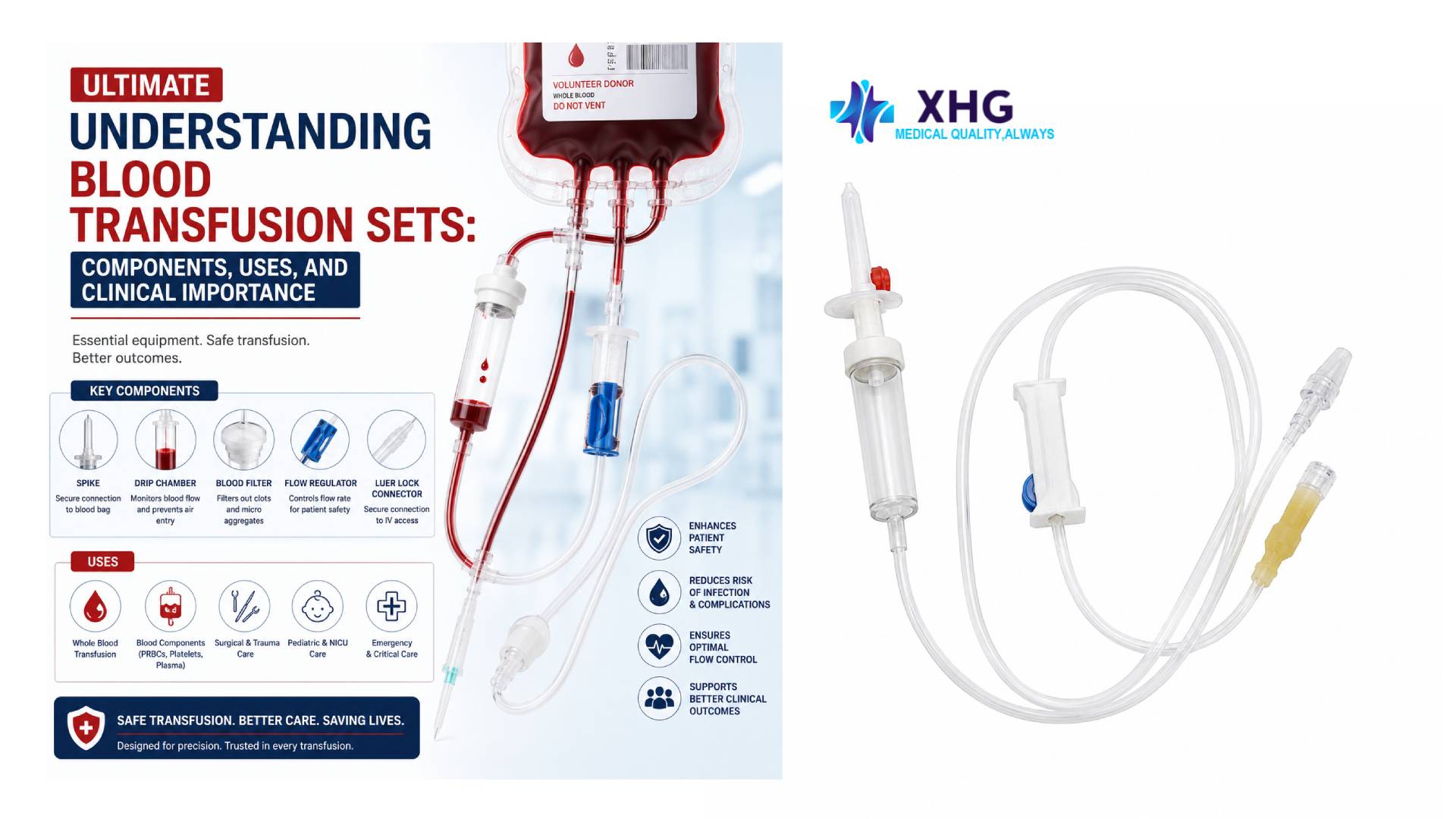
A high-quality blood transfusion set is an assembly of precisely engineered components, each serving a distinct and vital function in the transfusion process. Understanding the anatomy of these sets allows procurement officers to make informed decisions when selecting products for bulk purchase. The primary assembly typically includes a spike or piercing needle, a drip chamber, a flexible tubing line, a roller clamp for flow regulation, and an injection site for medication administration. The quality of these individual parts determines the overall performance of the set, making it essential for buyers to scrutinize the specifications provided by manufacturers.
The spike, for instance, must be sharp enough to pierce the blood bag port effortlessly without creating shards that could contaminate the fluid. High-end spikes often feature vents that allow air to enter the bottle to replace the displaced fluid, or non-vented designs for collapsible bags. The material composition of these components is critical; they must be robust yet flexible enough to withstand handling without cracking. For wholesalers, emphasizing the durability of these components in their marketing materials can build trust with buyers who are tired of the frequent failures associated with low-cost, inferior imports.
The tubing acts as the highway for the blood, and its internal diameter must be optimized to allow for a smooth, unimpeded flow. Standardization of tubing length is common, yet there is a growing market for customized lengths tailored to specific medical procedures, such as operating room setups where space is at a premium. A superior blood transfer set will utilize tubing that is kink-resistant and transparent, allowing for the immediate visual detection of air bubbles or clots. B2B customers value these features as they directly correlate to operational efficiency and patient safety during critical transfusions.
Furthermore, the inclusion of a robust roller clamp is essential for manual regulation of the flow rate. Precision-molded clamps ensure that the flow can be adjusted smoothly and completely shut off without damaging the tubing. In premium sets, these clamps are designed to offer tactile feedback, allowing nurses to adjust settings without constantly looking at the apparatus. The integration of these high-quality components into a single, cohesive unit defines the difference between a standard commodity and a premium medical device, offering a clear value proposition for discerning buyers.
2.1 How the Drip Chamber Facilitates Flow Control
The drip chamber is a critical component that serves as the window into the transfusion process, allowing healthcare professionals to monitor the flow rate visually. It is designed to allow the fluid to form drops at a measurable rate, which is then converted to an approximate flow rate in milliliters per hour. A well-designed drip chamber prevents the formation of foam, which can interfere with accurate counting and potentially introduce air into the line. Wholesale suppliers should prioritize sets that feature chambers with clear, flexible walls and optimized internal geometry to ensure consistent drop formation.
In addition to monitoring, the drip chamber acts as a reservoir that prevents air from passing down the tubing if the primary bag runs dry. This safety mechanism is vital in preventing air embolisms, a rare but dangerous complication. Some advanced drip chambers come equipped with micro-filter screens integrated directly into the base, capturing larger aggregates before they enter the tubing pathway. For 2025 procurement strategies, highlighting the safety features of the drip chamber can be a strong selling point, as hospitals continue to prioritize equipment that minimizes clinical risks.
2.2 Why Tubing Material Quality Matters
The material quality of the tubing is perhaps the most scrutinized aspect of a transfusion set, primarily due to its direct contact with the blood product. Medical-grade PVC has been the industry standard for decades due to its clarity and flexibility, often plasticized with DEHP to enhance softness. However, recent trends have shifted toward DEHP-free alternatives due to concerns about the leaching of chemicals into stored blood, particularly for vulnerable populations like neonates. Wholesalers offering a range of material options, including non-PVC and thermoplastic elastomer (TPE) tubing, are better positioned to meet the diverse ethical and clinical requirements of modern healthcare facilities.
The flexibility of the tubing is not merely about patient comfort; it plays a crucial role in preventing kinks that can stop the flow or cause turbulence that might damage blood cells. High-quality tubing maintains its patency even when the patient’s arm moves, reducing the need for nursing intervention. Additionally, the transparency of the material is essential for detecting the presence of air or clots immediately. As we approach 2026, the market is seeing innovations in tubing coatings that reduce thrombogenicity, further improving the safety profile of blood transfer sets and opening new avenues for premium product lines.
2.3 Which Filter Mechanisms Ensure Blood Purity
Filtration is a non-negotiable feature in any transfusion set, designed to remove clots, micro-aggregates, and debris that may accumulate in stored blood. Standard filters typically have a pore size of around 170 to 260 microns, which is sufficient to trap large particulates without impeding the flow of red blood cells. However, specialized sets are available with finer filters for specific applications, such as platelet transfusions or for patients with a history of transfusion reactions. Providing a portfolio of sets with varying filtration capabilities allows B2B buyers to cater to specialized departments like hematology and oncology.
The placement and design of the filter within the set are also crucial for performance. Filters must be positioned to ensure all fluid passes through them without creating air pockets or trapping excessive blood volume. Some manufacturers are developing integrated filter systems that combine air elimination with particulate filtration, enhancing the overall safety profile. For suppliers, understanding the technical nuances of these filtration mechanisms is key to advising customers correctly. By stocking sets with advanced filtration technologies, distributors can address the growing demand for high-safety transfusion products in the competitive medical marketplace.
3. How Do Various Types of Transfusion Sets Address Specific Clinical Needs?
The clinical landscape is diverse, requiring a variety of transfusion sets tailored to specific medical situations and patient demographics. Standard gravity transfusion sets are the most common, utilized for routine blood administration in general wards. However, specialized scenarios demand specialized equipment. For instance, rapid infusion sets are designed with wider-bore tubing to facilitate the fast delivery of large volumes of blood, essential in trauma and emergency resuscitation. Understanding these distinctions allows wholesale buyers to segment their inventory and provide targeted solutions to their clients, rather than a one-size-fits-all approach.
Pediatric care requires highly specialized equipment to prevent fluid overload and ensure the safety of young patients. Pediatric blood transfusion sets are equipped with smaller volume drip chambers and finer roller clamps that allow for precise, micro-level flow control. Additionally, these sets often feature smaller gauge needles to minimize discomfort and tissue damage. For B2B suppliers, highlighting the availability of pediatric-specific options is crucial for securing contracts with maternity wards and children’s hospitals, as these institutions have strict procurement protocols that prioritize patient-specific safety features.
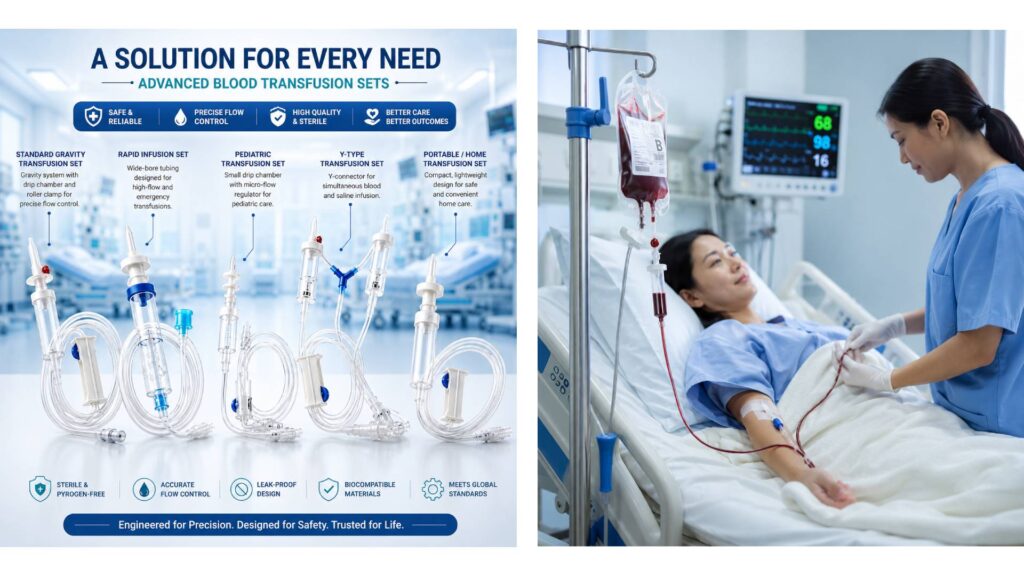
Another critical variation is the Y-type blood transfusion set, which allows for the simultaneous administration of blood and compatible intravenous solutions like saline. This design is particularly beneficial in operating rooms and intensive care units where rapid volume expansion and medication administration are required concurrently. The Y-connector design reduces the need for multiple venipuncture sites, lowering the risk of infection and improving patient comfort. By offering these multi-functional sets, wholesalers can provide added value to hospitals looking to streamline their inventory and reduce the complexity of their medical consumables.
Furthermore, the rise of ambulatory care and home healthcare services has created a demand for portable and user-friendly transfusion sets. These sets are designed for ease of use by patients or non-specialist caregivers, often featuring simplified clamping mechanisms and durable construction. As healthcare moves beyond the hospital walls, the market for these adaptable devices is expected to grow significantly through 2026. Distributors who recognize this shift and stock portable, easy-to-use transfusion sets will tap into a rapidly expanding segment of the healthcare market, driven by the desire to reduce hospital stays and associated costs.
3.1 How Gravity Sets Function in Routine Care
Gravity transfusion sets remain the workhorse of routine medical care, relying on the force of gravity to drive the fluid from the bag to the patient. Their simplicity, reliability, and cost-effectiveness make them a staple in every hospital ward. The mechanism is straightforward: the height difference between the blood bag and the patient’s vein creates the hydrostatic pressure needed for flow. For wholesalers, the high turnover rate of these consumables presents a steady revenue stream, making them a core component of any medical supply catalog. Ensuring a consistent supply of high-quality gravity sets is fundamental to maintaining strong relationships with hospital purchasers.
Despite their simplicity, the design of gravity sets has evolved to enhance safety and usability. Modern iterations include features like back-check valves to prevent reflux and specially designed spikes to ensure a secure fit with various bag ports. The efficiency of these sets directly impacts nursing efficiency, as reliable sets require less monitoring and adjustment. When marketing these products, emphasizing the balance between cost-effectiveness and clinical reliability can resonate with procurement managers who are tasked with maintaining budget controls without compromising on care standards.
3.2 Why Specialized Sets Are Necessary for Pediatrics
Pediatric patients possess unique physiological characteristics that necessitate the use of specialized transfusion sets to ensure safety and efficacy. The smaller blood volume of infants and children makes them highly susceptible to volume overload, a risk that standard sets cannot adequately mitigate. Pediatric blood transfer sets are specifically calibrated to deliver exact volumes, often featuring a micro-drip chamber that creates 60 drops per milliliter compared to the standard 20. This level of precision is vital for maintaining the delicate fluid balance required in neonatal intensive care units and pediatric oncology wards.
Beyond flow rate accuracy, the materials and construction of pediatric sets are subject to even stricter safety standards. The elimination of any sharp edges and the use of ultra-smooth, biocompatible materials help prevent irritation and phlebitis in small, fragile veins. For businesses involved in the wholesale of medical devices, carrying a certified line of pediatric transfusion sets is a mark of credibility and social responsibility. It demonstrates an understanding of the nuanced needs of all patient demographics, fostering trust with specialized healthcare providers who are often the most critical regarding product quality.
3.3 Which Features Benefit Surgical and Emergency Teams
In the high-stakes environments of operating rooms and emergency departments, speed and reliability are paramount. Surgical teams often utilize blood transfusion sets that are optimized for rapid flow, featuring large-diameter tubing and high-capacity filters to handle the quick administration of multiple blood units. These sets are designed to withstand the rigors of a busy OR, where they may be moved, draped, or manipulated frequently during procedures. For wholesale suppliers, marketing these sets as “high-performance” or “rapid-infusion” solutions targets the specific needs of surgical and trauma buyers who prioritize speed and volume delivery.
Additionally, emergency response teams require sets that are versatile and easy to set up under less-than-ideal conditions. Features like color-coded components and clearly labeled connection points can reduce setup time during critical moments, potentially saving lives. The durability of the packaging is also a consideration, as emergency supplies must remain sterile even when stored in ambulances or portable trauma kits. By focusing on the robustness and readiness of these emergency-grade transfusion sets, B2B sellers can effectively address the pain points of emergency medical services (EMS) providers and military medical procurement officers.
4. Why Is Customization Vital for Wholesale Blood Transfer Set Buyers?
In the highly competitive medical device market, off-the-shelf solutions often fail to meet the specific branding or clinical requirements of large healthcare networks. Customization has emerged as a key differentiator for wholesale buyers, allowing them to offer products that are tailored to the unique needs of their clients. Whether it is adjusting the length of the tubing, specifying the type of filter, or modifying the packaging to include hospital branding, customization adds significant value. This capability allows distributors to move beyond competing solely on price and instead compete on service and product alignment, fostering deeper, long-term partnerships with healthcare providers.
Customization also extends to the material composition of the sets, enabling hospitals to adhere to specific internal sustainability or safety goals. For example, a hospital system committed to reducing plastic waste might prioritize transfusion sets made from bio-based or recyclable materials. Others might mandate DEHP-free options across all departments to standardize patient safety protocols. By partnering with manufacturers who offer flexible material selection, wholesalers can cater to these institutional mandates, securing contracts that might otherwise be lost to competitors who only provide standard, rigid product lines.
The packaging of medical consumables is another area where customization plays a pivotal role. Sterile barrier packaging can be designed to optimize storage space in crowded hospital storerooms or to include specific tracking information for inventory management systems. Custom peel-open pouches or boxes with color-coded labeling can improve efficiency in the supply chain, reducing the time nurses spend searching for the right products. For B2B buyers, proposing customized packaging solutions is an effective strategy to demonstrate understanding of the logistical challenges faced by their clients, thereby solidifying their role as a strategic partner rather than a simple supplier.
Furthermore, private labeling offers a significant opportunity for regional distributors and larger hospital groups to build their own brand identity. By purchasing unbranded or OEM (Original Equipment Manufacturer) transfusion sets and applying their own labels, businesses can increase brand loyalty and trust among their staff and patients. This trend is particularly strong in growing markets where local players are striving to establish a market presence against global multinationals. Wholesalers who facilitate this customization process enable their clients to leverage the clinical quality of established manufacturing while building their own market brand, creating a win-win scenario for all parties involved.
4.1 How Branding and Packaging Influence Purchasing Decisions
Branding and packaging are often overlooked factors in the procurement of medical consumables, yet they hold significant sway over purchasing decisions, particularly at the administrative level. Custom packaging that features a hospital’s logo and color schemes can reinforce a sense of institutional identity and professionalism. For wholesale buyers, offering private-label options is a powerful value-add that allows hospital systems to standardize their inventory under a single brand. This standardization simplifies training for new staff, as they become familiar with the specific look and feel of their own branded supplies, reducing the likelihood of errors.
From a logistical standpoint, customized packaging can be engineered to fit specific storage units or dispensing machines used within the hospital. Efficiency in the operating room or blood bank depends on the rapid identification and retrieval of supplies. Packages that are easy to open, clearly marked with lot numbers, and designed for minimal waste contribute to smoother clinical workflows. By focusing on these functional packaging details, wholesalers can provide tangible operational benefits to their clients, making their customized blood transfer set offerings more attractive than generic alternatives.
4.2 Why Tailored Technical Specifications Improve Outcomes
The clinical efficacy of a transfusion set can be significantly enhanced by tailoring its technical specifications to the intended use case. Not all medical scenarios are identical, and a set that works perfectly in a dialysis center might be suboptimal for an ICU. Customization allows for the selection of specific needle gauges, tubing lengths, and clamp types that best suit the procedural habits of the medical staff. For instance, a surgical team might prefer a longer tube to accommodate the distance between the IV pole and the patient during complex procedures, whereas a trauma team might prioritize a shorter, more responsive line.
Providing the option to customize these specifications empowers the end-users to optimize their own workflows, leading to better patient outcomes and higher staff satisfaction. It reduces the friction caused by using ill-fitting equipment, thereby allowing clinicians to focus entirely on the patient rather than struggling with the hardware. For B2B sellers, engaging in a consultative sales process to determine these specific technical needs can dramatically increase client retention. When a distributor goes the extra mile to supply a blood transfusion set that fits the client’s exact specifications, they become an indispensable part of the healthcare delivery chain.
4.3 Which Regulatory Aspects Require Custom Attention
Navigating the regulatory landscape is a complex aspect of distributing medical devices, and customization often introduces additional layers of compliance that must be carefully managed. Different regions have specific requirements regarding material safety, biocompatibility testing, and labeling. For example, the European MDR (Medical Device Regulation) imposes strict traceability requirements that may necessitate custom labeling with unique device identifiers (UDIs). Wholesalers must ensure that any customized transfusion sets they source comply with the relevant regulations of the target market to avoid costly recalls or legal issues.
Customization also requires close collaboration with the manufacturer to ensure that any changes to the design or materials do not compromise the product’s certification status. If a hospital requests a specific modification, such as a different type of filter or tubing material, the product may need to undergo additional testing to maintain its CE or FDA clearance. B2B buyers must possess a thorough understanding of these regulatory implications to guide their clients effectively. By offering customization services that are fully compliant with international standards, wholesalers provide peace of mind to their clients, ensuring that the innovative products they deliver are also safe and legal.
5. How Can Businesses Navigate the 2026 Market Landscape for Transfusion Equipment?
As the healthcare industry looks toward 2026, the market for transfusion equipment is poised for significant transformation driven by technological integration and evolving economic pressures. Businesses operating in this space must adopt a proactive strategy to navigate these changes successfully. This involves staying informed about emerging trends such as the shift toward sustainable manufacturing and the increasing adoption of digital tracking in supply chains. Wholesale buyers who anticipate these shifts can adjust their procurement strategies early, securing advantageous positions in a market that is becoming increasingly competitive and innovation-driven.
One of the most prominent trends expected to gain momentum by 2026 is the integration of sustainability into the manufacturing of disposable medical devices. Environmental concerns are prompting healthcare providers to seek out eco-friendly alternatives, even in single-use items like transfusion sets. Manufacturers are responding by developing biodegradable plastics and reducing packaging waste. For B2B distributors, aligning their product portfolio with these green initiatives is not just an ethical choice but a strategic business move. Catering to the growing demand for sustainable medical products will be a key differentiator in the near future, appealing to hospitals striving to meet their own environmental, social, and governance (ESG) goals.
Digitalization is another frontier that will reshape the market landscape. The future of transfusion sets may see the incorporation of smart labels or RFID tags that enhance traceability and inventory management. These technologies enable real-time tracking of stock levels and expiration dates, reducing waste and improving the efficiency of blood banks. Businesses that invest in the infrastructure to handle and distribute these “smart” medical consumables will be better equipped to serve high-tech hospital systems. Understanding the logistical requirements of these advanced products is essential for wholesalers looking to modernize their operations and offer value-added services to their clients.
Moreover, the economic landscape of 2026 will likely be characterized by a continued focus on cost-containment in healthcare. Procurement managers will be under increasing pressure to reduce expenses without compromising on quality. This dynamic creates a demand for high-value, cost-effective transfusion sets that offer reliability at a competitive price point. Wholesalers can capitalize on this by optimizing their supply chains, perhaps by sourcing directly from manufacturers in regions known for cost-effective production while maintaining rigorous quality control. By balancing cost-efficiency with clinical reliability, businesses can thrive in a market that is as financially demanding as it is clinically rigorous.
5.1 How Supply Chain Resilience Impacts Availability
The disruptions witnessed in recent years have underscored the critical importance of supply chain resilience in the healthcare sector. For transfusion sets, which are consumables with constant demand, any interruption in supply can have dire consequences for patient care. Building a resilient supply chain involves diversifying sourcing strategies, maintaining buffer stocks, and establishing strong relationships with reliable manufacturers. As we approach 2026, geopolitical factors and transportation challenges will continue to pose risks, making it imperative for wholesalers to develop robust contingency plans to ensure uninterrupted product availability.
Resilience also translates to the ability to scale up production rapidly in response to sudden surges in demand, such as during a mass casualty event or a pandemic outbreak. Buyers should seek partners with flexible manufacturing capabilities who can ramp up production at short notice. Additionally, investing in predictive analytics can help businesses forecast demand spikes more accurately, allowing for proactive inventory management. By prioritizing supply chain resilience, wholesalers protect their clients from shortages and demonstrate their commitment to being a dependable partner in the healthcare infrastructure.
5.2 Why Strategic Partnerships with Manufacturers Matter
In a market characterized by rapid technological change and evolving regulatory requirements, strategic partnerships between wholesalers and manufacturers are more important than ever. A close collaboration allows for better communication regarding product developments, customization options, and potential supply chain bottlenecks. For businesses dealing in transfusion sets, having a direct line to the manufacturer can expedite the resolution of technical issues and facilitate the adoption of new product innovations. These partnerships enable wholesalers to offer their clients the latest advancements in transfusion technology as soon as they become available.
Furthermore, strong manufacturer relationships can provide wholesalers with preferential pricing, exclusive distribution rights for innovative products, and insights into future market trends. This insider knowledge is invaluable for strategic planning and inventory management. In the B2B context, the wholesaler acts as the bridge between the innovator and the end-user. By solidifying this bridge through strategic alliances, businesses can enhance their value proposition, ensuring they are not just moving boxes but delivering cutting-edge clinical solutions to the healthcare facilities that rely on them.
5.3 Which Trends Will Define the Next Era of Procurement
The procurement landscape of 2026 will be defined by a convergence of digital transformation, data-driven decision-making, and a heightened focus on sustainability. Buyers will increasingly rely on e-procurement platforms that streamline the ordering process, provide real-time inventory data, and facilitate transparent communication with suppliers. Wholesalers of transfusion sets must ensure their digital infrastructure is compatible with these platforms to remain accessible to modern procurement managers. The ability to offer seamless digital transactions will become a baseline expectation, not a competitive advantage.
Data analytics will also play a crucial role in procurement strategies. Hospitals will analyze usage patterns to identify cost-saving opportunities and standardize their product lines across different facilities. Wholesalers who can provide detailed usage data and support their clients in this analysis will become trusted advisors. Additionally, the trend toward group purchasing organizations (GPOs) will likely strengthen, requiring wholesalers to navigate contracts and volume commitments carefully. By aligning their offerings with the data-driven, efficiency-focused mindset of the future procurement era, businesses can secure their position in the market for years to come.
Conclusion
The landscape of medical consumables is intricate, where clinical necessity meets complex supply chain dynamics. Understanding the components, variations, and clinical importance of transfusion sets is fundamental for any business operating in the B2B healthcare sector. As we look toward the future, the ability to provide customized, high-quality, and compliant blood transfusion sets will distinguish market leaders from mere followers. By focusing on patient safety, embracing customization, and preparing for the trends of 2026, wholesalers can ensure they provide essential value to healthcare providers, ultimately contributing to better patient outcomes worldwide.
Frequently Asked Questions
1. What are the primary components of a standard blood transfusion set?
A standard blood transfusion set consists of several critical components designed to ensure safe and efficient delivery. These include a piercing spike for accessing the blood bag, a drip chamber for flow monitoring and air filtration, flexible tubing (usually medical-grade PVC), a roller clamp for flow regulation, and an injection site for administering additional medication. High-quality sets also incorporate a filtration mesh to trap micro-aggregates, ensuring patient safety.
2. Why is customization important for wholesale buyers of transfusion sets?
Customization allows wholesalers and healthcare providers to tailor products to specific clinical needs and branding requirements. This can include adjusting tubing length for specific procedures, selecting different needle gauges for pediatrics versus adults, or using non-DEHP materials for sensitive patient populations. Additionally, customized packaging and private labeling help hospitals streamline inventory management and build brand identity, offering a competitive edge in the B2B market.
3. How do gravity transfusion sets differ from rapid infusion sets?
Gravity transfusion sets rely on the height of the IV bag to create hydrostatic pressure for fluid flow and are typically used for routine administrations. In contrast, rapid infusion sets feature wider-bore tubing and specialized mechanisms to allow for the fast delivery of large blood volumes. These are essential in trauma centers and operating rooms where quick blood replacement is critical to stabilizing patients.
4. What are the key market trends for transfusion sets in 2025 and 2026?
The market is shifting towards sustainability, with an increasing demand for eco-friendly and non-PVC materials. Additionally, digital integration is becoming prevalent, with expectations for smart packaging featuring RFID tags for better traceability. There is also a growing emphasis on supply chain resilience and “just-in-time” delivery models to help healthcare providers manage inventory efficiently amid rising global demand.
5. What safety features should buyers look for in a blood transfer set?
Buyers should prioritize sets with sharp, debris-free spikes to prevent contamination during bag piercing. In-line filters are essential to remove clots and aggregates, while drip chambers with anti-foaming designs ensure accurate flow monitoring. Furthermore, roller clamps that provide precise tactile control help prevent accidental free-flow or under-infusion, enhancing overall patient safety.
6. Why is the shift toward DEHP-free materials significant?
DEHP (Di-2-ethylhexyl phthalate) is a plasticizer traditionally used to soften PVC tubing, but concerns about its potential leaching into blood products have driven a shift toward safer alternatives. DEHP-free transfusion sets are increasingly preferred for neonates, pregnant women, and long-term care patients to minimize health risks. Wholesalers offering these alternatives cater to hospitals looking to adopt stricter safety standards and reduce environmental impact.
7. How do Y-type transfusion sets benefit clinical workflows?
Y-type transfusion sets feature two distinct access ports, allowing for the simultaneous administration of blood and compatible intravenous solutions, such as saline or medications. This design is highly beneficial in operating rooms and ICUs as it reduces the need for multiple venipunctures, minimizes infection risk, and allows for greater flexibility in managing complex patient fluid requirements.
8. What regulatory standards must transfusion sets meet?
Transfusion sets must comply with stringent international standards to ensure safety and efficacy, such as ISO 8536-4 and USP Class VI standards for biocompatibility. Depending on the region, they may also require CE marking for Europe or FDA clearance for the United States. Wholesale buyers must verify that their manufacturers hold these certifications to avoid legal liabilities and ensure product quality.
9. How can wholesalers ensure the quality of bulk transfusion set orders?
Wholesalers should partner with manufacturers who provide transparent quality control documentation, including material traceability and sterility test reports. Conducting regular audits and requesting samples for pre-shipment inspection can help verify that the products meet technical specifications. Establishing strong, long-term relationships with reputable manufacturers is key to maintaining consistency in bulk orders.
10. Why is supply chain resilience critical for transfusion equipment?
Given the critical nature of blood transfusions in emergency and surgical care, any interruption in the supply of transfusion sets can have life-threatening consequences. Supply chain resilience involves diversifying suppliers, maintaining strategic buffer stocks, and utilizing predictive analytics to forecast demand surges. This ensures that healthcare providers always have access to essential medical consumables, regardless of global logistical disruptions.