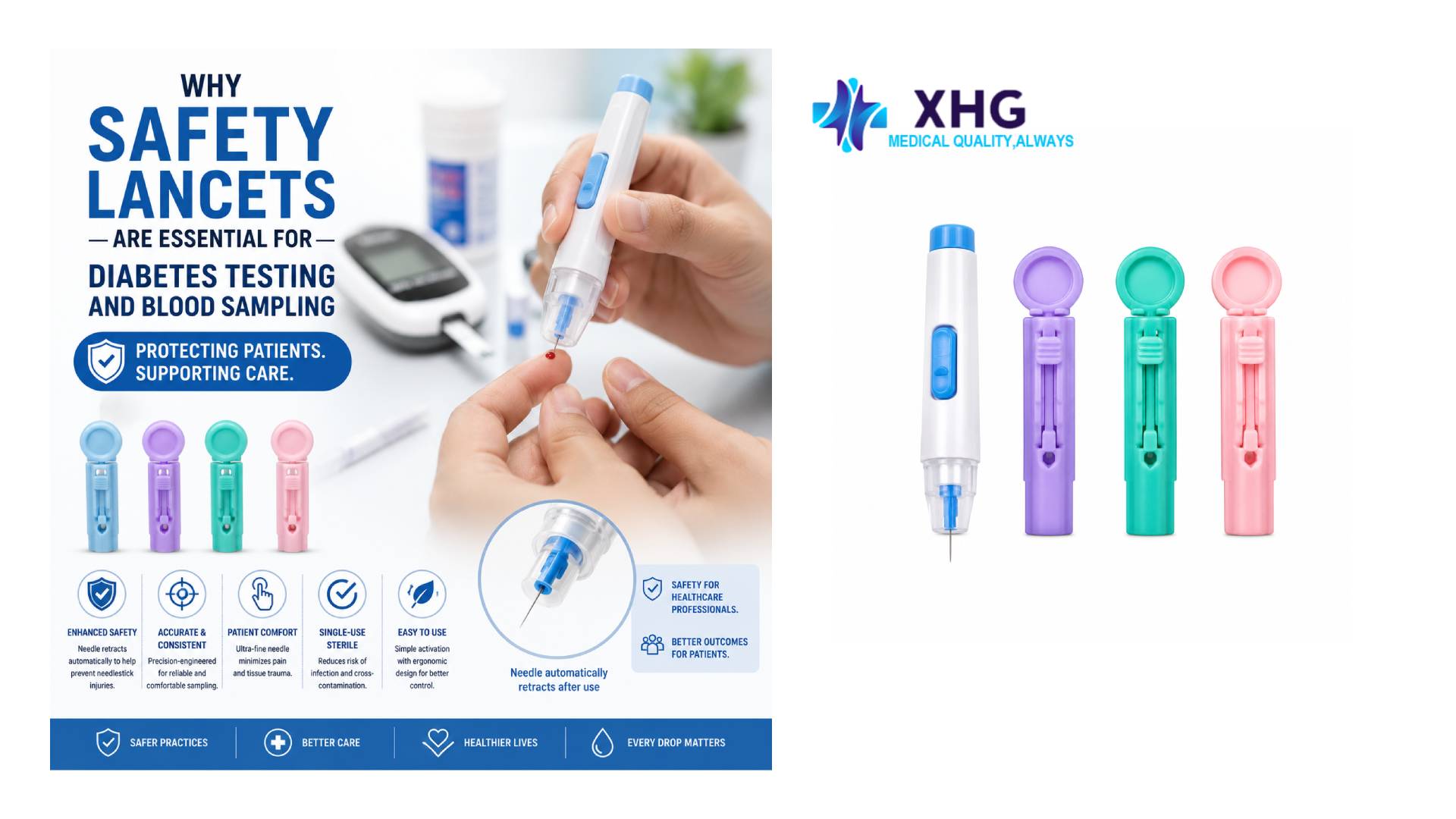
The global healthcare landscape is undergoing a significant paradigm shift regarding infection control and occupational safety, with Safety Lancets emerging as a cornerstone of this transition. As the prevalence of diabetes continues to rise globally, the demand for reliable, safe, and user-friendly blood sampling devices has never been higher. For distributors, hospitals, and procurement managers, understanding the value proposition of these devices is essential for making informed inventory decisions that prioritize both patient welfare and institutional liability. This shift is not merely a trend but a necessary evolution in standard of care, driven by stringent regulations and a collective commitment to harm reduction.
The reliance on traditional, reusable lancing devices poses significant risks, including cross-contamination and accidental needlestick injuries, which can transmit blood-borne pathogens. In contrast, Safety Lancets are engineered as single-use, disposable devices that permanently retract or blunt the needle immediately after use, effectively eliminating the primary vector of injury. This design integrity is crucial for maintaining a sterile environment in high-throughput settings such as hospitals, clinics, and large-scale screening camps. Consequently, the adoption of these devices is becoming a mandatory compliance metric rather than an optional upgrade for healthcare facilities aiming to uphold the highest safety standards.
For wholesalers and B2B buyers, the pivot toward safety-engineered devices represents a substantial opportunity to align product catalogs with current market demands. Healthcare providers are increasingly seeking partnerships with suppliers who can guarantee consistent quality and safety compliance, making the availability of certified Safety Lancets a key differentiator in the medical supply chain. By stocking these essential items, distributors not only fulfill a critical need but also position themselves as proactive partners in public health. This strategic alignment ensures that businesses remain competitive in a market where safety accreditation and product reliability are paramount.
Recent industry forecasts for 2025 indicate a surge in procurement volumes for safety-engineered sharp devices, projected to grow at a Compound Annual Growth Rate (CAGR) of over 7% through 2026. This growth is fueled by an aging population and the escalating global burden of diabetes management, which requires frequent blood glucose monitoring. As regulatory bodies tighten guidelines on occupational safety for healthcare workers, the market penetration of Safety Lancets is expected to accelerate, replacing older, less safe technologies. B2B buyers must, therefore, anticipate this demand spike by securing robust supply chains and comprehensive product ranges that cater to diverse clinical requirements.
1. Why Safety Lancets Are Critical in Modern Healthcare
The primary driver for the widespread adoption of Safety Lancets is the imperative to reduce the incidence of needlestick injuries among healthcare professionals. These injuries are not only a physical trauma but also a significant psychological burden, carrying the risk of transmitting serious infections such as Hepatitis B, Hepatitis C, and HIV. Safety mechanisms integrated into these devices ensure that the needle is rendered inoperable immediately after the puncture, thereby neutralizing the hazard at the source. This proactive approach to safety protects the workforce and reduces the substantial costs associated with post-exposure prophylaxis and follow-up testing, which can amount to thousands of dollars per incident.
Beyond the immediate physical protection, the implementation of Safety Lancets serves as a critical component of risk management and liability mitigation for healthcare institutions. Facilities that fail to provide safety-engineered devices may face regulatory fines, litigation, and increased insurance premiums due to preventable workplace injuries. By standardizing the use of safety-engineered devices, institutions demonstrate a commitment to occupational health, fostering a culture of safety that improves staff morale and retention. For B2B purchasers, supplying these products allows them to offer a solution that directly addresses their clients’ risk management strategies, adding value beyond the basic unit cost of the goods.
The psychological comfort provided to patients is another, often overlooked, benefit of using high-quality Safety Lancets. In diabetes care, where patients must perform frequent self-testing, the fear of pain and accidental injury can lead to non-compliance with monitoring regimens. Modern safety lancets are designed for precision and comfort, utilizing ultra-sharp needles and smooth activation mechanisms to minimize tissue trauma. This patient-centric design encourages regular testing, which is vital for effective disease management and better long-term health outcomes, making these devices a preferred recommendation for clinicians and educators.
Market data from early 2025 highlights a strong correlation between the use of safety-engineered devices and improved operational efficiency in point-of-care testing. Because Safety Lancets are pre-sterilized, single-use, and require no assembly or disassembly, they streamline the blood sampling process, saving valuable time for nursing staff. This efficiency is particularly crucial in busy emergency departments and during mass vaccination or screening drives, where speed and safety are both priorities. As the healthcare sector continues to emphasize operational excellence, the demand for devices that combine safety with efficiency is set to dominate procurement agendas through 2026 and beyond.
2. How Safety Lancets Revolutionize Diabetes Testing
The evolution of Safety Lancets has fundamentally changed the landscape of diabetes testing by introducing mechanisms that ensure consistent penetration depth and blood sample volume. Unlike traditional lancets where the depth can be inconsistent depending on the user’s technique, safety variants often feature pre-set or adjustable depths that guarantee an adequate sample for glucose meters every time. This consistency is vital for accurate readings, as variable penetration can lead to insufficient blood flow or excessive pain, both of which compromise the testing process. For distributors, highlighting the reliability of these devices is key when addressing the needs of diabetes clinics and home care providers.
Specifically designed Blood Lancets for Glucose Testing have incorporated advanced manufacturing technologies to produce needles that are significantly sharper and thinner than those used in the past. This technological advancement reduces the force required to puncture the skin, thereby diminishing the sensation of pain for the user. A less painful experience is critical for pediatric patients and those with sensitive skin, ensuring that the daily routine of glucose monitoring is less daunting. By offering premium Blood Lancets for Glucose Testing, wholesalers can cater to a segment of the market that prioritizes patient comfort and adherence to treatment protocols above all else.
Customization plays a pivotal role in how these devices revolutionize care, as manufacturers now offer a variety of gauge sizes and activation types to suit different patient demographics and testing scenarios. For instance, a facility requiring Blood Lancets for Glucose Testing for neonatal care will need different specifications compared to a geriatric clinic. Wholesale suppliers that provide a tailored range of products enable their clients to select the exact tool required for their specific patient population, thereby enhancing the quality of care provided. This ability to customize orders—from gauge size to brand packaging—allows B2B buyers to meet niche market demands effectively.
Looking ahead to 2026, industry insights suggest that the integration of smart technology with safety lancets will further revolutionize diabetes management. While currently mechanical, future iterations of Blood Lancets for Glucose Testing may feature indicators or connectivity features that log usage times, aiding patients in tracking their testing habits. As the market moves toward interconnected digital health ecosystems, safety lancets will remain the primary physical interface for data collection. Businesses that invest in understanding and stocking these evolving technologies will be well-positioned to capitalize on the next wave of innovation in diabetes care products.
3. Which Features Define High-Quality Safety Lancets
Identifying superior Safety Lancets requires a thorough understanding of the engineering and material standards that dictate product performance. High-quality devices are characterized by tri-bevel needle tips, which are polished to an extreme smoothness to facilitate effortless skin penetration with minimal trauma. The sharpness of the needle is a defining quality metric, as a duller blade can cause increased pain and tissue damage, leading to poor patient experiences. For B2B buyers and procurement officers, prioritizing suppliers who adhere to strict manufacturing tolerances is essential to ensure that the products delivered meet the highest clinical standards of care.
The reliability of the safety mechanism itself is the most critical feature to evaluate when selecting Safety Lancets. A high-quality device must guarantee that the needle is fully retracted or permanently blocked immediately after use, with zero possibility of accidental re-exposure. This mechanism must be intuitive and easy to activate, yet robust enough to function reliably 100% of the time, regardless of user technique. Testing for this feature involves rigorous quality control checks, and reputable manufacturers will provide certification and compliance data to verify the efficacy of their safety designs. Wholesale customers should demand this documentation to mitigate liability and ensure product consistency.
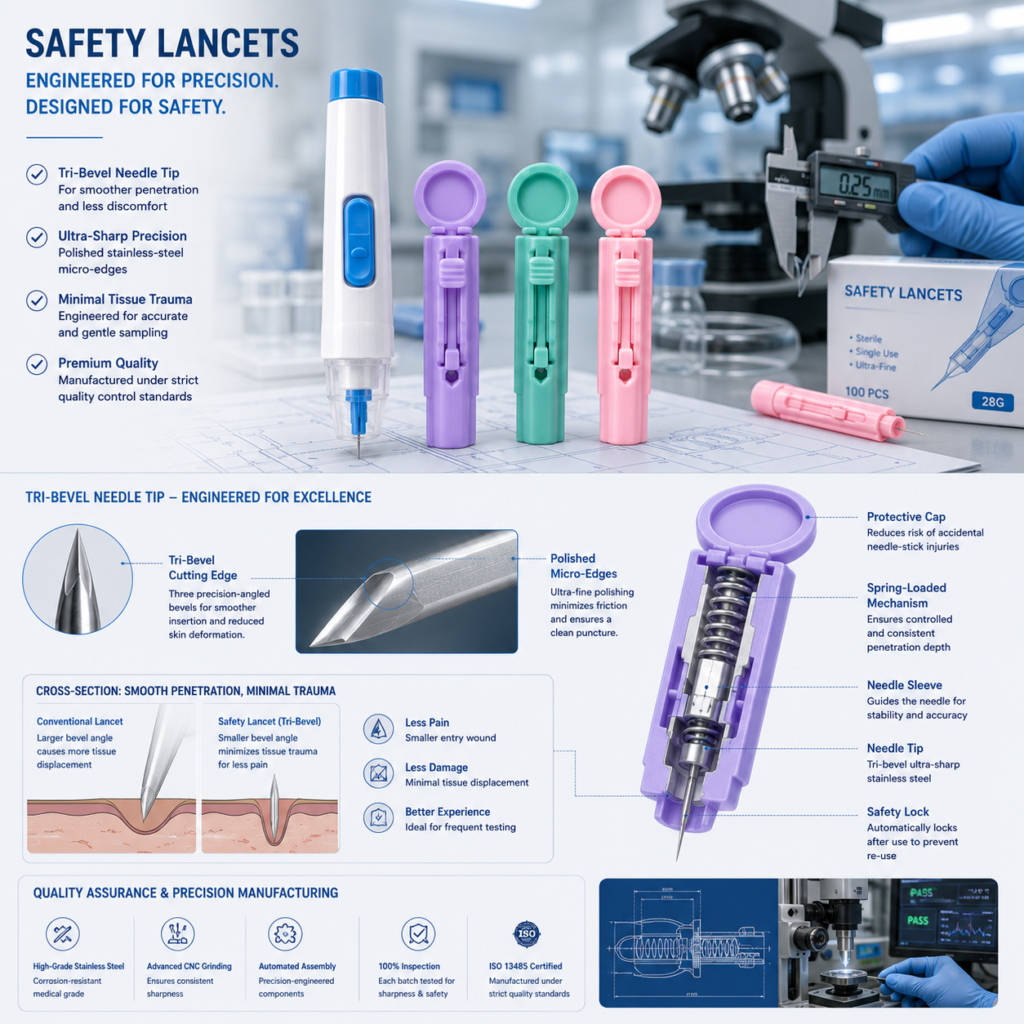
Sterility and packaging integrity are non-negotiable attributes that define the quality of Safety Lancets and Blood Lancets for Glucose Testing. Each unit must be individually wrapped in tamper-evident packaging that maintains sterility until the moment of use, preventing contamination that could lead to site infections. Furthermore, the packaging material should be durable enough to withstand transportation and storage without compromising the seal. For distributors, ensuring that the supply chain handles these products with care is vital, as compromised packaging renders the product unusable and dangerous, directly affecting the end-user’s trust in the brand.
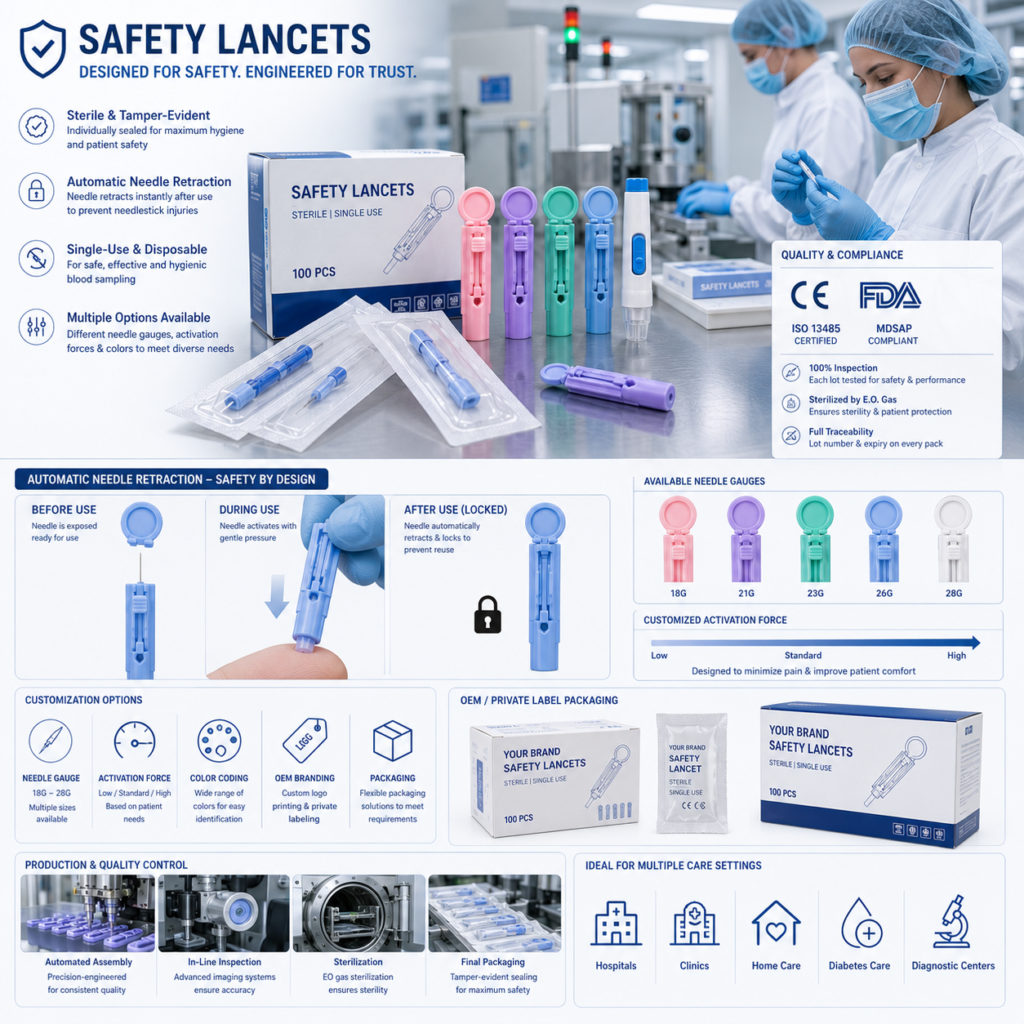
Finally, the availability of customization options serves as a hallmark of a premium manufacturer capable of serving diverse wholesale needs. High-quality suppliers offer OEM and ODM services, allowing buyers to specify needle gauges, penetration depths, activation forces, and even brand packaging. This level of customization is particularly important for Blood Lancets for Glucose Testing, where different health systems may require specific product configurations to align with their protocols. By partnering with manufacturers who offer this flexibility, B2B clients can differentiate their product offerings in a crowded market and secure long-term contracts with large healthcare systems seeking tailored solutions.
4. How Wholesale Partnerships Drive Cost Efficiency
Establishing strong wholesale partnerships for Safety Lancets is a strategic move that unlocks significant economies of scale for healthcare providers and distributors alike. Purchasing in bulk allows for substantial unit cost reductions, which is a critical consideration for large hospital networks and government health programs operating on tight budgets. These savings can be redirected to other areas of patient care or used to upgrade medical equipment, thereby enhancing the overall capability of the healthcare institution. By leveraging wholesale pricing, buyers can maintain a steady stock of essential consumables without suffering the financial volatility associated with smaller, frequent orders.
Beyond the basic unit price, wholesale partnerships often provide value-added services such as inventory management and just-in-time delivery systems. For Safety Lancets, which are consumables used in high volumes, efficient logistics are crucial to prevent stockouts that could disrupt clinical operations. A reliable wholesale partner acts as an extension of the purchaser’s supply chain team, using data analytics to predict usage patterns and automate replenishment orders. This logistical efficiency reduces overhead costs associated with storage and manual ordering, providing a hidden layer of cost efficiency that benefits the bottom line of the purchasing organization.
Customization through wholesale channels offers a pathway to brand development and market differentiation that justifies a higher margin or fosters stronger customer loyalty. When a distributor works directly with a manufacturer to create custom-branded Safety Lancets, they are effectively building a private label that resonates with their client base. This brand equity allows healthcare providers to market their commitment to safety and quality to their patients, reinforcing trust. For the wholesaler, this creates a defensible market niche where they compete on brand value and service rather than just price, insulating them from aggressive price wars in the commodity sector.
Market analysis for 2025 suggests that supply chain resilience will be a primary determinant of success in the medical device sector. Recent global disruptions have taught buyers that having a direct relationship with a manufacturer or a primary wholesaler of Safety Lancets is a safeguard against shortages. By securing allocation agreements and priority status through wholesale contracts, businesses ensure continuity of supply even during periods of high demand or logistical constraint. This security is invaluable for B2B buyers who cannot afford to have their operations halted by a lack of essential supplies like blood lancets for glucose testing.
5. Why Customization Is the Future of Blood Sampling Devices
The future of blood sampling lies in the shift from a “one-size-fits-all” approach to highly personalized, customized solutions that address specific clinical and demographic needs. As precision medicine advances, the requirement for Safety Lancets that cater to unique skin types, ages, and medical conditions becomes more pronounced. For example, neonatal care demands extremely fine gauges with minimal penetration depth, whereas adult patients with calloused skin may require a higher-pressure device. Manufacturers that offer a spectrum of customizable options enable healthcare providers to deliver optimized care, positioning themselves as leaders in a specialized and evolving market.
Customization also extends to the branding and packaging of Blood Lancets for Glucose Testing, offering a powerful tool for building institutional identity. Hospitals, pharmacies, and diabetes care centers are increasingly seeking private-label solutions to enhance their professional image and foster patient loyalty. A customized lancing device packaged with a clinic’s branding serves as a subtle yet constant reminder of the care provider’s commitment to quality and safety. For wholesalers and B2B suppliers, offering these OEM customization services is a key strategy for deepening relationships with clients, transforming a simple transaction into a collaborative business partnership.
Sustainability is emerging as a critical factor in product customization, with 2026 market insights pointing toward a demand for eco-friendly medical disposables. While Safety Lancets are single-use for safety reasons, the materials used in their construction—from the plastic casing to the packaging—can be engineered to be more environmentally sustainable. Forward-thinking manufacturers are exploring biodegradable plastics and reduced packaging volumes to meet the growing corporate social responsibility goals of their clients. Providing sustainable customization options allows wholesalers to align their product portfolios with the green initiatives of major healthcare systems, which is increasingly becoming a prerequisite for large contracts.
Technological integration is the final frontier of customization, where future iterations of Safety Lancets may be designed to interact seamlessly with digital health platforms. Customization in this context involves creating devices that are compatible with specific lancing devices or data loggers, facilitating automatic recording of blood glucose events. As the Internet of Medical Things (IoMT) expands, the ability to offer hardware that is “future-proof” and compatible with digital ecosystems will be a significant competitive advantage. B2B buyers who recognize this trend and seek out manufacturers capable of integrating hardware with software solutions will lead the market in the coming years.
Conclusion
The indispensable role of Safety Lancets in modern diabetes testing and blood sampling is undeniable, driven by a convergence of safety regulations, market growth, and technological advancements. As the industry moves toward 2026, the focus is increasingly on products that not only prevent injury and ensure accuracy but also offer customization and supply chain reliability. For wholesalers, distributors, and healthcare providers, the strategic procurement of high-quality Blood Lancets for Glucose Testing is a critical investment in patient safety and operational excellence. By prioritizing partnerships that offer flexibility, quality, and customization, businesses can ensure they remain at the forefront of this essential healthcare sector.
Frequently Asked Questions
1. Why are safety lancets considered superior to traditional lancets for clinical use?
Safety Lancets are engineered with built-in mechanisms to retract or blunt the needle immediately after a single use, significantly reducing the risk of needlestick injuries and cross-contamination. Unlike traditional lancets, which require manual recapping or disposal of an exposed sharp, safety variants protect both the healthcare worker and the patient from potential exposure to blood-borne pathogens. For B2B buyers, stocking these devices is essential for ensuring compliance with occupational safety regulations and minimizing liability within healthcare facilities.
2. How does the gauge size of Blood Lancets for Glucose Testing affect the patient experience?
The gauge size refers to the thickness of the needle; a higher gauge number indicates a thinner needle. Blood Lancets for Glucose Testing are available in various gauges, such as 28G, 30G, and 33G, allowing healthcare providers to select the most appropriate option for their patient’s skin type and testing requirements. Thinner lancets (higher gauge) generally cause less pain and are ideal for frequent testing or pediatric patients, while lower gauge lancets ensure adequate blood flow for patients with thicker or calloused skin.
3. Which customization options are available for wholesale orders of safety lancets?
Wholesale suppliers often provide extensive customization options, including OEM (Original Equipment Manufacturer) and ODM (Original Design Manufacturer) services, to meet specific branding and functional needs. Clients can customize the needle depth, activation mechanism (push-button or side-trigger), color coding, and packaging to align with their private label. This level of customization allows distributors to offer a unique product portfolio that stands out in the competitive medical supply market while catering to the specific protocols of different healthcare institutions.
4. How do safety lancets contribute to cost efficiency in a high-volume medical setting?
While the unit price of Safety Lancets may be slightly higher than traditional alternatives, they offer substantial long-term cost savings by preventing expensive needlestick injuries, which require testing, treatment, and potential worker compensation claims. Additionally, their pre-set depth and single-use design streamline the blood sampling process, reducing staff time per procedure and minimizing the risk of device malfunction. For wholesale buyers, purchasing these devices in bulk ensures a lower cost per unit and maximizes budget efficiency across large hospital networks.
5. What are the key regulatory standards to look for when sourcing Blood Lancets for Glucose Testing?
When sourcing Blood Lancets for Glucose Testing, it is critical to verify that the products meet international quality and safety standards, such as ISO 13485 for quality management systems and ISO 8537 for single-use lancets. Compliance with regulations like the European Union’s Medical Device Regulation (MDR) or the FDA’s requirements in the United States ensures that the devices are sterile, safe, and effective for clinical use. B2B buyers should always request certification documentation from manufacturers to guarantee product reliability and market acceptance.
6. Why is the adoption of safety lancets expected to grow through 2025 and 2026?
Market trends indicate a growing adoption of Safety Lancets driven by an increasing global prevalence of diabetes, heightened awareness of infection control, and stricter government mandates regarding occupational safety for healthcare workers. As healthcare systems evolve to prioritize patient and staff safety, the demand for safety-engineered sharp devices is projected to grow at a robust rate. This shift presents a significant opportunity for wholesalers to expand their inventory and secure long-term contracts with providers transitioning away from conventional devices.
7. How does the needle mechanism in safety lancets ensure operator safety?
The primary safety mechanism in these devices involves a spring-loaded system that automatically retracts the needle into the plastic housing after it punctures the skin, or permanently shields the needle tip with a locking mechanism. This design ensures that the contaminated sharp is never exposed again after use, effectively eliminating the risk of accidental injury during disposal. This feature is particularly valuable in busy environments like emergency rooms or diabetes clinics where the speed of procedure combined with safety is paramount.
8. Which types of facilities benefit most from purchasing safety lancets in bulk?
Facilities that perform high volumes of capillary blood sampling, such as hospitals, diagnostic laboratories, diabetes clinics, and blood donation centers, benefit the most from purchasing Safety Lancets in bulk. These institutions require a consistent, reliable supply of consumables to maintain operational efficiency and patient throughput. Furthermore, public health organizations conducting large-scale screening programs rely on wholesale purchases to keep costs manageable while ensuring the highest safety standards for their staff and participants.
9. How can private labeling help distributors in the safety lancet market?
Private labeling allows distributors to market Blood Lancets for Glucose Testing under their own brand name, fostering brand loyalty and recognition among their client base. By partnering with a manufacturer capable of high-quality custom packaging and printing, distributors can differentiate themselves from competitors who sell generic products. This strategy builds trust with healthcare providers who look for reliable, branded supplies and enables distributors to capture a larger share of the market value.
10. Why is tri-bevel needle technology important in Blood Lancets for Glucose Testing?
Tri-bevel needle technology creates a sharpened, three-sided edge on the lancet tip, allowing for smoother and more comfortable skin penetration with less force. This advanced sharpening process minimizes patient discomfort and reduces the trauma to the skin tissue, promoting faster healing and preventing bruising. For B2B buyers, ensuring that the Blood Lancets for Glucose Testing utilize tri-bevel technology is a mark of quality that enhances patient satisfaction and encourages compliance with regular testing routines.