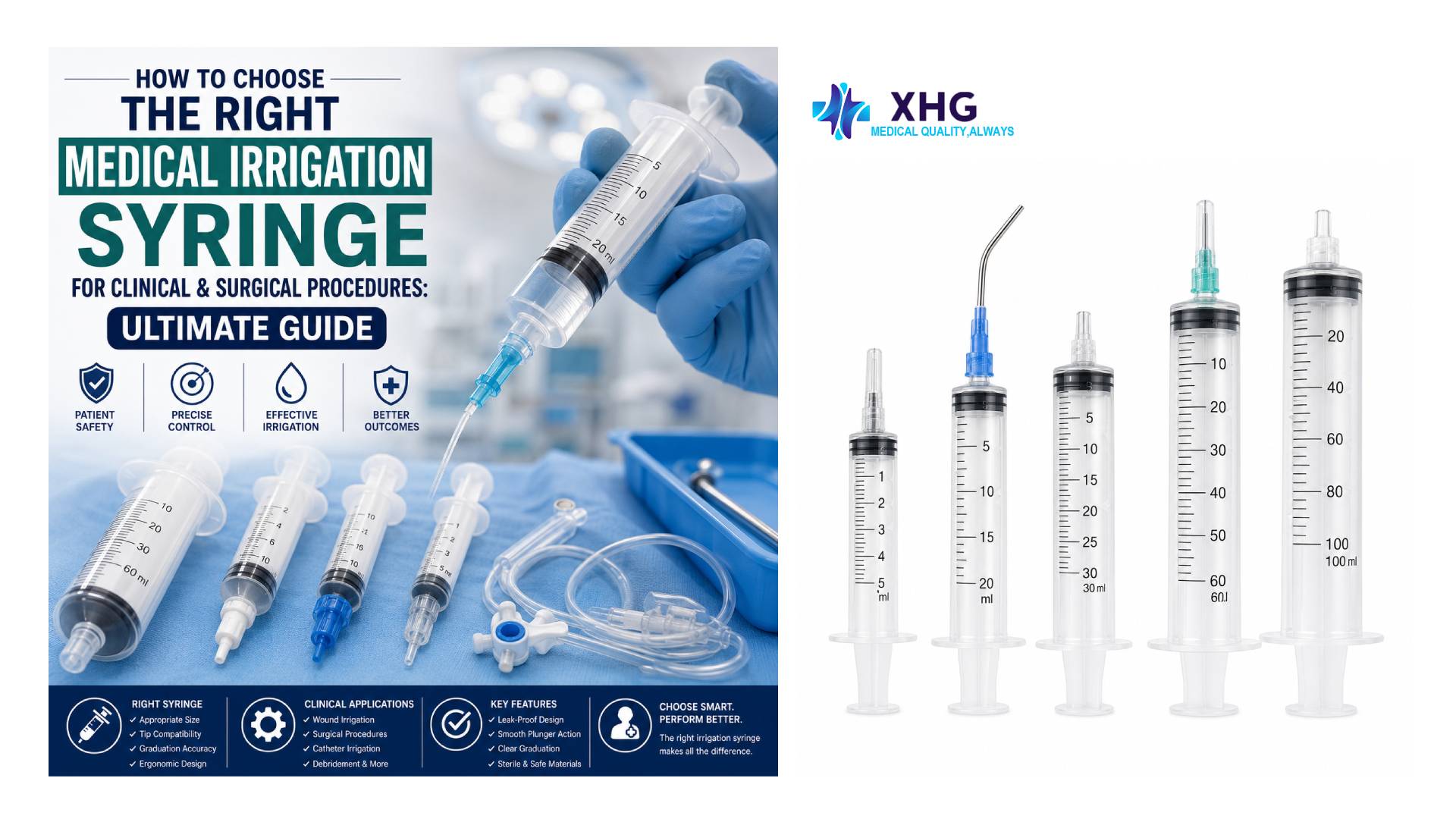
In the complex landscape of modern healthcare, the selection of basic medical tools plays a disproportionately large role in patient outcomes and operational efficiency. Among these tools, the medical irrigation syringe stands out as a critical component in both clinical and surgical settings. Ensuring that healthcare providers have access to high-quality, reliable irrigation solutions is not merely a matter of convenience but a fundamental requirement for patient safety. For wholesale buyers and procurement managers, understanding the nuances of these products is essential to making informed decisions that align with both clinical standards and budgetary constraints.
The market for medical supplies is becoming increasingly sophisticated, with a growing emphasis on devices that offer precision, safety, and cost-effectiveness. A medical irrigation syringe serves diverse functions, ranging from wound cleansing to delicate surgical rinsing, necessitating a variety of designs and specifications. As the demand for these disposable and reusable devices grows, so does the need for buyers to discern which products offer the best value and performance. This is particularly relevant for B2B transactions, where bulk purchasing decisions impact entire healthcare networks.
Choosing the right irrigation syringe involves more than just selecting a volume size; it requires a deep understanding of material compatibility, tip design, and sterility assurance. In an era where hospital-acquired infections are a major concern, the integrity of a sterile irrigation syringe is paramount. Furthermore, the rise of customized medical solutions allows healthcare facilities to tailor their inventory to specific procedural needs, improving workflow and patient care simultaneously. This guide explores the critical factors that influence the selection of irrigation syringes, providing insights tailored for wholesale and customization-focused procurement strategies.
As we look toward the evolving medical device landscape, the importance of strategic sourcing cannot be overstated. The ability to choose the right manufacturing partners and product specifications will define the success of healthcare providers in delivering high-quality care. By focusing on the technical and commercial aspects of irrigation syringes, buyers can navigate the market with confidence, ensuring they secure products that meet rigorous clinical demands while optimizing their supply chain.
1. Why Choosing the Right Medical Irrigation Syringe is Critical for Patient Safety
Patient safety is the cornerstone of all medical procedures, and the equipment used plays a vital role in minimizing risks. A medical irrigation syringe is frequently used in open wounds and sterile surgical fields, meaning any compromise in the device’s quality can lead to severe complications, including infections or tissue trauma. Wholesale buyers must recognize that their choice of supplier directly influences the standard of care delivered at the point of use. Ensuring that every syringe meets strict quality control measures is the first line of defense against preventable medical errors.
The mechanism of action for an irrigation syringe involves delivering fluid to remove debris, bacteria, and necrotic tissue from a wound site. If the device malfunctions, such as a plunger sticking or a tip detaching, the procedure can be delayed, or worse, the patient can be harmed. Consequently, the reliability of a medical irrigation syringe is non-negotiable. For procurement officers, this means prioritizing manufacturers that utilize robust quality assurance protocols, ensuring that every unit performs consistently under pressure. A focus on durability and precision engineering is essential to maintain the highest safety standards.
In the context of mass procurement, the stakes are even higher. A single defect in a batch of sterile irrigation syringes can have ripple effects across a hospital system, potentially leading to widespread infection risks. Therefore, choosing the right product involves a thorough vetting of the manufacturer’s history, compliance records, and technological capabilities. Buyers must look beyond price tags and consider the long-term implications of equipment failure on patient health and institutional liability. This rigorous selection process is crucial for maintaining trust in healthcare delivery.
Furthermore, the specific application of the syringe—whether for routine wound care or intricate surgical irrigation—dictates the safety features required. For instance, syringes used in surgical settings may require Luer lock mechanisms to prevent accidental disconnection, whereas wound irrigation syringes might need specific tip designs to control fluid pressure. Understanding these nuances allows buyers to source the right tools for the right job, thereby enhancing patient safety. A tailored approach to procurement, focusing on specific clinical needs, ensures that the medical irrigation syringe inventory is both safe and effective.
1.1 How Improper Irrigation Tools Compromise Clinical Outcomes
Using substandard irrigation devices can significantly derail the healing process and introduce new pathogens into a patient’s system. When a wound irrigation syringe fails to deliver consistent pressure, it may inadequately clean the wound bed, leaving behind contaminants that cause infection. Inconsistent fluid flow can also damage delicate new tissue growth, delaying recovery times and increasing the duration of hospital stays. For healthcare providers, this translates to higher costs and reduced patient satisfaction, highlighting the need for reliable equipment.
Clinical outcomes are heavily dependent on the mechanical efficiency of the tools used. A syringe with a rough finish or poor-quality plunger can cause friction, generating particulate matter that could be introduced into the wound. Additionally, if the material of the medical irrigation syringe is not biocompatible, it may react with the irrigation solution or the patient’s tissue, causing inflammation. These factors underscore the importance of selecting products made from high-grade medical polymers that ensure smooth operation and biocompatibility.
The impact of poor clinical outcomes extends beyond the individual patient to the reputation of the healthcare institution. Outbreaks traced back to contaminated or defective equipment can lead to severe regulatory penalties and loss of accreditation. Therefore, sourcing irrigation syringes from reputable manufacturers who adhere to international safety standards is a strategic imperative. Wholesale buyers play a pivotal role in this ecosystem by enforcing strict quality criteria that prevent the entry of inferior products into the medical supply chain.
Ultimately, the goal of any irrigation procedure is to promote healing and prevent complications. Achieving this requires tools that are designed with precision and manufactured with care. By avoiding improper or low-quality irrigation tools, healthcare facilities can ensure better clinical outcomes, reduced infection rates, and faster patient turnover. This focus on quality procurement is a direct investment in the overall efficacy of healthcare delivery.
1.2 Why Sterility Standards Define the Quality of a Sterile Irrigation Syringe
Sterility is the most critical attribute of any device used in invasive procedures. A sterile irrigation syringe must be free from viable microorganisms to prevent introducing infections into sterile sites or open wounds. The manufacturing process for these syringes must occur in a controlled environment, typically a cleanroom, adhering to stringent ISO standards. For wholesale buyers, verifying that a supplier holds valid certifications for sterile manufacturing is a fundamental step in the procurement process to mitigate infection risks.
Packaging plays a significant role in maintaining sterility until the point of use. High-quality sterile irrigation syringes are packaged in materials that are resistant to moisture and physical damage, ensuring the contents remain uncontaminated. Any breach in the packaging integrity renders the syringe unsafe for use. Buyers should prioritize suppliers who use advanced packaging technologies and conduct rigorous integrity testing on their products. This attention to detail ensures that the end-user receives a product that is safe and ready for immediate application.
The rise of antibiotic-resistant bacteria has made sterility even more critical. Infections caused by superbugs are difficult to treat and can be life-threatening, making the prevention of contamination through sterile devices a top priority. A medical irrigation syringe used in a clinical setting acts as a direct conduit between the environment and the patient’s internal body. Therefore, the assurance of sterility is not just a regulatory requirement but a moral obligation to patient safety. Wholesale partnerships must be built on a shared commitment to these high standards.
Furthermore, the method of sterilization—whether ethylene oxide (EtO), gamma radiation, or steam—affects the materials and compatibility of the syringe. Buyers must ensure that the sterilization method used is compatible with the irrigation solutions typically employed in their facilities. A comprehensive understanding of these technical aspects allows procurement teams to specify the exact type of sterile irrigation syringe needed, ensuring both safety and functional compatibility in diverse clinical scenarios.
1.3 How Material Composition Affects Syringe Performance and Safety
The material used in manufacturing a medical irrigation syringe dictates its clarity, durability, and chemical resistance. Most high-quality syringes are made from medical-grade polypropylene or polyethylene, which offer excellent clarity for visual monitoring of the fluid and sufficient strength to withstand handling during procedures. Inferior plastics can cloud over time, making it difficult to see air bubbles or fluid color changes, which are crucial indicators during irrigation. Selecting the right material is therefore essential for both performance and patient monitoring.
Chemical compatibility is another vital consideration. Irrigation solutions can range from normal saline to antiseptic agents containing alcohol or iodine. The syringe material must be inert and not react chemically with these solutions, which could alter the efficacy of the irrigation or leach harmful substances into the wound. A sterile irrigation syringe crafted from high-grade medical plastics ensures that the fluid remains pure and effective throughout the procedure. Buyers should request detailed material data sheets from suppliers to verify compatibility with their institution’s standard irrigation protocols.
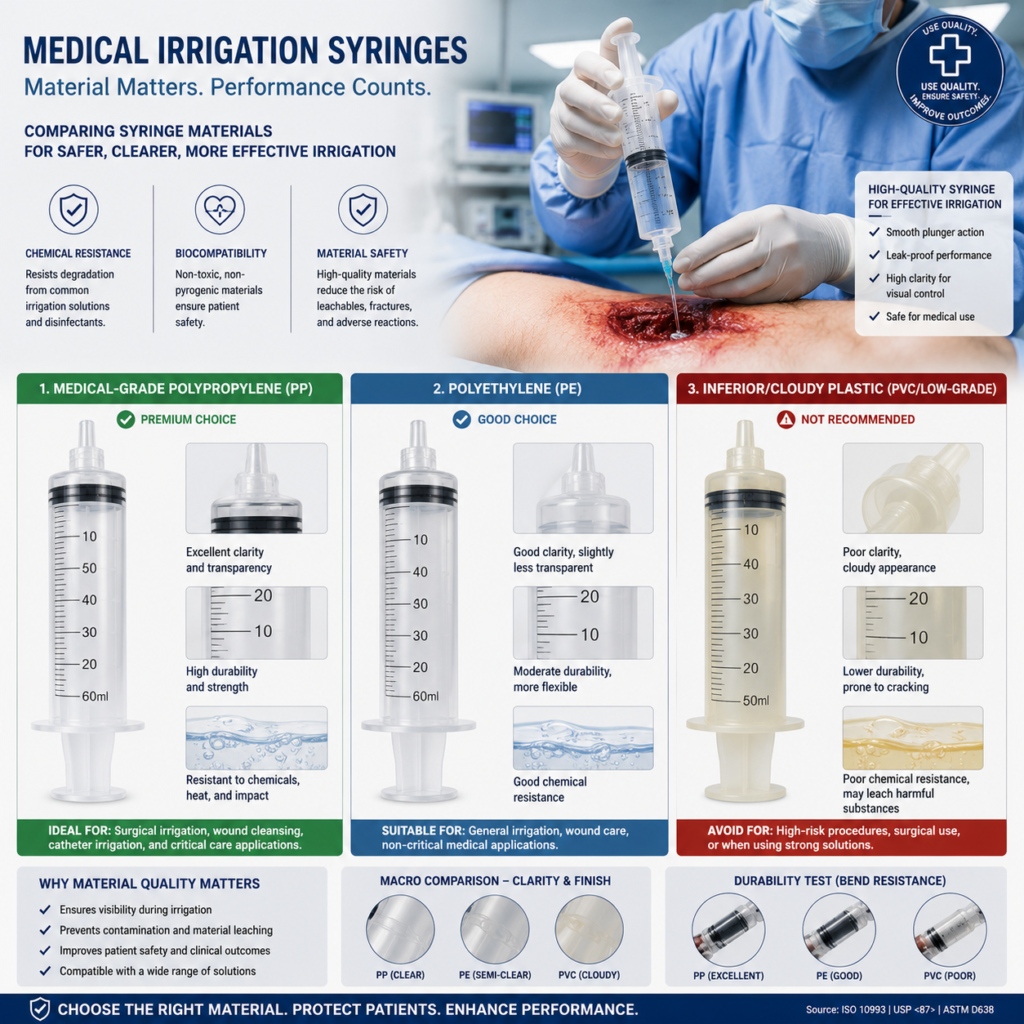
Flexibility and ergonomics are also influenced by material composition. A syringe that is too rigid may be difficult to manipulate, while one that is too flexible might break under pressure. The plunger material must create a smooth, friction-free seal to ensure consistent delivery of the fluid. For surgical teams, the tactile feedback provided by a well-designed medical irrigation syringe is crucial for precision. Wholesale buyers should look for products that balance rigidity and flexibility to enhance user experience and procedural accuracy.
Sustainability trends are also pushing for innovations in materials. As the healthcare industry moves toward greener practices, manufacturers are exploring bio-based polymers without compromising performance or safety. While these innovations are emerging, the primary focus remains on patient safety and product efficacy. B2B buyers should stay informed about material advancements that could offer environmental benefits while maintaining the rigorous standards required for clinical use. A proactive approach to material selection ensures a future-proof supply chain.
1.4 Why Compliance with Global Regulatory Standards Protects Your Business
Navigating the regulatory landscape is a complex but necessary aspect of sourcing medical devices. Compliance with standards such as ISO 13485 (Quality Management Systems), ISO 10993 (Biocompatibility), and CE marking or FDA approval ensures that the medical irrigation syringe meets international safety and performance requirements. For wholesale distributors and healthcare systems, sourcing compliant products is the primary defense against legal liabilities and recalls. Non-compliance can result in severe financial penalties and bans on selling products in key markets.
Regulatory compliance also serves as a proxy for quality. Manufacturers who invest in obtaining and maintaining these certifications demonstrate a commitment to quality and continuous improvement. When procuring a sterile irrigation syringe, buyers should treat valid certifications as a baseline requirement. This vetting process filters out low-quality manufacturers and establishes partnerships with reliable entities that prioritize patient safety and product consistency. It is a critical step in building a resilient and trustworthy medical supply chain.
In the event of a product failure or adverse event, documented compliance provides a layer of protection. It shows that due diligence was exercised in selecting a product that met all established safety norms. This is particularly important for B2B buyers who act as intermediaries between manufacturers and end-users. By ensuring that every wound irrigation syringe and surgical syringe in their inventory is fully certified, they protect their business from litigation and reputational damage. Trust is the currency of the medical supply business, and regulatory compliance is its foundation.
Moreover, global standards are constantly evolving to address new safety challenges and technological advancements. Staying abreast of these changes allows procurement managers to adapt their sourcing strategies proactively. For instance, new guidelines on single-use device labeling or traceability may require suppliers to upgrade their processes. A strong partnership with a compliant manufacturer ensures that buyers receive products that are not only safe today but also ready for the regulatory landscape of tomorrow. This forward-thinking approach is essential for long-term business stability.
2. How to Evaluate Different Types of Irrigation Syringes for Specific Applications
Not all irrigation procedures are created equal, and consequently, a one-size-fits-all approach to selecting a medical irrigation syringe is rarely effective. Different clinical scenarios—from emergency wound care to ophthalmic surgery—require syringes with specific features, such as specialized tips, precise volume graduations, or unique Luer lock mechanisms. Evaluating these types requires a clear understanding of the end-user’s needs. For B2B buyers, this means categorizing inventory based on application to ensure healthcare providers have the right tool for every situation, thereby enhancing procedural efficiency.
The physical design of the syringe plays a pivotal role in its application. For example, a curved tip syringe is essential for irrigating wounds that are not easily accessible with straight tips, allowing for better penetration and cleansing without causing trauma to surrounding tissues. Conversely, a standard straight tip wound irrigation syringe might be preferred for large, open surface wounds where coverage speed is prioritized. Recognizing these distinctions allows buyers to curate a comprehensive product portfolio that addresses the full spectrum of clinical needs.
Volume capacity is another critical factor in evaluation. While a small-volume medical irrigation syringe might be perfect for delicate surgical sites requiring precise fluid control, large-volume syringes (60ml or more) are necessary for high-flow wound cleansing. Procurement strategies must account for these volume requirements by offering a range of sizes. This ensures that clinicians are not forced to use multiple syringes for a procedure that could be completed with one, or conversely, struggle with a device that is too large for fine motor control.
The integration of customization options further refines the evaluation process. Healthcare facilities often seek specific features that align with their protocols, such as color-coded plungers for size identification or enhanced grip for better control in wet environments. By working with manufacturers that offer extensive customization capabilities, wholesale buyers can provide tailored solutions that set them apart in the market. This application-based evaluation strategy leads to higher customer satisfaction and better patient outcomes.
2.1 Which Features Define an Effective Wound Irrigation Syringe
An effective wound irrigation syringe is defined by its ability to deliver fluid at a pressure sufficient to clean the wound without causing damage to healthy tissue. This balance is often achieved through specific nozzle designs that control the spray pattern. Some syringes feature a shielded tip to prevent the nozzle from touching the wound bed, thereby reducing the risk of contamination. These features are critical in emergency rooms and trauma centers, where rapid and safe wound decontamination is a priority.
Graduation marks on the barrel of the syringe are another defining feature. Clear, accurate markings allow healthcare professionals to monitor the exact volume of fluid used, which is vital for documenting the procedure and ensuring adequate irrigation. For a medical irrigation syringe used in wound care, visibility is key. The barrel should be transparent enough to allow for the inspection of the fluid for any particulate matter. These design elements contribute significantly to the usability and reliability of the device in high-pressure clinical environments.
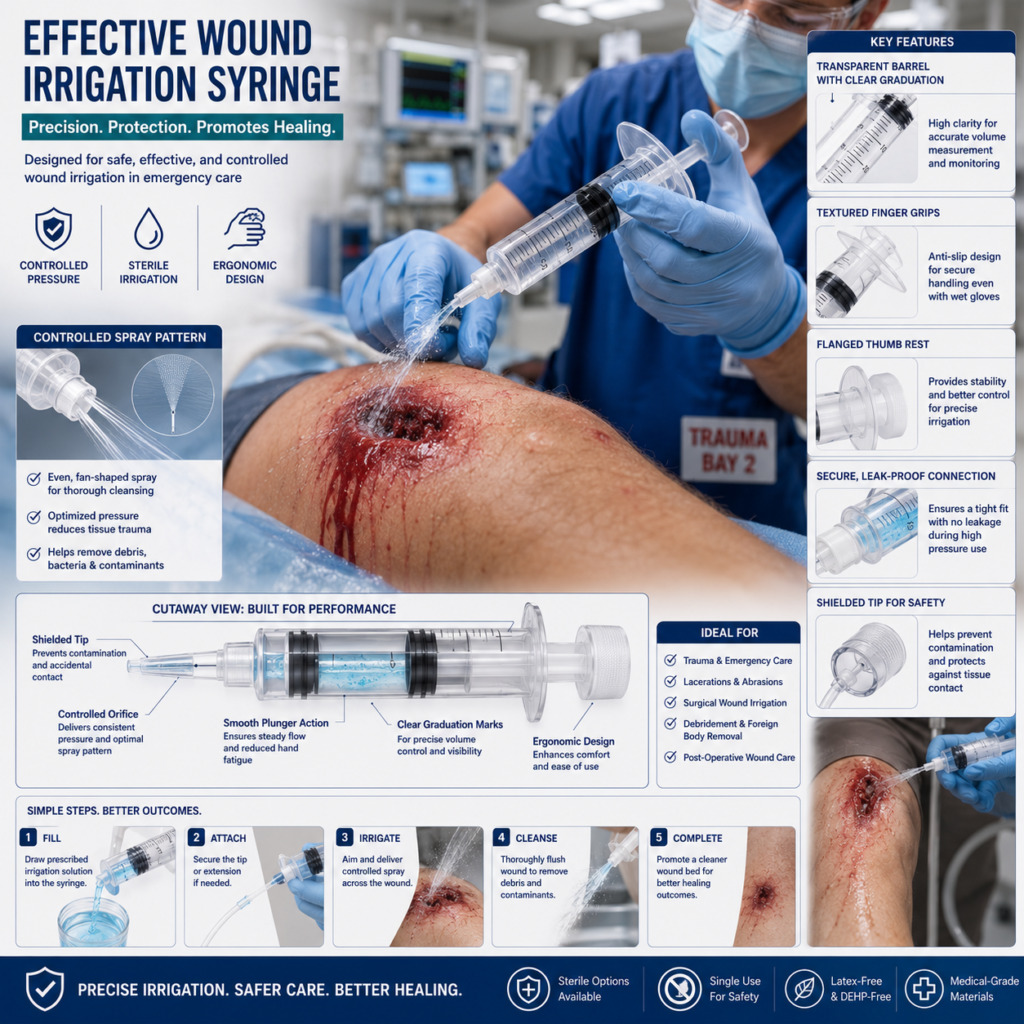
Ergonomics also define the effectiveness of a wound irrigation syringe. Clinicians often wear gloves, which can reduce dexterity and grip. A syringe with textured finger grips and a flanged thumb rest provides better control, reducing hand fatigue during prolonged irrigation procedures. This is particularly relevant for buyers supplying to burn units or wound care centers, where irrigation is a frequent and time-consuming task. Selecting ergonomically designed devices demonstrates an understanding of the challenges faced by frontline healthcare workers.
Finally, the material of the wound irrigation syringe must be robust enough to withstand high-pressure delivery without cracking or leaking. A faulty connection between the tip and the barrel can lead to fluid wastage and inconsistent pressure, compromising the cleaning process. Therefore, wholesale buyers should prioritize syringes with secure, leak-proof designs. These features collectively define the efficacy of the product, ensuring it performs its intended function safely and efficiently in demanding clinical settings.
2.2 Why Surgical Procedures Demand Precision-Controlled Medical Irrigation Syringes
Surgical procedures, whether minimally invasive or open surgeries, demand a level of precision that far exceeds general wound care. In the operating room, a medical irrigation syringe is used to clear blood, debris, and maintain a clear field of vision for the surgeon. Any inconsistency in fluid delivery can obstruct the surgeon’s view or inadvertently damage sensitive structures. Consequently, surgical syringes must feature smooth, effortless plunger action that allows for drop-by-drop control when necessary.
The connection mechanism in surgical irrigation is often more sophisticated. Luer lock syringes are the standard in surgical settings because they provide a secure, twist-on connection that prevents accidental disconnection during critical moments of the procedure. A sterile irrigation syringe with a loose fitting could spray fluid uncontrollably or detach, contaminating the sterile field. For B2B buyers focusing on the surgical market, ensuring that inventory includes Luer lock options is essential for meeting the stringent requirements of operating suites.
Tip design in surgical syringes varies based on the specialty. Neurosurgery or ophthalmic procedures might require specialized tips that are elongated or angled to reach deep or narrow cavities. General surgery might utilize standard tips but with higher flow rates. Understanding these specific needs allows buyers to segment their product offerings effectively. It is not enough to supply a generic syringe; the surgical market demands specific, precision-engineered tools that cater to the unique demands of different surgical disciplines.
Furthermore, the sterility of surgical irrigation devices is absolute. Unlike a wound care station where setup might be hurried, surgical prep involves strict protocols. The packaging of surgical irrigation syringes must allow for sterile opening and transfer onto the sterile field. Buyers must ensure that the packaging design facilitates this process, perhaps with easy-peel tabs or sterile presentation wraps. These logistical details, while seemingly minor, have a significant impact on the workflow and efficiency of surgical teams.
2.3 How Volume Variants Impact Efficiency in High-Throughput Clinical Settings
In high-throughput environments such as emergency departments or busy outpatient clinics, efficiency is paramount. The choice of syringe volume directly impacts the speed of care. Using a small volume syringe for a large wound irrigation task is inefficient, requiring repeated refilling which interrupts the procedure. Conversely, stocking a diverse range of volume variants—from 3ml for precise tasks to 60ml or larger for lavage—ensures that clinicians can select the most appropriate tool for the job, optimizing workflow and patient throughput.
Inventory management becomes a strategic consideration when dealing with volume variants. Wholesale buyers must analyze usage data to determine the optimal mix of syringe sizes for their clients. Overstocking large-volume syringes that are rarely used ties up capital, while understocking high-demand sizes leads to stockouts and frustrated customers. A medical irrigation syringe supplier that offers flexible ordering quantities and a broad size range enables buyers to fine-tune their inventory to match actual consumption patterns, reducing waste and improving service levels.
The physical footprint of larger volume syringes is also a factor. Storage space in clinical settings is often at a premium. Bulky packaging for 60ml syringes can be difficult to store in crowded procedure carts. Buyers should look for suppliers that offer space-efficient packaging solutions without compromising sterility or protection. This logistical consideration enhances the value proposition of the product, making it more attractive to facility managers who are constantly looking for ways to optimize their operational space.
Standardization across a facility can also drive efficiency. If a hospital network standardizes on a specific brand and style of irrigation syringe across all its departments, it simplifies training and reduces the likelihood of usage errors. Wholesale buyers can facilitate this by offering bulk purchasing agreements that cover a full spectrum of volume variants under a single product line. This approach simplifies the supply chain and leverages volume discounts, providing economic benefits to both the buyer and the healthcare provider.
2.4 Which Designs Best Facilitate Customization for Wholesale Buyers
Customization is a key differentiator in the competitive medical device market. Wholesale buyers often seek designs that can be tailored to the specific branding or functional requirements of their clients. This can range from custom color coding to identify specific sizes or departments, to printing logos and batch numbers directly on the barrel for traceability. A sterile irrigation syringe that can be easily customized offers higher value to B2B customers looking to build their own brand identity or meet unique institutional protocols.
The mold design of the syringe is central to its customization potential. Manufacturers with advanced molding capabilities can produce syringes with unique textures, grip shapes, or finger rests that improve usability and brand recognition. For instance, a wound irrigation syringe with a custom-shaped flange that fits a specific dispenser mechanism can be a proprietary advantage for a distributor. Buyers should prioritize suppliers that offer open dialogue and engineering support to develop these bespoke solutions, fostering a partnership rather than a transactional relationship.
Packaging customization is equally important. The ability to print detailed instructions, barcodes, or branding on the individual peel pouch adds significant value in professional settings. Wholesale buyers should assess the flexibility of the supplier’s packaging lines. Can they accommodate multi-language labeling for international clients? Can they create custom bulk packs to reduce packaging waste? These capabilities are crucial for buyers serving diverse markets with specific regulatory and consumer demands.
Ultimately, the best designs for customization are those that combine modularity with robust manufacturing standards. A medical irrigation syringe platform that allows for various tip attachments and barrel colors without re-tooling the entire production line offers the best balance of customization and cost-effectiveness. This agility allows wholesale buyers to respond quickly to market trends and customer requests, securing their position as a preferred supplier in the dynamic healthcare marketplace.
3. How Market Trends and 2025-2026 Statistics Influence Purchasing Decisions
The medical device market is dynamic, driven by technological advancements, demographic shifts, and evolving regulatory landscapes. Staying informed about these trends is essential for wholesale buyers making strategic purchasing decisions. Recent industry reports indicate a steady growth in the demand for disposable medical supplies, projected to continue through 2026. This growth is fueled by an aging global population and an increase in outpatient surgical procedures, necessitating a reliable supply of consumables like the medical irrigation syringe.
In 2025, the focus on infection control has intensified, leading to a surge in demand for single-use, sterile devices. Statistics suggest that healthcare-associated infections (HAIs) remain a primary concern, prompting institutions to prioritize devices that guarantee sterility. For buyers, this trend validates the stocking of high-quality sterile irrigation syringes over reusable alternatives that require sterilization infrastructure. The shift towards disposables is not just a clinical preference but a strategic move to reduce operational costs associated with sterilization and infection management.
Looking ahead to 2026, market insights predict a rise in the integration of smart technologies in medical consumables. While basic irrigation syringes may not become “smart” overnight, the packaging and tracking systems are evolving. There is a growing trend toward barcoding and RFID integration for better inventory management and traceability. Forward-thinking wholesale buyers are already seeking suppliers that are adapting to these technological shifts, ensuring their inventory remains compatible with modern hospital supply chain management systems.
Economic factors also play a role. The fluctuating costs of raw materials, particularly petroleum-based plastics, impact pricing structures. Market analysis for the latter half of the decade suggests that buyers who secure long-term contracts with manufacturers will be better insulated against price volatility. Understanding these economic drivers allows B2B purchasers to time their investments strategically, securing favorable terms and ensuring a steady supply of critical medical irrigation syringes despite market turbulence.
3.1 Why the Global Demand for Disposable Irrigation Devices is Rising
The global rise in demand for disposable irrigation devices is inextricably linked to the imperative of infection control. Cross-contamination is a significant risk in any medical setting, and reusable devices, even when sterilized, carry a residual risk of pathogen transmission. A sterile irrigation syringe designed for single use eliminates this risk entirely, providing a safer alternative for both patients and staff. As healthcare systems worldwide strive to reduce HAI rates, the procurement of disposables has become a standard protocol, driving market growth.
Demographic changes are another powerful driver. The “silver tsunami”—the aging population—is resulting in a higher prevalence of chronic wounds, such as diabetic ulcers and pressure sores. These conditions require frequent and often long-term wound care, sustaining a high demand for wound irrigation syringes. Projections for 2025-2026 indicate that wound care will remain one of the fastest-growing segments in healthcare. Wholesale buyers responding to this trend must ensure their supply chains are robust enough to meet this sustained increase in volume.
Furthermore, the expansion of healthcare access in developing economies is contributing to the rise in demand. As infrastructure improves in these regions, the adoption of western-standard safety protocols, including the use of disposable medical devices, is accelerating. This opens new markets for exporters of medical irrigation syringes. Buyers who can navigate the regulatory and logistical complexities of these emerging markets stand to gain significant competitive advantage and revenue growth in the coming years.
The convenience factor cannot be overlooked. Disposable devices streamline workflows by eliminating the need for cleaning and reprocessing. In high-volume settings, time saved on reprocessing can be redirected to patient care. This operational efficiency, combined with the cost-effectiveness of mass-produced disposables, reinforces the global shift away from reusable devices. For B2B stakeholders, this trend underscores the importance of focusing on high-volume, cost-competitive disposable product lines.
3.2 How 2025 Market Data Drives the Need for Reliable Wholesale Partners
Market data from 2025 highlights a consolidation in the medical manufacturing sector, with smaller producers being acquired by larger conglomerates. While this creates stability, it also reduces the number of direct sources for niche products. For wholesale buyers, this data point is a red flag regarding supply chain fragility. Relying on a single source for a critical item like a medical irrigation syringe can be risky if that source faces disruptions. Consequently, the need for reliable, diversified wholesale partners has never been more acute to ensure business continuity.
The data also reveals volatility in shipping and logistics, a lingering effect of global disruptions over recent years. Lead times for medical products have extended, and inventory buffers have shrunk as facilities adopt just-in-time purchasing models. This creates a precarious situation where stockouts are more likely. A reliable wholesale partner with deep warehousing capabilities and robust logistics networks becomes an asset rather than just a vendor. They act as a buffer, ensuring that healthcare providers have uninterrupted access to essential irrigation supplies.
Furthermore, 2025 market analysis shows an increasing complexity in regulatory compliance across different regions. Navigating these varying requirements requires expertise that individual healthcare providers often lack. Wholesale partners who specialize in regulatory compliance add immense value by ensuring that the sterile irrigation syringe stocks they supply are fully compliant with local regulations in the markets they serve. This expertise shields buyers from legal risks and simplifies the procurement process.
Finally, the data emphasizes price sensitivity. Healthcare budgets are tightening, and buyers are under pressure to reduce costs without compromising quality. Reliable wholesale partners leverage their purchasing power to negotiate better pricing from manufacturers, passing these savings on to their clients. In a data-driven market, the ability of a partner to provide transparent pricing and volume discounts is a key determinant in their selection. Strategic partnerships are becoming the cornerstone of successful procurement strategies in the medical device sector.
3.3 What 2026 Projections Indicate About Customization in Medical Devices
Projections for 2026 suggest that the era of “one size fits all” in medical devices is drawing to a close. The demand for customization is accelerating, driven by the need for improved patient outcomes and operational efficiency. Specifically, the irrigation syringe market is expected to see a rise in requests for procedure-specific designs. For example, wound irrigation syringes might be requested with specialized tips that allow for simultaneous suction and irrigation, a feature that can significantly speed up wound debridement procedures.
The concept of “customization” is also expanding to include digital integration. Future projections envision the integration of QR codes or NFC chips into the packaging or even the syringe itself. These digital tags could store information such as lot numbers, expiration dates, and usage instructions, which can be scanned for instant access. This trend towards the “Internet of Medical Things” (IoMT) requires buyers to partner with manufacturers who are technologically forward-thinking and capable of producing next-generation medical irrigation syringes.
Sustainability is another pillar of the 2026 projections. There is a growing expectation for medical devices to be environmentally responsible without sacrificing sterility or performance. This might involve the use of recycled materials where safe, or the development of new biodegradable polymers. Customization in this context could mean offering clients a choice between traditional polypropylene syringes and a new “green” line. Wholesale buyers should monitor these material innovations closely to prepare for shifting market demands.
Lastly, demographic-specific customization is expected to rise. Pediatrics, for instance, requires smaller, gentler devices compared to adult care. The market for pediatric medical irrigation syringes is projected to grow as specialized care for children advances. Buyers should look for manufacturers that offer a diverse portfolio catering to different patient demographics. This segmentation allows for more precise marketing and ensures that healthcare facilities can source the exact products needed for their specific patient populations.
3.4 How Economic Shifts Impact Pricing for Bulk Sterile Irrigation Syringe Orders
Economic shifts, particularly inflation and fluctuating currency exchange rates, have a direct impact on the pricing of raw materials like plastic resins. Since a sterile irrigation syringe is primarily a plastic device, any increase in resin costs is inevitably passed down the supply chain. For wholesale buyers placing bulk orders, this volatility presents a significant budgeting challenge. Understanding the economic drivers behind pricing allows buyers to negotiate more effectively, perhaps by locking in prices for longer contract durations to hedge against inflation.
Labor costs in manufacturing regions are also subject to economic shifts. As wages rise in traditional manufacturing hubs, the cost of producing medical irrigation syringes increases. This can lead to a search for new, lower-cost manufacturing locations or a push toward automation. Automation, while requiring upfront capital investment, can stabilize long-term unit costs. Buyers should assess the financial health and operational strategies of their suppliers to gauge whether they are managing these economic pressures effectively.
Shipping costs remain a wild card in the economic equation. Fuel prices and global shipping capacity constraints can cause sudden spikes in the landed cost of medical goods. A bulk order that seemed economical at the time of purchase can lose its margin if shipping costs surge unexpectedly. Experienced wholesale buyers mitigate this risk by working with suppliers who offer Incoterms (International Commercial Terms) that are favorable, such as DDP (Delivered Duty Paid), or by diversifying their logistics routes to avoid bottlenecks.
Despite these economic pressures, the bulk purchasing model offers inherent advantages. Economies of scale mean that per-unit costs for a medical irrigation syringe decrease significantly as order volume increases. Strategic buyers use this to their advantage by consolidating orders across multiple facilities or partner organizations. By increasing the volume of a single purchase order, they can offset some of the inflationary pressures, securing better pricing and ensuring a steady supply of essential equipment for their clients.
4. Which Customization Options Should Buyers Prioritize for Brand and Utility
Customization in the realm of medical devices serves a dual purpose: it enhances the utility of the product for the end-user and reinforces the brand identity of the healthcare provider or distributor. For a medical irrigation syringe, utility customization might involve modifying the tip design for better fluid dynamics or adding graduation marks in specific units. Brand customization, on the other hand, involves printing logos, distinct colors, or specific packaging that aligns with the buyer’s corporate identity. Prioritizing these options allows B2B buyers to offer a product that is both functionally superior and commercially distinct.
One of the most impactful customization options is color coding. In a busy clinical setting, visual cues save time. A buyer might request that a specific volume of wound irrigation syringe be produced in a unique color to prevent mix-ups with other syringes used for medication administration. This simple visual differentiation enhances patient safety by reducing the risk of using the wrong device for a task. Wholesale buyers should prioritize suppliers that offer a wide palette of medical-grade, color-fast polymers to facilitate this level of safety customization.
Tip customization is another area where utility can be significantly enhanced. Standard Luer slip or Luer lock tips are common, but procedures often require specialized solutions. A rounded, open-ended tip might be preferred for general wound washing, while a 3-hole closed tip provides a gentler spray for sensitive tissues. By offering a range of tip options—or the ability to create custom molds—manufacturers enable their B2B clients to solve specific clinical problems. This problem-solving approach builds loyalty and positions the buyer as a trusted advisor rather than a mere commodity seller.
Packaging offers the broadest canvas for brand customization. The box or peel pouch of a sterile irrigation syringe is prime real estate for branding, instructions for use, and regulatory information. Custom packaging allows healthcare networks to unify their supply rooms with branded materials, projecting a professional image. For distributors, private-label packaging allows them to build their own market presence. Buyers should prioritize customization options that include high-quality flexographic or offset printing capabilities to ensure the final product looks professional and communicates essential information clearly.
Ergonomic customization is often overlooked but provides immense value. The shape of the flanges and the texture of the barrel can be modified to improve grip and comfort. A surgical team performing a long procedure appreciates a syringe that fits naturally in the hand and reduces fatigue. If a buyer can offer a medical irrigation syringe that is notably more comfortable than the competitor’s standard version, they gain a significant competitive edge. Prioritizing ergonomics in customization discussions demonstrates a deep understanding of the clinical end-user’s experience.
4.1 Why Custom Branding Enhances Trust in Clinical Environments
Trust is the currency of healthcare. Patients and professionals alike rely on the consistency and quality of medical tools. Custom branding on a sterile irrigation syringe—such as a hospital’s logo or a trusted distributor’s mark—serves as a stamp of approval. It signals that the device has been vetted and sourced specifically for that institution. In a clinical environment, seeing a familiar brand on medical supplies reinforces a sense of reliability and order, contributing to a culture of safety and professionalism.
For wholesale distributors, custom branding is a powerful marketing tool. It transforms a generic commodity into a proprietary product. When a nurse reaches for a wound irrigation syringe with a specific brand name, it creates brand recall and loyalty. This is particularly important in competitive markets where product differentiation is minimal. By building a brand associated with quality and reliability, distributors can protect their market share and justify premium pricing. Custom branding is not just aesthetic; it is a strategic business investment.
Custom branding also aids in inventory management and preventing stock pilferage. Branded packaging or barrels are easily identifiable and can be tracked more efficiently within a large facility. If a specific brand of medical irrigation syringe is assigned to a particular department, it becomes easier to monitor usage and identify any diversion or misuse. This operational benefit adds another layer of value to the customization investment, making it easier for facility managers to maintain tight control over their assets.
Furthermore, branded products facilitate better accountability. If a specific batch of syringes is found to be defective, the branding allows for rapid identification and recall of that specific product line. In contrast, generic supplies from various unnamed sources can make tracing issues difficult. Custom branding thus integrates with quality control systems, enhancing the overall safety and traceability of the medical supply chain. It is a visible manifestation of a commitment to quality and accountability.
4.2 How Tailored Syringe Designs Improve Workflow Efficiency
Workflow efficiency in healthcare is often measured in seconds and minutes saved. Tailored syringe designs can shave valuable time off routine procedures. Consider a medical irrigation syringe with a textured grip specifically designed to be handled with wet or gloved hands. This design reduces the time spent fumbling to adjust grip or prevent slipping. In a trauma bay where seconds count, these ergonomic improvements can translate directly into faster patient turnaround and improved outcomes.
Another design element that enhances workflow is the integration of hanger holes or specialized caps. Some irrigation procedures require the syringe to be hung or set down without contaminating the tip. A syringe designed with a built-in hanger loop allows it to be suspended on an IV pole, keeping it accessible but off the sterile field. Alternatively, a tip cap that is tethered to the barrel ensures it is never lost or misplaced. These thoughtful design tweaks reduce the friction in clinical workflows, allowing nurses and doctors to focus on the patient rather than the equipment.
Luer lock mechanisms versus Luer slip is another design consideration impacting efficiency. While Luer slip is faster to connect, Luer lock offers a secure connection that won’t pop off under pressure. For high-pressure irrigation, a secure connection is crucial to prevent interruptions caused by disconnection. By choosing the right mechanism for the specific application—perhaps prioritizing Luer lock for surgical wound irrigation syringes—buyers can ensure that the procedure flows smoothly without the need for troubleshooting or equipment changes.
Capacity markings that are high-contrast and located on the front and back of the barrel improve readability from any angle. A clinician should not have to twist the syringe to read the volume. Tailored designs that maximize visibility reduce cognitive load and the chance of dosing errors. For wholesale buyers, sourcing syringes with these user-centric design features demonstrates an understanding of the practical realities of clinical life. It positions the supplier as a partner in efficiency, not just a vendor of plastic goods.
4.3 Which Packaging Solutions Ensure Integrity During Wholesale Distribution
The journey from a manufacturing plant to a hospital storeroom can be arduous, involving long-distance shipping, changes in temperature, and handling by various logistics providers. Packaging solutions that ensure the integrity of a sterile irrigation syringe during this process are non-negotiable. Robust outer cartons made from high-strength corrugated cardboard protect the inner contents from crushing. For bulk wholesale orders, master cartons should be designed for palletization, ensuring stability during transit to prevent shifting and damage.
Individual sterile packaging is equally critical. Each sterile irrigation syringe must be sealed in a pouch or blister pack that is impervious to moisture and bacteria. Tyvek and medical-grade paper are common materials that offer breathability (for sterilization gas penetration) while maintaining a barrier against microbes. Buyers should prioritize suppliers who use advanced heat-sealing technologies to ensure that every pouch is hermetically sealed. A compromised seal in transit renders the syringe useless, resulting in pure waste and financial loss.
Tamper-evident features add a layer of security to the packaging. This is particularly important for distributors servicing a wide network where the chain of custody is long. If a sterile irrigation syringe box has been opened or damaged, it must be immediately apparent. Tamper-evident seals or shrink-wrapping on master cartons provide this visual cue. This helps in receiving inspections at hospitals, allowing staff to quickly identify and reject any compromised shipments without having to inspect every single unit manually.
Efficient packaging also considers density and waste minimization. Excess packaging not only increases shipping costs but also creates more waste for the healthcare facility to dispose of. “Right-sized” packaging that snugly fits the quantity of syringes maximizes the number of units per pallet, reducing the carbon footprint and transportation costs per unit. Buyers should look for packaging solutions that balance protection with sustainability, optimizing the logistics chain from the warehouse to the clinical floor.
4.4 How Collaborative Development with Manufacturers Yields Superior Products
The relationship between a wholesale buyer and a manufacturer should not be purely transactional; it should be a collaborative partnership. When buyers share feedback from their end-users—surgeons, nurses, and wound care specialists—with manufacturers, it drives product innovation. For instance, if multiple clients report that a specific wound irrigation syringe tip is too sharp, the manufacturer can modify the mold to create a rounded, safer tip. This feedback loop results in a superior product that better meets market needs.
Collaborative development also extends to new product lines. As medical techniques evolve, new devices are required. A buyer aware of an emerging trend—say, a new minimally invasive procedure requiring a unique irrigation method—can partner with a manufacturer to co-develop a specialized medical irrigation syringe. Being first to market with such a product gives the buyer a significant competitive advantage. It positions them as an innovator rather than a follower, solidifying their reputation in the industry.
This collaboration can also optimize costs. Manufacturers can advise buyers on material choices or design simplifications that reduce production costs without sacrificing quality. For example, reducing the weight of the plastic used in the barrel by fractions of a gram might save significant costs across a million-unit order. A transparent manufacturer will work with the buyer to find these efficiencies, sharing the savings. This approach fosters long-term loyalty and ensures that the product remains price-competitive in a sensitive market.
Finally, collaborative planning ensures capacity alignment. If a buyer anticipates a surge in demand due to a new contract, sharing this forecast with the manufacturer allows the factory to allocate resources, raw materials, and machine time accordingly. This prevents stockouts and production bottlenecks. A synchronized supply chain, built on open communication and collaborative planning, is the hallmark of a mature B2B relationship in the medical device sector. It ensures that the right products are available at the right time, in the right quantity.
5. How to Select the Best Wholesale Supplier for Medical Irrigation Syringes
Selecting the right wholesale supplier is a decision that reverberates through the entire supply chain, affecting everything from inventory costs to patient safety. The ideal supplier for a medical irrigation syringe is not just the one with the lowest price, but the one who offers the best combination of quality, reliability, and service. The selection process should begin with a thorough audit of the supplier’s credentials, looking for ISO certifications, FDA registrations, or CE marks that validate their commitment to quality management systems. These certifications are the baseline requirements for any entity handling medical devices.
Beyond credentials, the supplier’s track record is a critical indicator of future performance. Buyers should seek references and case studies from other healthcare institutions or distributors. A supplier with a history of consistent on-time delivery and low defect rates is invaluable. In the medical field, a delayed shipment of sterile irrigation syringes can force a hospital to cancel procedures, putting patients at risk. Therefore, evaluating the logistical capabilities and reliability of the supplier is as important as evaluating the product itself. The supplier must demonstrate a robust distribution network capable of meeting the demands of just-in-time inventory models.
Financial stability is another key consideration. The medical device manufacturing sector is capital intensive. A supplier facing financial difficulties might cut corners on quality control or, worse, go out of business, leaving the buyer without a critical source of supply. Conducting a financial health check or partnering with established, publicly traded companies can mitigate this risk. A stable wholesale supplier ensures continuity of supply and provides the security needed for long-term planning and contracting.
Finally, the level of customer service and technical support offered by the supplier sets the great apart from the good. Can the supplier provide detailed technical specifications? Do they have a responsive team to handle inquiries or complaints? When issues arise with a batch of wound irrigation syringes, the supplier’s willingness to investigate and resolve the problem quickly is paramount. Selecting a supplier is essentially selecting a partner who will support the buyer’s business objectives and clinical goals over the long term.
5.1 Why Certifications and Quality Assurance are Non-Negotiable
In the medical device industry, certifications and quality assurance (QA) systems are the language of trust. They provide objective evidence that a supplier is adhering to the highest standards of safety and efficacy. For a sterile irrigation syringe, compliance with ISO 13485 is the gold standard, ensuring that the manufacturer has a robust quality management system in place from design to distribution. Without this certification, there is no guarantee that the manufacturing process is controlled, repeatable, or safe. Buyers should treat the absence of such certifications as a deal-breaker.
Quality assurance goes beyond just having a certificate; it involves active, ongoing testing and validation. Buyers should inquire about the supplier’s QA protocols. Do they perform burst tests on the syringes? Do they test for cytotoxicity to ensure the materials are safe for tissue contact? A supplier that is transparent about their testing methodologies and willing to share audit reports demonstrates confidence in their products. This transparency is crucial for buyers who need to defend their purchasing decisions to their own stakeholders and regulatory bodies.
Regulatory harmonization is another factor. A supplier that holds multiple certifications, such as FDA approval for the US market and CE marking for Europe, shows a capability to meet diverse global standards. This is particularly important for wholesale buyers who operate internationally or serve clients that export medical kits. Sourcing a medical irrigation syringe from a globally certified supplier simplifies the regulatory burden on the buyer, ensuring that the products can be deployed across different regions without legal hurdles.
Furthermore, certifications are often a prerequisite for insurance and liability coverage. In the event of a product liability lawsuit, the ability to prove that the product was sourced from a certified, reputable manufacturer is a critical defense. Insurance providers may refuse coverage for products sourced from unaccredited suppliers. Therefore, insisting on strict certifications is not just about quality; it is about risk management. It protects the buyer’s business from catastrophic financial and reputational damage.
5.2 How Supply Chain Reliability Determines Clinical Continuity
Clinical continuity depends on the seamless availability of medical supplies. A disruption in the supply of irrigation syringes can halt wound care procedures and delay surgeries, directly impacting patient care. A reliable wholesale supplier mitigates these risks through strategic inventory management and diversified sourcing. They maintain safety stock of critical items like the medical irrigation syringe to buffer against demand spikes or manufacturing delays. Buyers must evaluate the supplier’s inventory depth and their ability to scale up production during emergencies.
Geographic diversification of the supply chain is another aspect of reliability. Relying on a single manufacturing location makes the supply chain vulnerable to regional disruptions, such as natural disasters, political unrest, or pandemics. The best suppliers utilize a multi-sourcing strategy, manufacturing key components or finished goods in multiple locations. This geographical spread ensures that if one node goes down, others can pick up the slack, maintaining a steady flow of products to the buyer.
Logistics partnerships are equally important. A supplier is only as good as their shipping partners. Leading wholesale suppliers have contracts with premium freight forwarders and logistics providers who prioritize medical shipments. They offer cold chain solutions where needed (though less critical for syringes than biologics, temperature control can still affect packaging integrity) and provide real-time tracking. This visibility allows the buyer to manage their own inventory replenishment accurately, preventing stockouts that could jeopardize clinical operations.
Communication is the backbone of supply chain reliability. Proactive suppliers inform buyers of potential issues before they become problems. If a raw material shortage is looming, a reliable partner will alert the buyer immediately, allowing time to adjust orders or find alternatives. This proactive communication transforms the supplier relationship from a reactive order-taking process to a strategic partnership that safeguards clinical continuity. It ensures that healthcare providers can focus on patient care, confident that their supply needs are in capable hands.
5.3 Which Scalability Factors Matter When Expanding Product Lines
As healthcare organizations grow, their needs evolve. A wholesale supplier must be able to scale alongside their clients. Scalability involves the capacity to increase production volumes without compromising quality or lead times. When a buyer lands a large new contract for a hospital network, the supplier must be able to ramp up output of the wound irrigation syringe to meet the increased demand. Buyers should assess the supplier’s manufacturing capacity, machinery, and workforce flexibility to ensure they can handle growth.
Product line expansion is another dimension of scalability. A buyer may start by purchasing standard irrigation syringes but later decide to expand into custom-designed kits or specialized surgical instruments. A supplier with a broad portfolio of manufacturing capabilities can support this expansion, becoming a one-stop-shop for the buyer’s growing needs. This reduces the complexity of managing multiple vendor relationships. Scalability means the supplier can grow with the buyer, offering new solutions as the buyer’s market strategy evolves.
Technological scalability is also relevant. As the industry moves towards smart manufacturing and digital tracking, the supplier must be able to integrate these technologies into their processes. If a buyer wants to implement RFID tagging for their inventory, the supplier must have the infrastructure to support this. A supplier stuck in outdated manufacturing methods will eventually become a bottleneck to the buyer’s modernization efforts. Choosing a supplier that invests in technology ensures that the supply chain remains efficient and competitive.
Finally, financial scalability matters. Supporting large contract growth often requires extended payment terms or financing options. A financially robust supplier can offer flexible terms that facilitate the buyer’s expansion. Conversely, a supplier with tight cash flow may impose restrictive terms that stifle growth. Evaluating the financial health and willingness of the supplier to support the buyer’s commercial expansion is a crucial step in selecting a long-term partner. It ensures that the business relationship can thrive through periods of rapid growth.
5.4 Why Transparent Pricing Models Strengthen Long-Term B2B Relationships
In the B2B medical supply sector, pricing transparency builds trust. Hidden fees, unexpected surcharges, or fluctuating prices erode confidence and complicate budgeting. A transparent pricing model for a medical irrigation syringe clearly outlines the unit cost, volume discounts, and any logistics or customization fees. This clarity allows the buyer to accurately calculate their margins and set prices for their own customers. It eliminates the friction of constant negotiation and allows both parties to focus on value creation.
Transparent pricing also facilitates fair contract negotiations. When the cost breakdown is clear—reflecting raw material costs, manufacturing overheads, and a reasonable profit margin—buyers can understand the drivers behind price changes. This is particularly important in a volatile economic climate where raw material costs fluctuate. If a supplier can openly demonstrate why a price increase is necessary, perhaps due to a rise in resin costs, the buyer is more likely to accept it, preserving the relationship. Transparency turns price adjustments from disputes into data-driven discussions.
Long-term contracts benefit immensely from transparent pricing. A stable pricing environment over a multi-year contract allows healthcare providers to plan their budgets effectively. Wholesale suppliers who offer price-fixing or cap-and-floor mechanisms based on transparent indices provide immense value to their clients. This stability is a competitive advantage for the supplier, making them a preferred partner for risk-averse healthcare institutions that value predictability.
Ultimately, transparent pricing signals integrity. It suggests that the supplier is confident in their value proposition and has nothing to hide. It fosters a partnership atmosphere where both buyer and seller are aligned in their goals. In the long run, this leads to stronger, more resilient B2B relationships. Suppliers who are open and honest about their pricing earn loyalty, while those who rely on opaque pricing models often find themselves replaced by more forthright competitors. Trust, anchored in transparency, is the foundation of enduring business success.
Frequently Asked Questions
1. Why is selecting the correct medical irrigation syringe critical for clinical environments?
Selecting the correct device is vital for patient safety and procedural efficiency. A reliable medical irrigation syringe ensures effective wound cleansing and surgical site maintenance without compromising tissue integrity or introducing infections. High-quality syringes prevent mechanical failures like leakage or plunger sticking, which can delay treatment and increase healthcare costs. For wholesale buyers, ensuring the supply of consistently high-performing devices is essential for maintaining the standard of care within partner healthcare facilities.
2. What are the key sterility standards for a sterile irrigation syringe?
A high-quality sterile irrigation syringe must be manufactured in compliance with international standards such as ISO 13485 within a controlled cleanroom environment. The packaging must be robust, often utilizing Tyvek or medical-grade paper, to resist moisture and physical damage, ensuring the device remains uncontaminated until the point of use. For B2B procurement, verifying that a supplier adheres to these strict regulatory protocols is a non-negotiable step in mitigating infection risks.
3. How does material composition impact the performance of an irrigation syringe?
The device should ideally be made from medical-grade polypropylene or polyethylene to ensure clarity, durability, and chemical compatibility. High-quality materials prevent adverse reactions with irrigation solutions, such as saline or antiseptics, and allow for smooth plunger operation. Furthermore, premium materials ensure the barrel remains transparent for accurate fluid monitoring and that the syringe can withstand pressure without cracking, which is crucial for both surgical and wound care applications.
4. What distinguishes a wound irrigation syringe from one used for surgical procedures?
A wound irrigation syringe typically features specialized designs, such as shielded nozzles or curved tips, to control fluid pressure and prevent the tip from touching the wound bed. In contrast, surgical syringes demand higher precision, often requiring Luer lock mechanisms for secure connections and smooth, effortless plunger action to maintain a clear surgical field. Understanding these distinctions helps wholesale buyers curate a product portfolio that effectively addresses the specific needs of different clinical departments.
5. Why should wholesale buyers consider customized irrigation syringes?
Customization allows buyers to enhance brand identity through logos and specific color schemes while improving clinical workflow with ergonomic designs. Tailored solutions, such as color-coded sizes for quick identification or specialized tips for unique procedures, add significant value for end-users. For B2B clients, offering customized options differentiates their brand in a competitive market and fosters stronger loyalty by meeting the exact specifications of healthcare providers.
6. How are current market trends influencing the demand for medical irrigation syringes?
Current trends indicate a rising demand for single-use disposable devices driven by rigorous infection control protocols and an aging population requiring chronic wound care. Market projections for 2025-2026 also suggest a shift toward integrating smart packaging technologies, like RFID tags, for better inventory management. Wholesale buyers must stay ahead of these trends by partnering with manufacturers who can supply high volumes of compliant, innovative products to meet growing needs.
7. What criteria should be used when selecting a wholesale supplier for irrigation syringes?
Buyers should prioritize suppliers with valid certifications (ISO, FDA, CE), a proven track record of supply chain reliability, and financial stability. It is also important to assess the supplier’s capacity for scalability and their commitment to transparent pricing models. A strong wholesale partner acts as an extension of the buyer’s business, ensuring consistent quality, timely delivery, and technical support for bulk orders.
8. How does syringe volume selection affect clinical efficiency?
Selecting the appropriate volume variant—ranging from small units for precision surgical tasks to large capacities for high-flow wound lavage—optimizes workflow by reducing the need for frequent refills. Standardizing sizes across a facility can also streamline inventory management and reduce the risk of usage errors. Wholesale buyers can assist their clients by offering a diverse range of volume options tailored to specific clinical applications.
9. Why is packaging integrity crucial in the wholesale distribution of irrigation syringes?
Robust packaging is essential to protect the sterility and physical integrity of the syringes during transit and storage. Solutions such as tamper-evident seals and high-strength corrugated master cartons prevent damage and contamination. For wholesale distributors, investing in high-quality packaging minimizes waste and financial loss while ensuring that products arrive at healthcare facilities in a safe, ready-to-use condition.
10. Which specific safety features should buyers look for in irrigation syringes?
Key safety features include Luer lock mechanisms to prevent accidental disconnection during procedures, shielded tips to avoid direct contact with the wound bed, and clear, high-contrast graduation marks for accurate fluid monitoring. These features collectively enhance patient safety by reducing the risk of contamination and dosage errors. Prioritizing these design elements in procurement decisions ensures that the delivered products meet the highest standards of clinical safety.