Introduction to UDI and Its Global Impact
In the evolving landscape of global healthcare, UDI code compliance, the integration of traceability devices, and adherence to UDI global rules are now fundamental pillars for ensuring patient safety, transparency, and device accountability. As regulatory bodies tighten controls, manufacturers and healthcare providers must adapt to robust tracking systems that monitor medical devices from production to patient use.
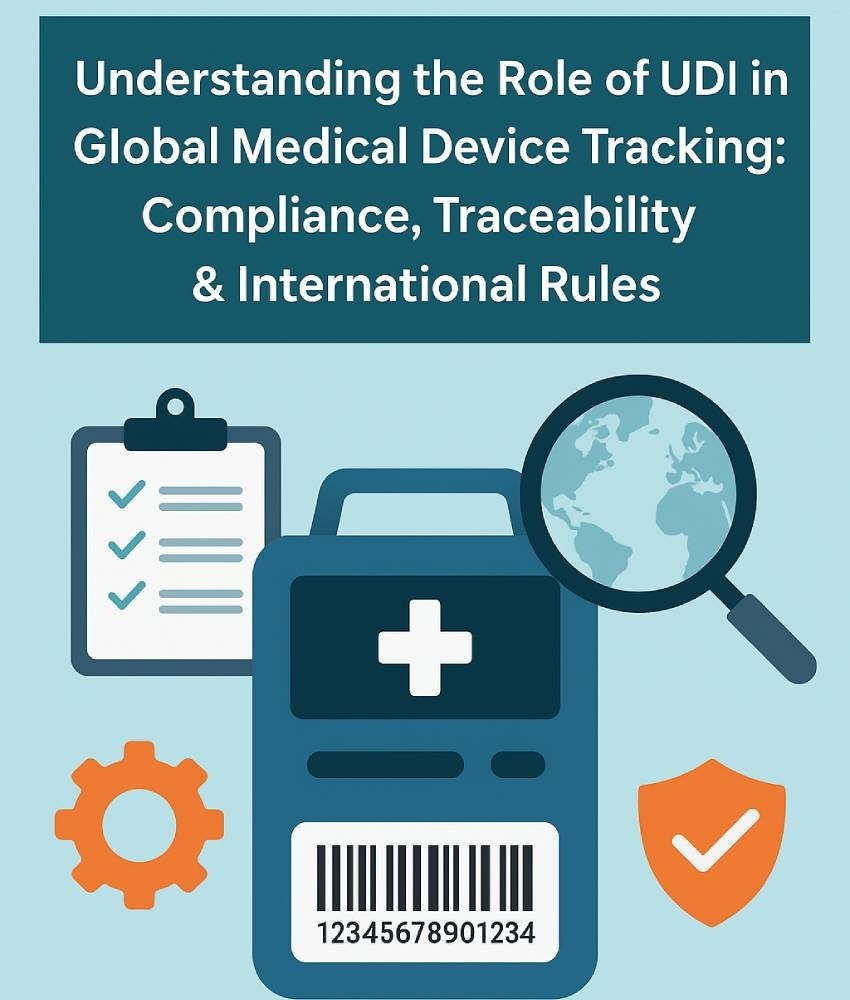
The Unique Device Identification (UDI) system is a globally harmonized initiative designed to improve the traceability and visibility of medical devices across supply chains, markets, and clinical environments. This system empowers regulators, manufacturers, and patients alike. Know more..
What is UDI Code Compliance?
Breakdown of a UDI Code
A UDI code is a unique alphanumeric string assigned to medical devices. It typically includes:
- Device Identifier (DI): Static component identifying the specific version or model.
- Production Identifier (PI): Dynamic component including batch/lot number, expiration date, manufacturing date, etc.
Regulatory Requirements by Region
| Region | Database | Authority | Required For |
| USA | GUDID | FDA | Class I, II, III Devices |
| EU | EUDAMED | EU MDR | Class I-III, AIMDs |
| China | NMPA | UDID | High-risk Devices |
| Global | IMDRF | GUDID-compatible | Voluntary baseline |
Manufacturers must ensure UDI code compliance based on the region where their product will be marketed. Non-compliance can result in legal penalties, market access denial, and costly product recalls.
Consequences of Non-Compliance
- Market delays or denial
- Regulatory fines
- Product recalls and reputational damage
- Legal liability in adverse events
Understanding Traceability Devices in the UDI System
Definition and Scope
Traceability devices refer to hardware or systems that help track, store, and communicate data related to a medical device’s identity, lifecycle, and usage history.
Examples of Traceability Technologies
- Barcode scanners
- RFID tags
- QR codes
- Blockchain systems for immutable record-keeping
These tools enable real-time location tracking and provide audit trails for every device interaction, shipment, or recall event.
Overview of UDI Global Rules and Standards
US FDA and EU MDR Comparisons
| Feature | US FDA (GUDID) | EU MDR (EUDAMED) |
| Device Scope | Class I-III | Class I-III, custom-made |
| Submission | Structured, XML upload | Multiple modules, evolving |
| Label Format | AIDC & HRI | Same |
| Grace Period | Tiered by device class | Transition ends 2027 |
IMDRF Guidelines and Global Convergence
The International Medical Device Regulators Forum (IMDRF) provides a framework to align global UDI standards and promote interoperability among national systems. Most countries model their UDI global rules on IMDRF recommendations.
UDI Labeling and Data Management
Human-Readable and Machine-Readable Labels
UDI must appear in both:
- HRI (Human Readable Information): Text and numbers
- AIDC (Automatic Identification and Data Capture): Barcode, 2D matrix, or RFID
GUDID and EUDAMED Databases
Manufacturers must submit product information into:
- FDA GUDID in the U.S.
- EUDAMED in the EU
These databases store and share device data with healthcare systems, customs agencies, and consumers.
Key Benefits of UDI for Manufacturers and Distributors
Improved Recall Management
UDI enables precise recalls. Instead of broad-scale product withdrawals, manufacturers can:
- Isolate defective batches
- Notify affected providers quickly
- Track every unit’s location and usage
Increased Market Access and Trust
- Facilitates entry into regulated markets
- Enhances product legitimacy
- Builds credibility with hospitals and regulators
UDI Code Compliance in Manufacturing Workflows
Integration into Production Lines
To streamline UDI code compliance, manufacturers embed UDI printing and scanning into:
- Automated labeling machines
- Final packaging lines
- Product verification stations
Quality Control and Label Validation
Best practices include:
- Periodic code verification with scanners
- Label durability testing
- Cross-referencing PI with ERP systems
Challenges and Barriers in Global UDI Implementation
Supply Chain Complexity
Implementing traceability across distributed manufacturing and logistics partners requires:
- Shared platforms
- Clear SOPs (Standard Operating Procedures)
- Vendor compliance enforcement
Multi-Standard Harmonization
One of the biggest hurdles in achieving full UDI global rules compliance is navigating:
- Conflicting timelines
- Varying technical specifications
- Different reporting formats
Digital Transformation Through Traceability Devices
Barcodes, RFID, and Blockchain
Technologies used in traceability include:
- 1D and 2D Barcodes: Widely adopted, cost-effective
- RFID Tags: Enable non-line-of-sight scanning
- Blockchain: Ensures immutable logs, suitable for high-risk devices
Automation of Data Entry and Reporting
Software platforms help reduce manual errors by:
- Auto-generating DI and PI fields
- Connecting UDI data to ERP and PLM systems
- Uploading directly to GUDID and EUDAMED portals
Impact of UDI on Healthcare Providers and Patients
Enhanced Device Safety
Healthcare professionals can:
- Scan UDI to verify authenticity
- Check device expiration dates instantly
- Access device usage history in EMRs
Transparency and Informed Usage
Patients can:
- Look up device details via public UDI databases
- Validate recalled products
- Gain peace of mind about implants or devices used in treatment
How to Prepare for UDI Global Rules Compliance
Training and Internal Policy Updates
To meet compliance:
- Train staff on new labeling and documentation rules
- Update SOPs
- Set up internal audit checkpoints
Choosing the Right UDI Technology Partner
Look for vendors that offer:
- Barcode/RFID integration
- ERP-compatible software
- Certification and regulatory guidance
- Real-time data dashboards
Real-World Case Studies of Successful UDI Integration
Large-Scale Device Recall Management
A leading cardiac device manufacturer used UDI codes to:
- Pinpoint 22,000 units in a faulty batch
- Notify affected hospitals in 24 hours
- Avoid a public relations crisis
Multinational Implementation in OEM Devices
An orthopedic OEM integrated traceability devices and global UDI compliance across five factories. Result:
- 98% reduction in labeling errors
- 100% market access compliance across EU and U.S.
FAQs About UDI, Compliance, and Traceability
1. What is the difference between DI and PI in a UDI code?
DI identifies the device model; PI covers variable data like lot number, serial number, and expiration date.
2. Are traceability devices mandatory for UDI compliance?
Not always, but they’re recommended to simplify scanning, tracking, and reporting.
3. Is UDI required for all medical devices?
It depends on the region. For example, Class I devices in the U.S. had delayed requirements, while high-risk devices face stricter rules.
4. Can one UDI format work globally?
Ideally yes, but real-world implementation requires adapting to regional standards (e.g., EUDAMED vs. GUDID).
5. How often must UDI data be updated?
Whenever there is a change in DI, PI, or product attributes affecting the label or database entry.
6. What are common mistakes to avoid in UDI code compliance?
- Incorrect PI formatting
- Unreadable barcode printing
- Mismatched database entries
Conclusion
UDI code compliance, smart traceability devices, and unified UDI global rules are redefining how the medical industry tracks and secures its products. As global healthcare networks grow more interconnected, the importance of implementing robust, flexible, and scalable UDI systems cannot be overstated.
By proactively adopting compliant solutions and leveraging modern traceability technologies, manufacturers not only meet regulatory demands but also create safer, more transparent experiences for healthcare providers and patients alike.